Bishy Barnabee’s Cottage Garden

Cottage Garden Seeds

The timeless favourites that built the cottage garden look

120 products
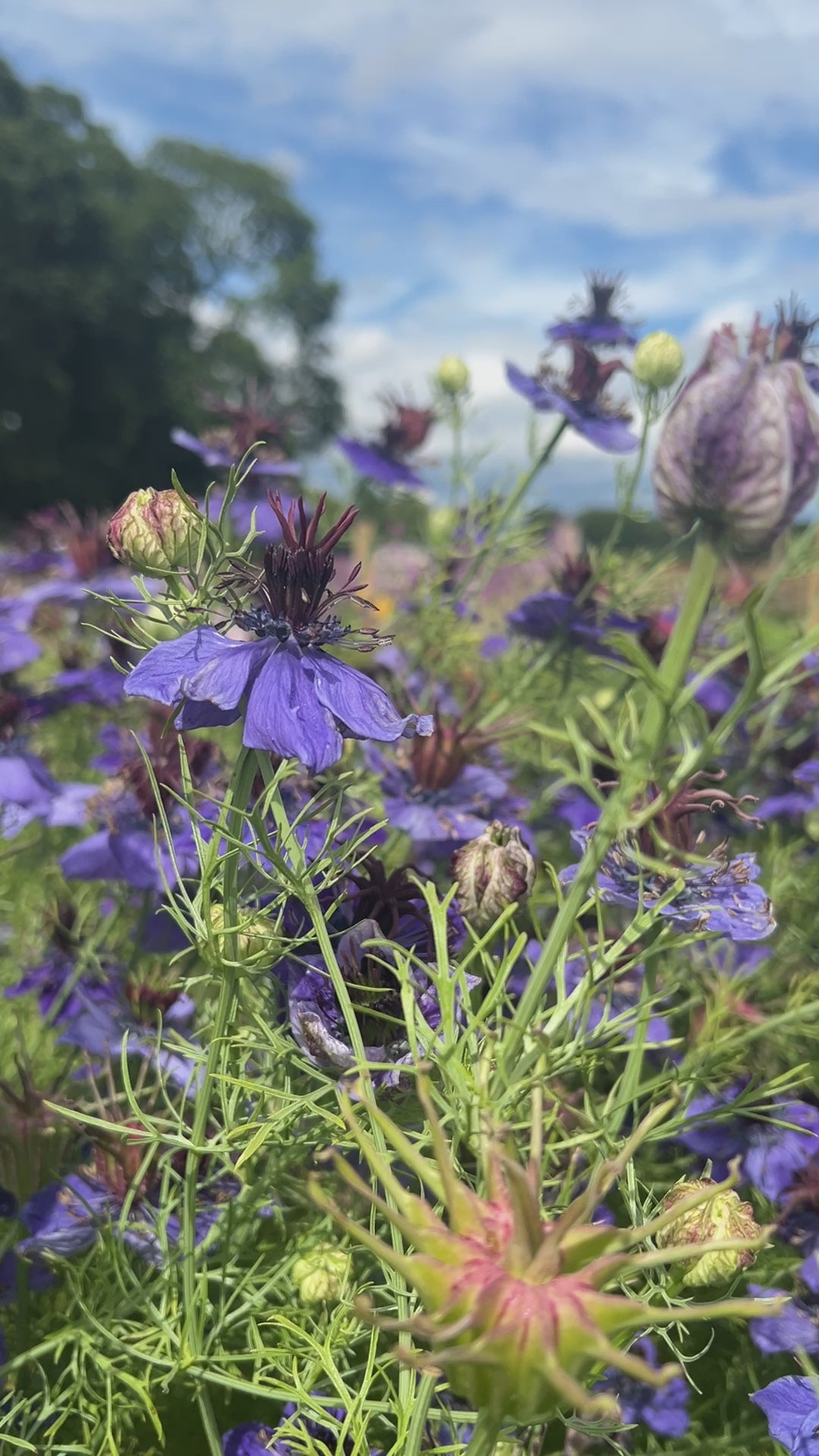
Close-up of Nigella hispanica by Bishy Barnabees Cottage Garden, featuring royal violet-blue petals, dark feathery centers, green foliage, and unopened buds on mulched ground—hinting at its striking architectural seed pods.
Annual

Nigella hispanica

The Spanish one, and a considerably bigger plant than the Miss Jekyll types

Sow: Mar–May · Sep
£2.30 View
A close-up of Phacelia flowers, with delicate purple petals and green foliage, from Bishy Barnabees Cottage Garden. These bee-friendly blooms are often grown from Phacelia seeds as beneficial green manure in gardens.
Annual

Phacelia

Coiled lavender-blue flower spikes that uncurl as they…

Sow: Mar–Sep
£1.95 View
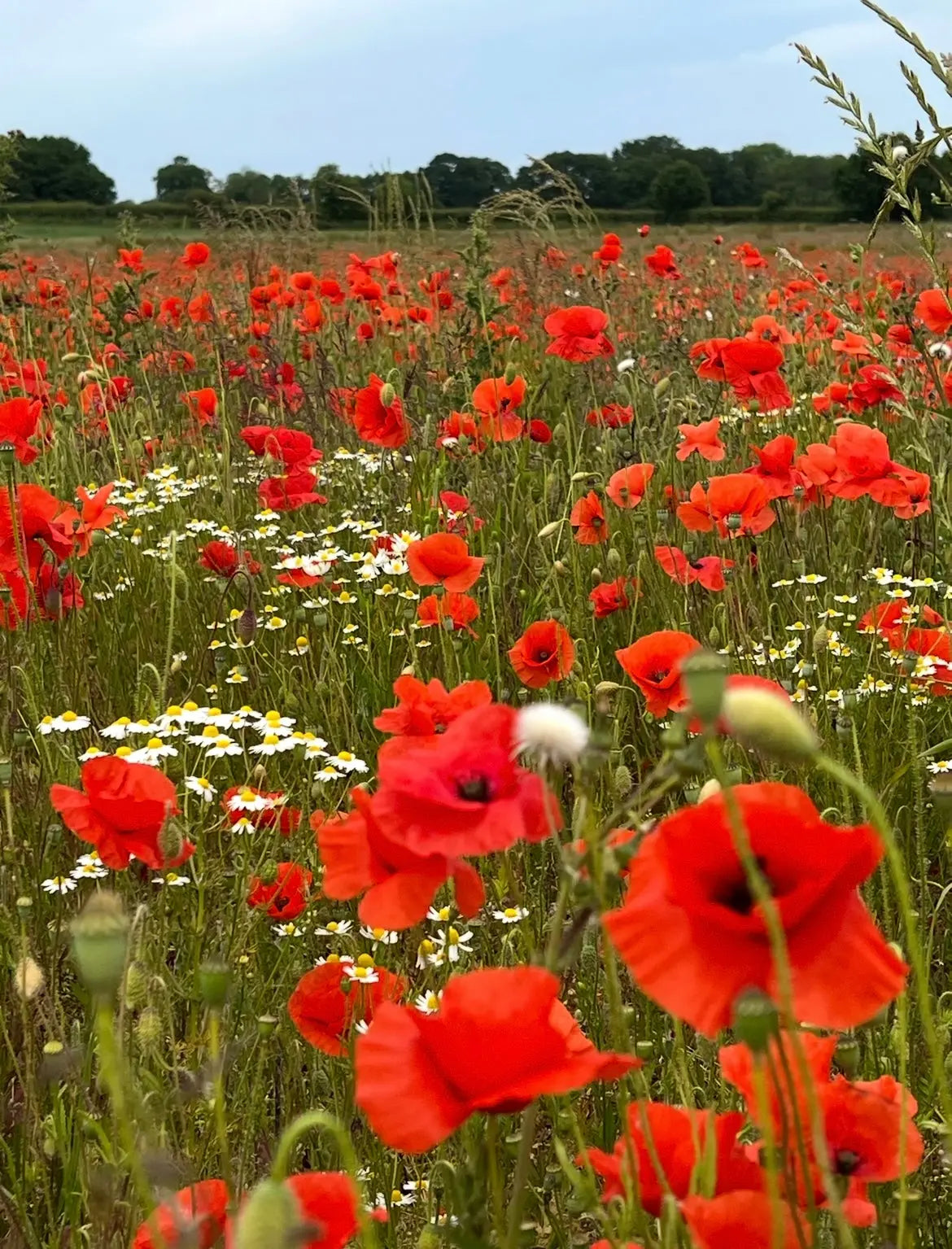
Poppy Flanders Red
Annual

Poppy Flanders Red

The British field poppy, the same Papaver rhoeas…

Sow: Mar–May · Aug–Sep
£1.59 View
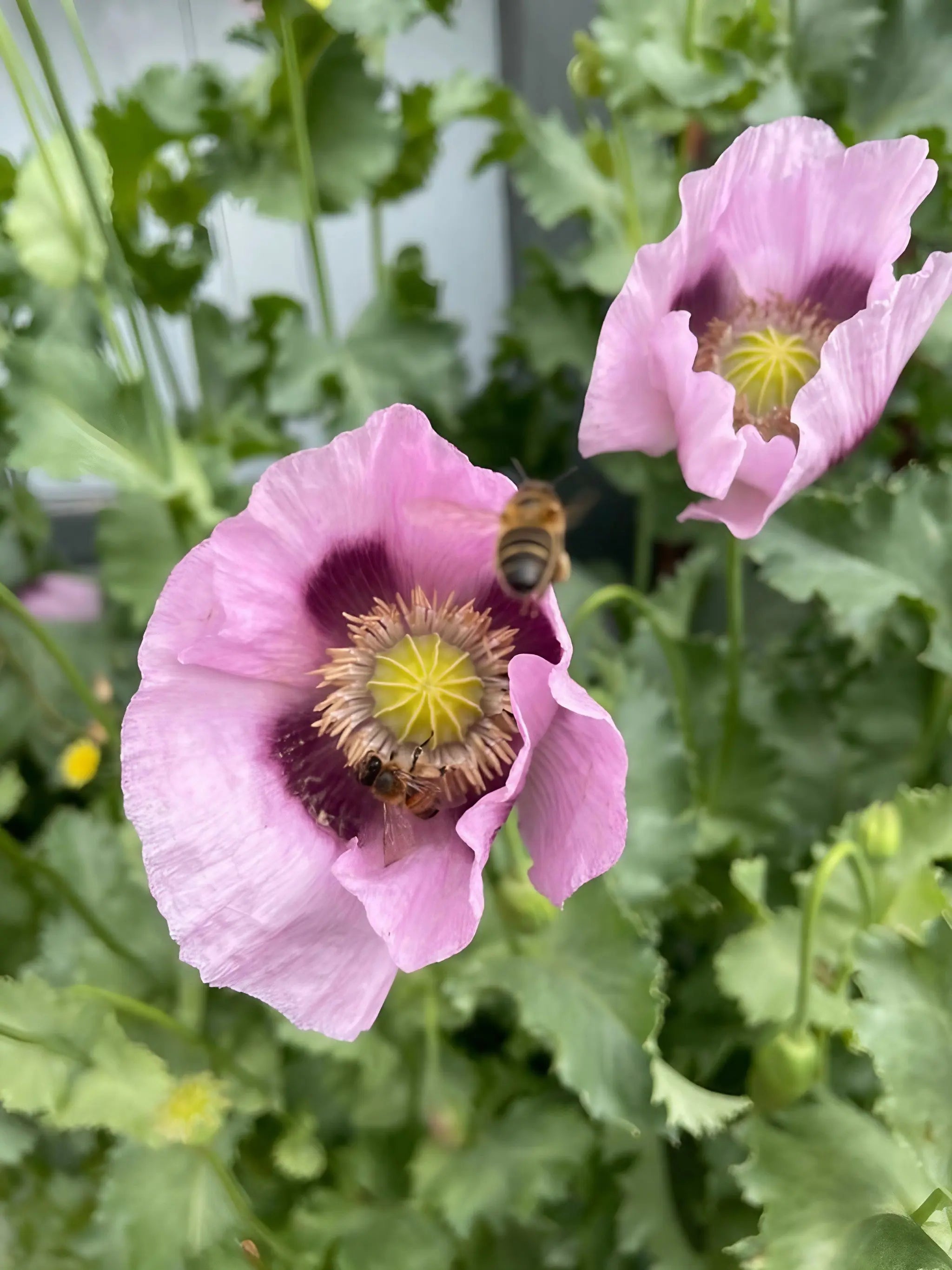
Two bees gather nectar from a large, light purple Poppy Hungarian Blue flower by Bishy Barnabees Cottage Garden, featuring a dark center and green leaves, with another poppy blooming in the background. This variety is known for edible poppy seeds.
Annual

Poppy Hungarian Blue

Large single violet-purple bowls, eight to ten centimetres…

Sow: Mar–May · Sep–Oct
£2.20 View
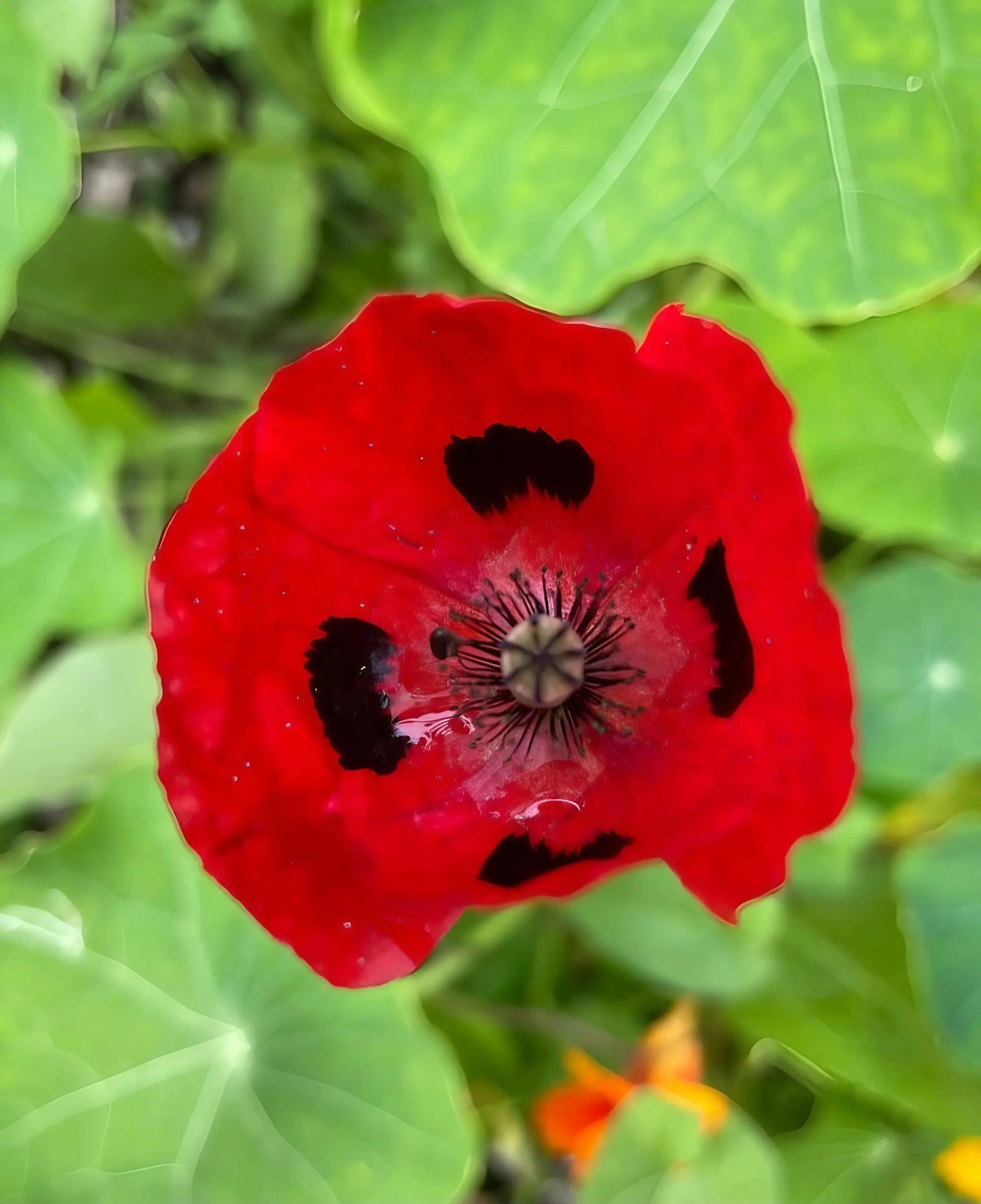
A vivid Poppy Ladybird by Bishy Barnabees Cottage Garden opens amid green foliage, viewed from above. The softly blurred background highlights its scarlet-red petals with black centers and intricate stamens.
Annual

Poppy Ladybird

Scarlet cups with a huge black blotch at…

Sow: Mar–May · Sep–Oct
£2.10 View
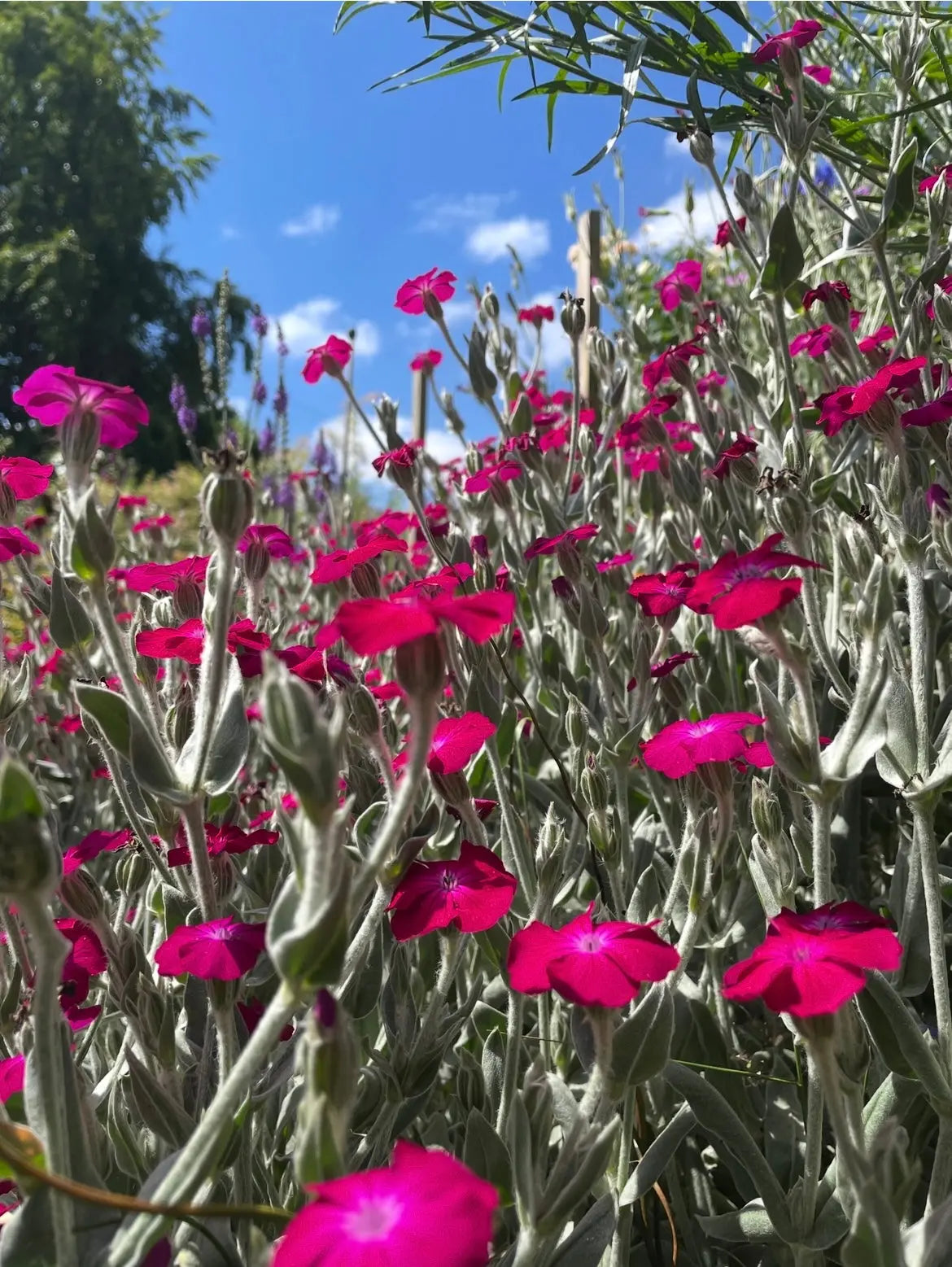
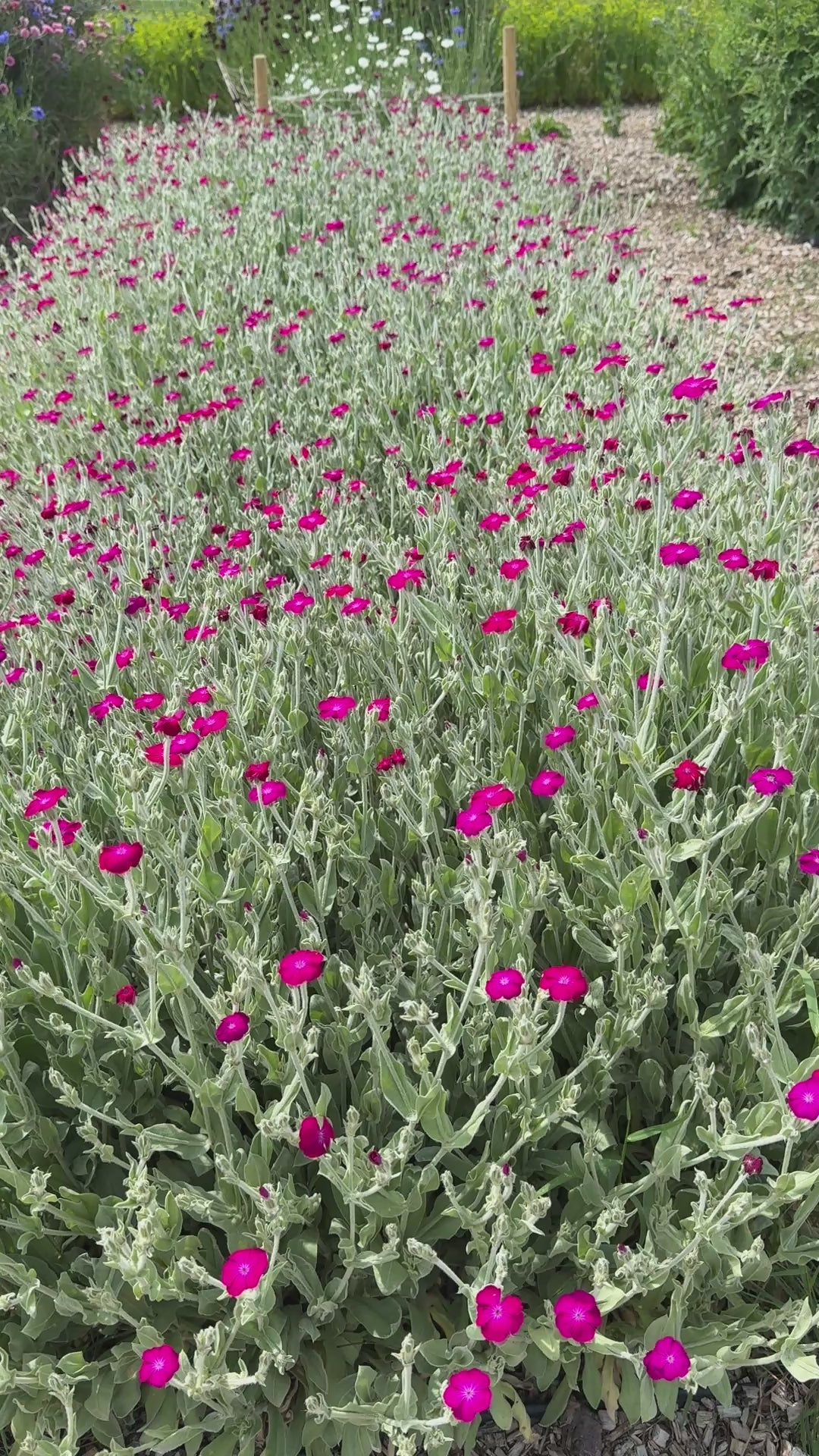
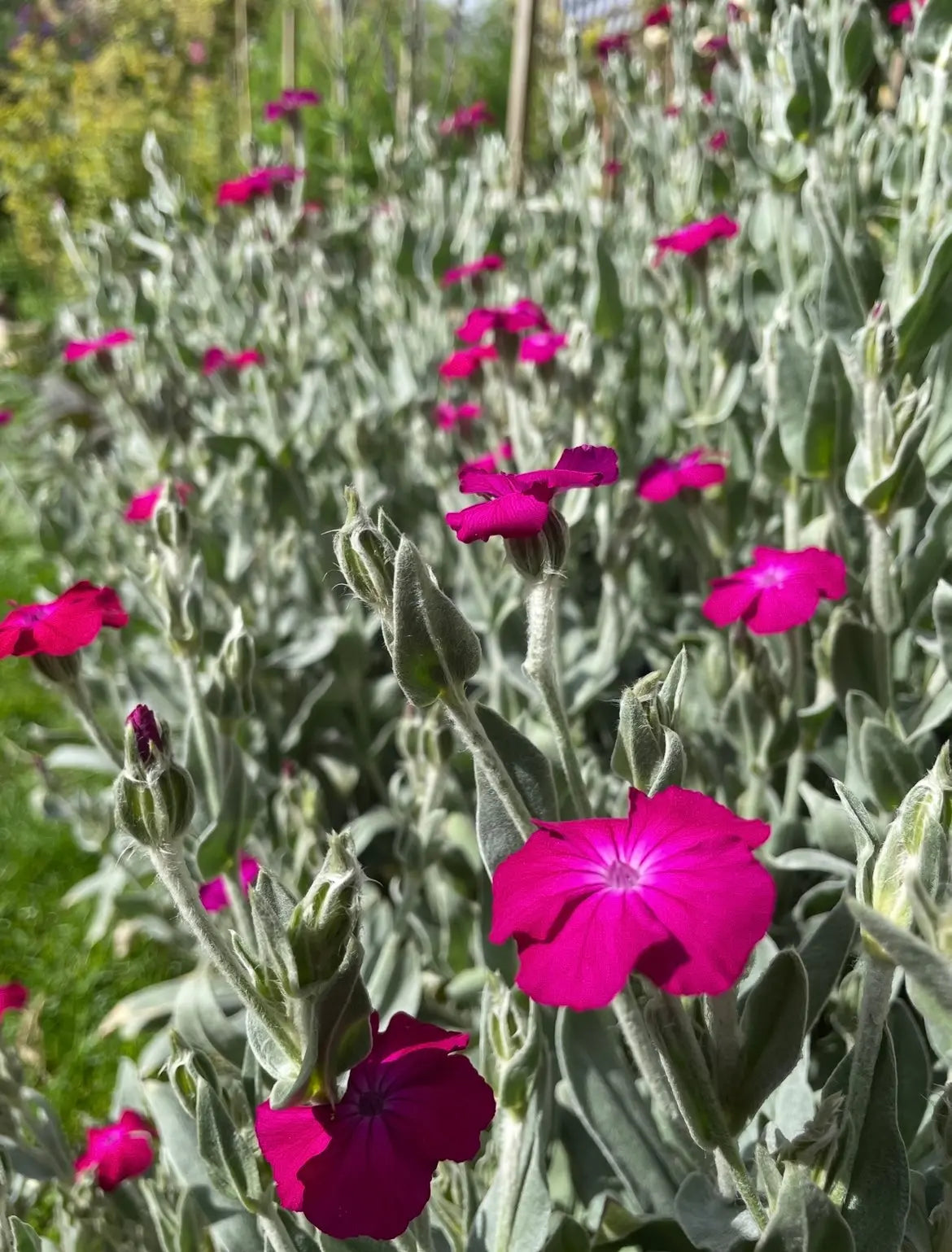
Rose Campion by Bishy Barnabees Cottage Garden features vivid magenta blooms with silvery-green foliage—an ideal outdoor choice for vibrant color in your garden.
Biennial

Rose Campion

Two beautiful things on one plant that look…

Sow: Feb–Aug
£2.10 View

Growing cottage garden classics — your questions answered

What makes a flower a cottage garden classic?

Cottage garden classics are the informal, abundant, self-seeding flowers that filled English country gardens long before bedding-out came into fashion. Think foxgloves, hollyhocks, larkspur, nigella, and cornflowers — flowers grown for their charm and forgiveness rather than uniformity. They mix happily, draw pollinators, and reseed themselves into the cracks of paths and borders.

How do I create a relaxed cottage garden look?

Plant in groups of odd numbers, mix heights deliberately (tall spires at the back, mounding shapes in the middle, low spreading edges at the front), and resist the urge to space everything evenly. Allow self-seeders to do their own thing. The cottage garden look is built from layered abundance, not order — small drifts of many species rather than blocks of a few.

Which classics should I sow first?

For instant cottage garden charm, start with cornflowers, calendula, nigella (love-in-a-mist), and cosmos — all easy from direct-sown seed and flowering within ten to twelve weeks. Add foxgloves and hollyhocks the year after; these are biennials that flower in their second summer, and once established they self-seed for years to come.

Will they come back next year?

Most cottage garden classics will self-seed reliably if you leave a few spent seed heads on the plant in late summer. You will often get drifts of seedlings the following spring — exactly the natural-looking effect that defines the style. A gentle hand with the hoe in spring is the only weeding skill required.