Perennial
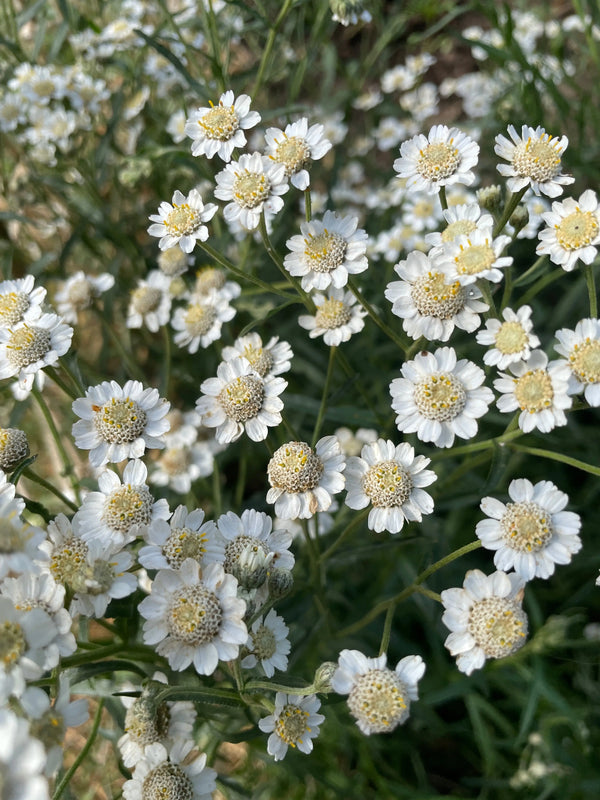
Achillea Ballerina
Small double white buttons, ruffled and about the…
Sow: Feb–Apr
£2.25
View


Long stems, generous harvests, vase-ready blooms
Small double white buttons, ruffled and about the…

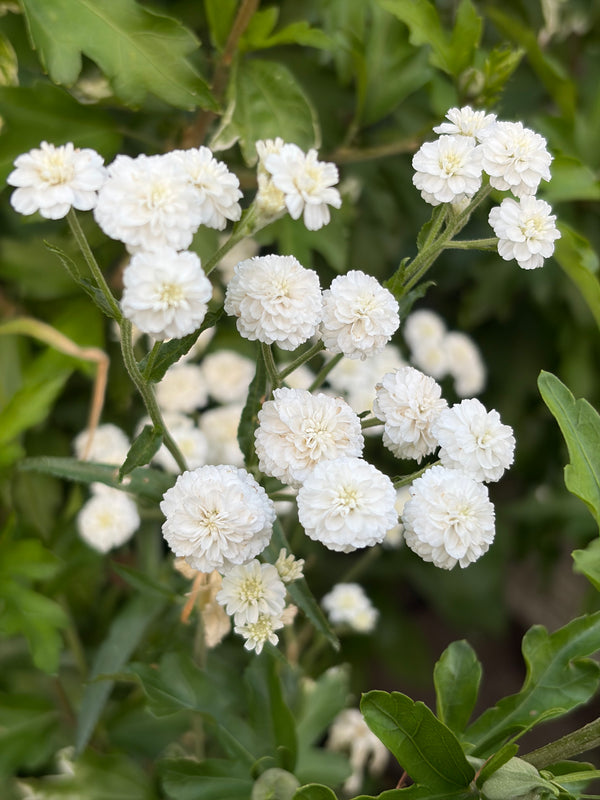
Soft double white pompoms on slender stems from…

A seed mix rather than a single variety,…
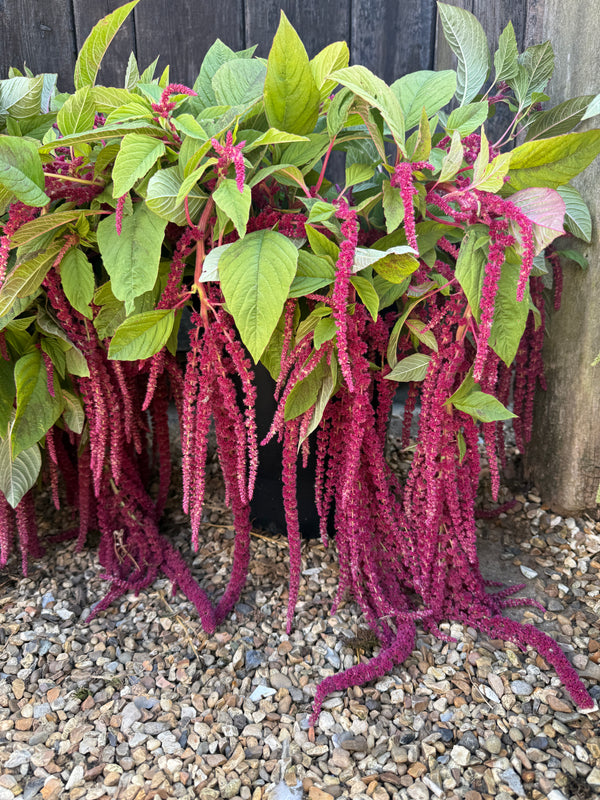
Long velvet crimson tassels hanging from tall upright…
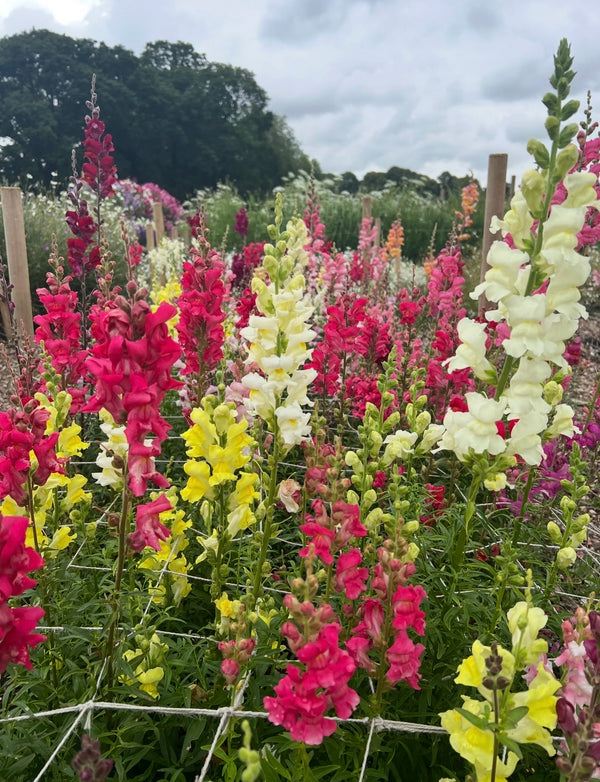
A bedding snapdragon rather than a cutting one, and honest about it
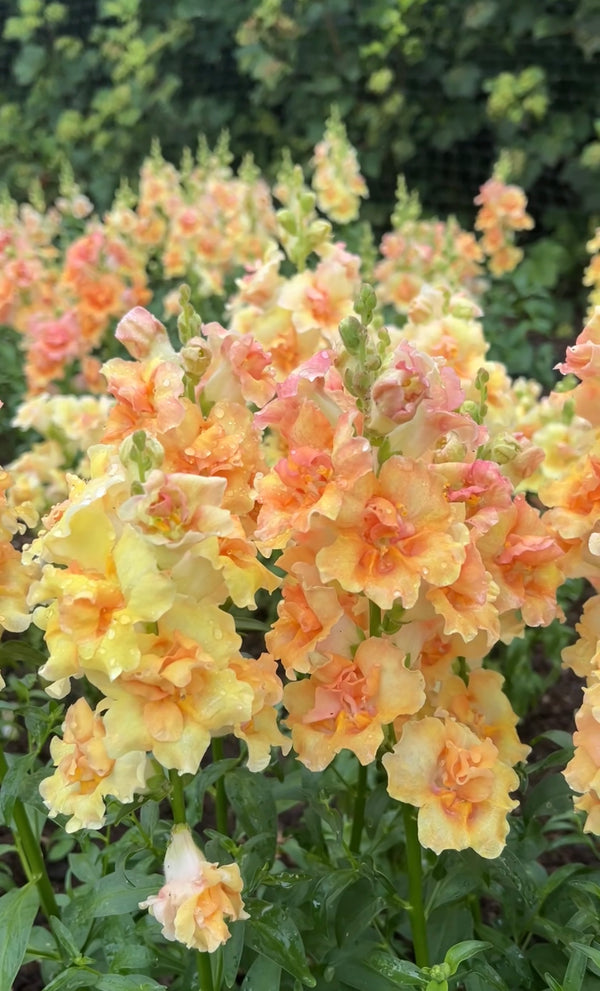
A double-flowered snapdragon, which means the dragon's mouth…
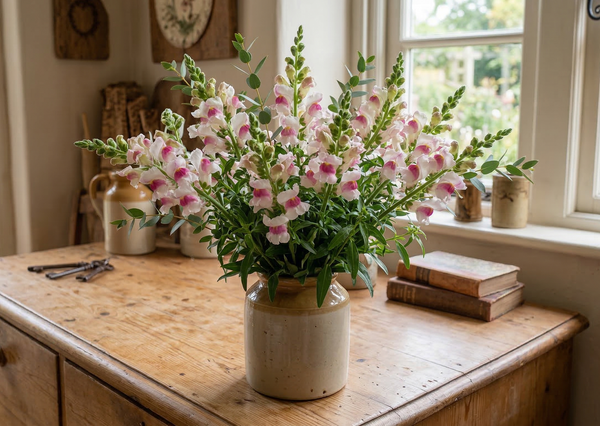
White upper petals cut sharply against a saturated…
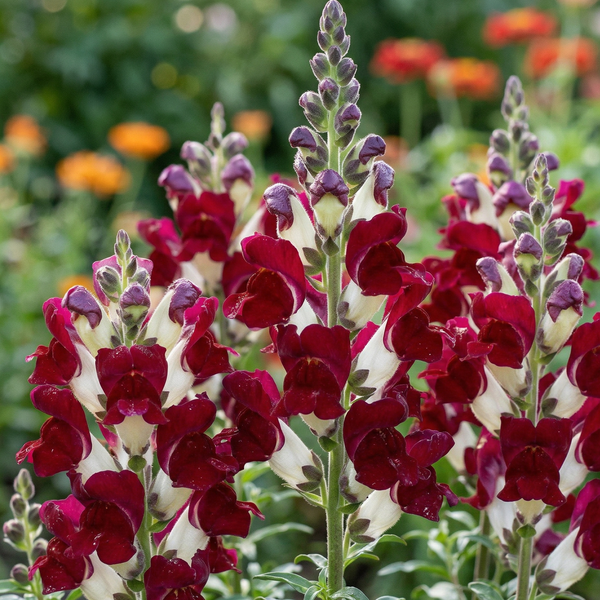
Deep velvet crimson spikes, each flower cut through…
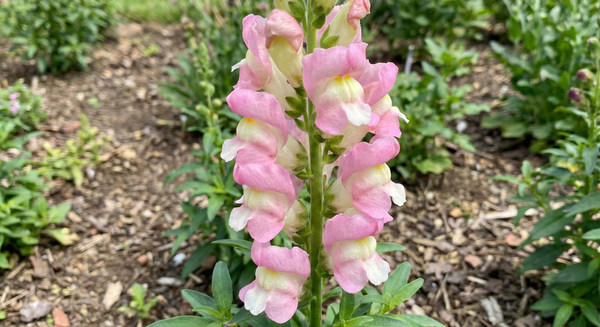
Fully double open-faced blooms in porcelain pink and…
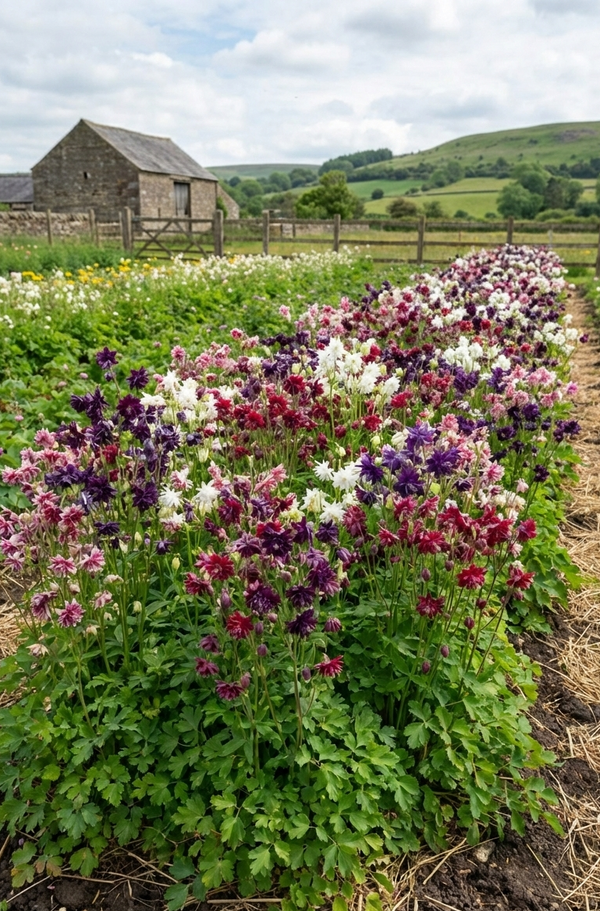
Fully double spurless pompoms on tall stems at…
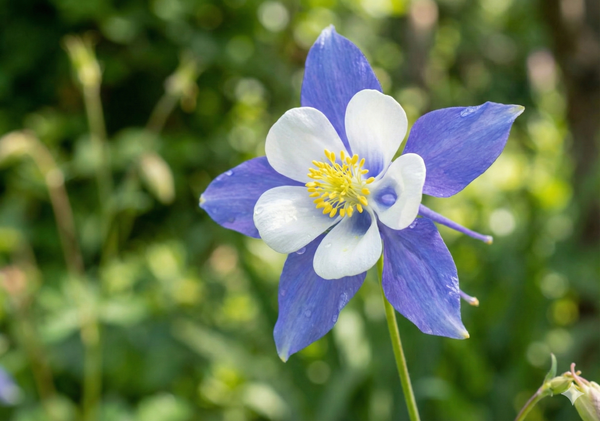
The classical spurred granny's bonnet: nodding flowers in…
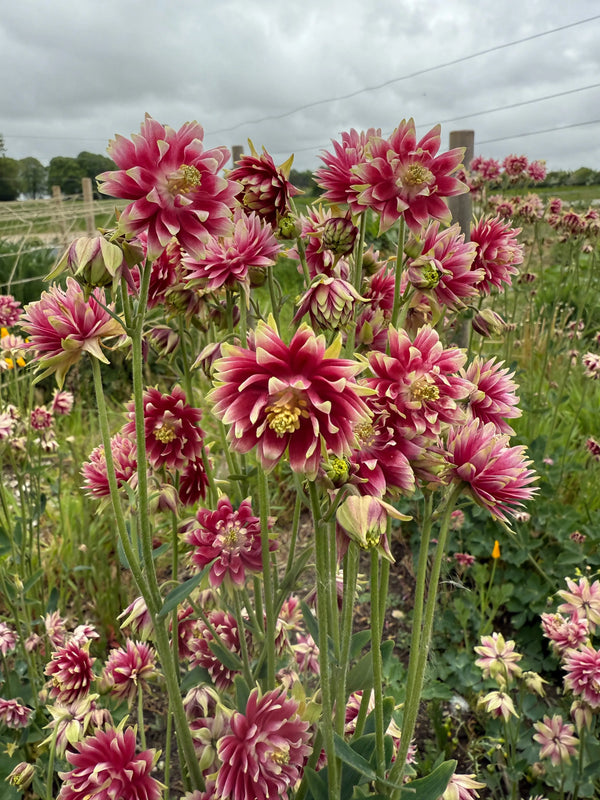
Raspberry-pink pompoms with each petal tipped in white…
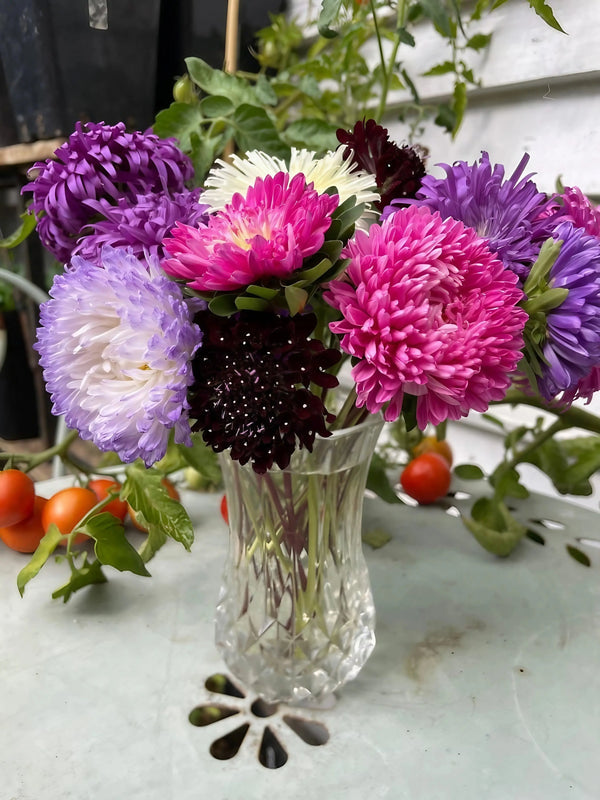
Dense incurved peony-form heads in violet, hot pink,…
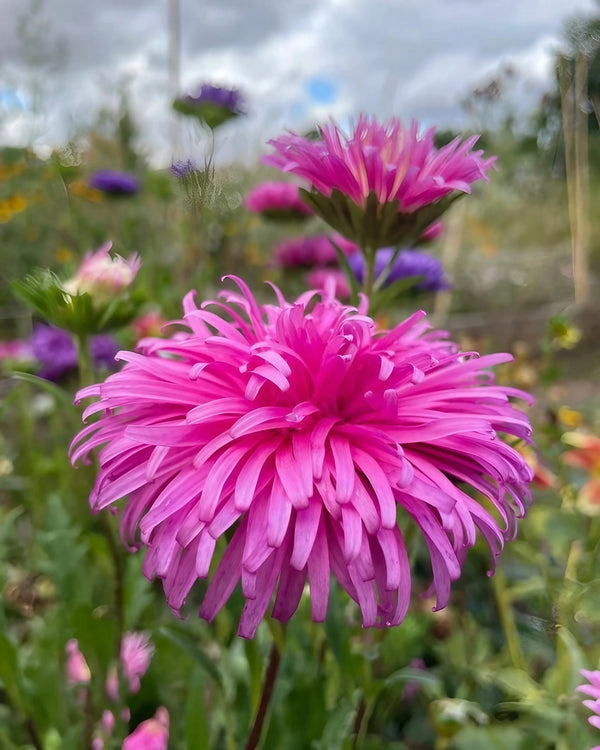
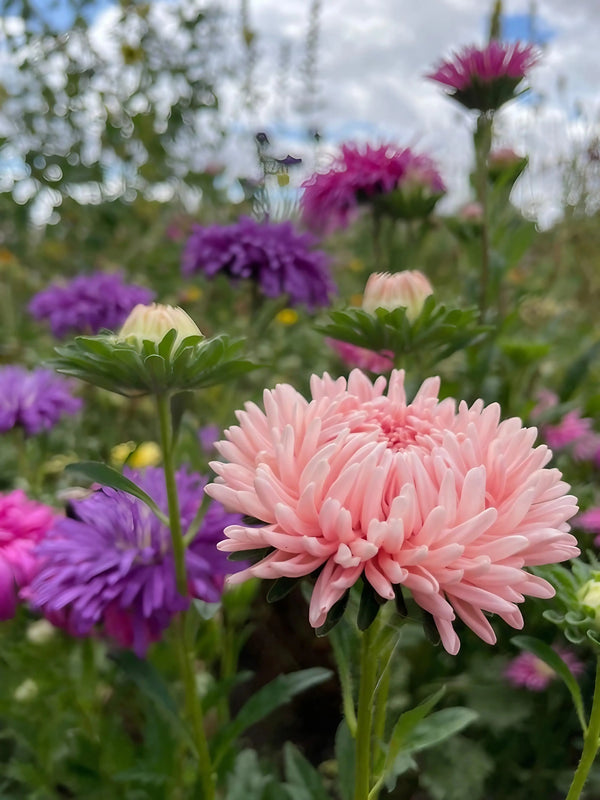
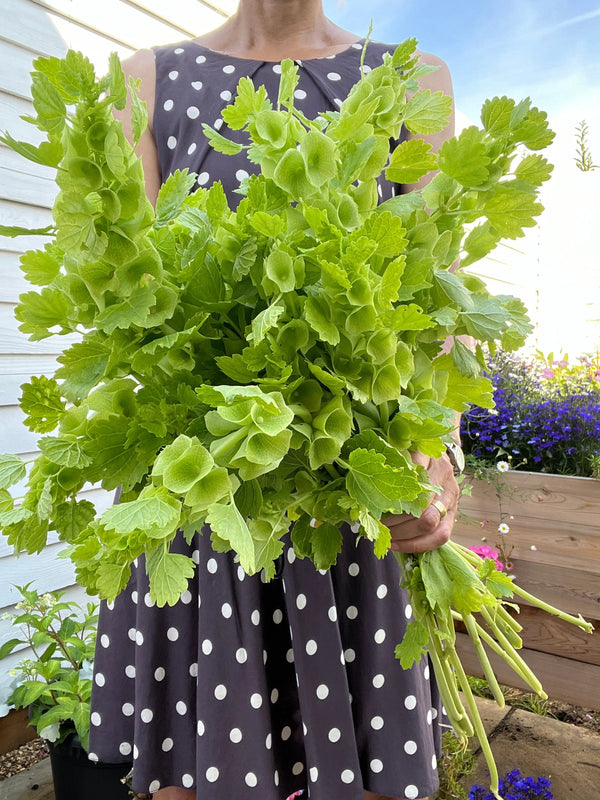
Stiff upright spires lined from top to bottom…
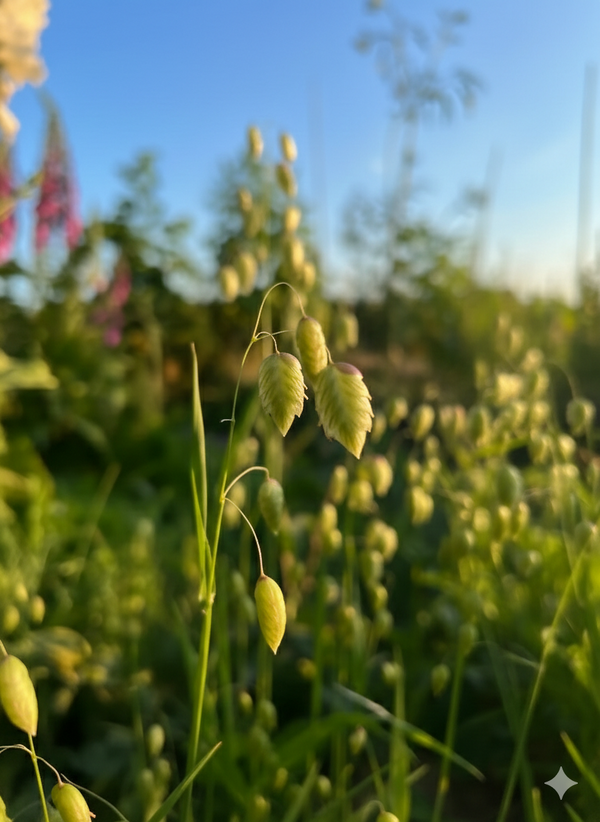
Flattened heart-shaped lockets hanging off stems so fine…
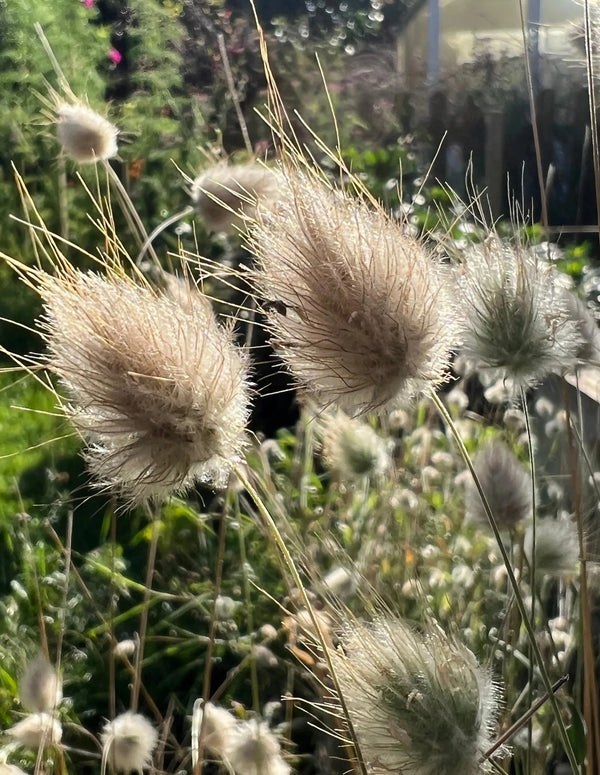
Soft downy oval heads about the size of…
Surprisingly small. A two-metre by one-metre patch densely planted will keep a single household in cut flowers from June through October. Most cut flower growers plant intensively in rows or blocks, spacing tighter than the seed packet suggests — the plants support each other and the harvest per square metre goes up.
Cosmos, zinnias, calendula, cornflowers, and sweet peas are the reliable starting five. They are forgiving, fast from seed, productive, and — importantly — they rebloom when cut. Avoid fussier choices like lisianthus or dahlias until you have a season under your belt and know your soil and conditions.
Cut early morning when stems are fully hydrated, plunge straight into a bucket of cool water, and recut the stems underwater before arranging. Strip any leaves that would sit below the waterline. Most cottage garden cut flowers will give you five to ten days in the vase with this treatment — longer than supermarket bouquets and considerably fresher.
Hardy annuals like cornflowers and ammi go in from March (or autumn-sown the previous September for stronger plants). Half-hardy annuals like cosmos and zinnias start indoors in April, planted out after the last frost. Sow a second batch of fast varieties in June for late-summer succession — it keeps the patch productive into October.