


How to Grow a Garden
for Pollinators
A celebration of the bees, butterflies, hoverflies and moths that animate the cottage garden — and our top eleven plants to bring them all to your door, from spring's first warmth right through to autumn's last sunlight
Pause for a moment beside a flowering border on a warm June afternoon and listen. There it is — that low, contented hum that announces a garden truly alive. A bumblebee disappears into the deep throat of a foxglove. A peacock butterfly folds and unfolds its wings on a verbena spire. A hoverfly hangs motionless above a calendula like a tiny perfect helicopter. Down at ground level, an unfamiliar little solitary bee — striped, fast, entirely intent — drops into a borage flower and is out again in seconds. The garden is not just a place of plants. It is a place of movement, of sound, of countless small lives going about their work.
This is what a pollinator garden gives you — not just colour and scent for your own pleasure, but the daily joy of sharing your patch with the creatures who make it tick. Build a garden the bees and butterflies love and you build a garden that is, almost effortlessly, more beautiful, more dynamic, more abundant. The flowers bloom harder. The fruit sets better. The whole place hums. This guide is a celebration of that quiet, joyful exchange — what pollinators are, what they love, how to plant for them, and our own top eleven pollinator-friendly seeds from the farm to start you on your way.
Pollinator Garden Essentials
Choose
Single-flowered varieties
Aim For
Bloom Feb to October
Position
A sunny patch matters
Avoid
All garden pesticides
Provide
A shallow water dish
Allow
A little wildness
Why Your Garden Matters
The simplest reason to plant for pollinators is also the most generous one. A garden full of bees and butterflies is a garden full of joy — there is no other way to describe the lift you feel watching a bumblebee work methodically up a salvia spire, or the small thrill of a brimstone butterfly drifting between the borders on a March afternoon. Pollinators turn a static piece of planting into a living, moving, sounding scene, and you really only need a few square metres of the right flowers to begin attracting them.
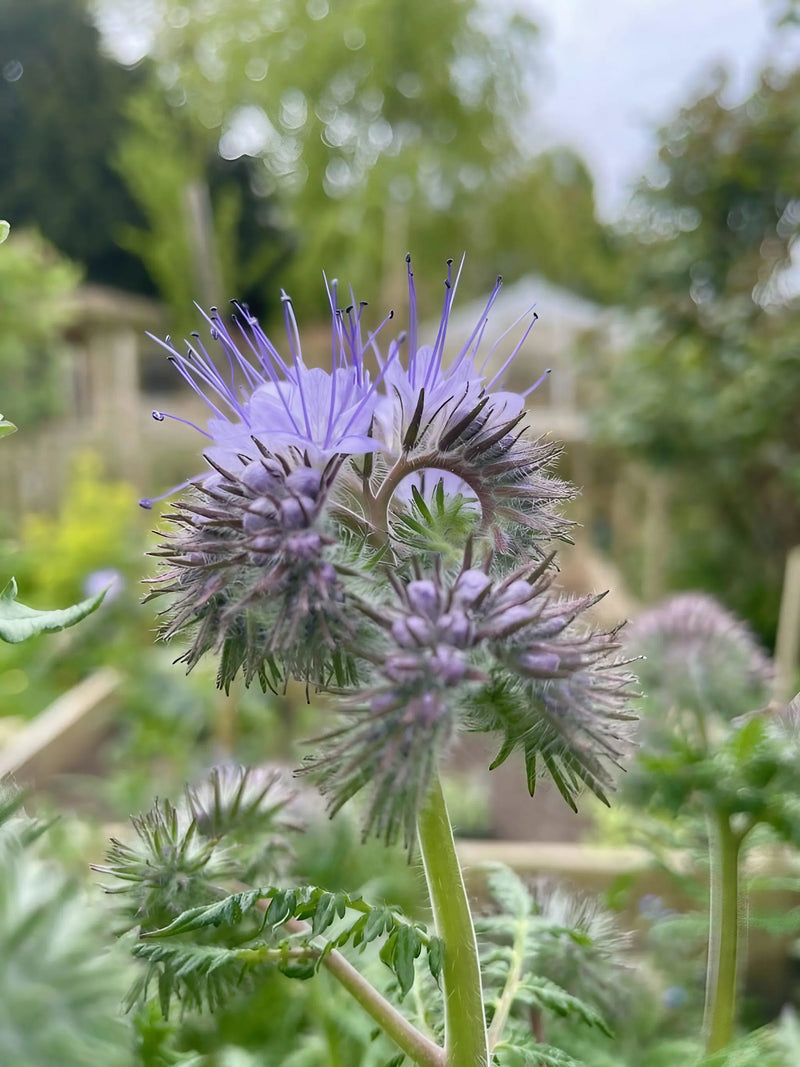
The wider reason is that pollinators do extraordinary work. Roughly a third of everything we eat depends on insect pollination — every apple, every strawberry, every courgette, every almond — and the cottage garden is one of the very few places in the modern British landscape where pollinator habitat is being deliberately created rather than steadily lost. You don't need to make this the headline of your gardening; you just need to know that a single well-chosen border in a Norfolk village or a Glasgow suburb genuinely contributes to a bigger, more hopeful picture. A patch of phacelia in flower in July is more useful to the local bumblebee population than almost anything else of equivalent size you could plant.
And there is a quieter, more personal reason too. Once you start watching pollinators properly, you discover an entire layer of the garden you had been missing — the species and the behaviours, the time of day each kind appears, the favourite plant of the one little solitary bee that nests in your fence post. You become a witness to something genuinely wild happening on your own terms. This is the gift of the pollinator garden, and it is open to anybody, however small the plot.
A Small Patch Can Do a Great Deal
You do not need an acre, a meadow, or anything resembling a traditional wildlife garden. A doorstep, a balcony pot of cosmos and calendula, a single sunny square metre of border planted thoughtfully — all of these support pollinators meaningfully. Research consistently finds that smaller domestic gardens, taken together, support more pollinators than many far larger countryside habitats. Whatever space you have, it counts.
Meet Your Pollinators
"Pollinators" is a wonderfully convenient word, but it hides an extraordinary cast of characters. Once you start looking properly, you realise your garden is visited by a dozen or more distinct types of creature, each with its own pace, its own preferences, and its own time of day. Here, briefly, are the most important ones to know — the headline acts of the British cottage garden in summer.
Bumblebees
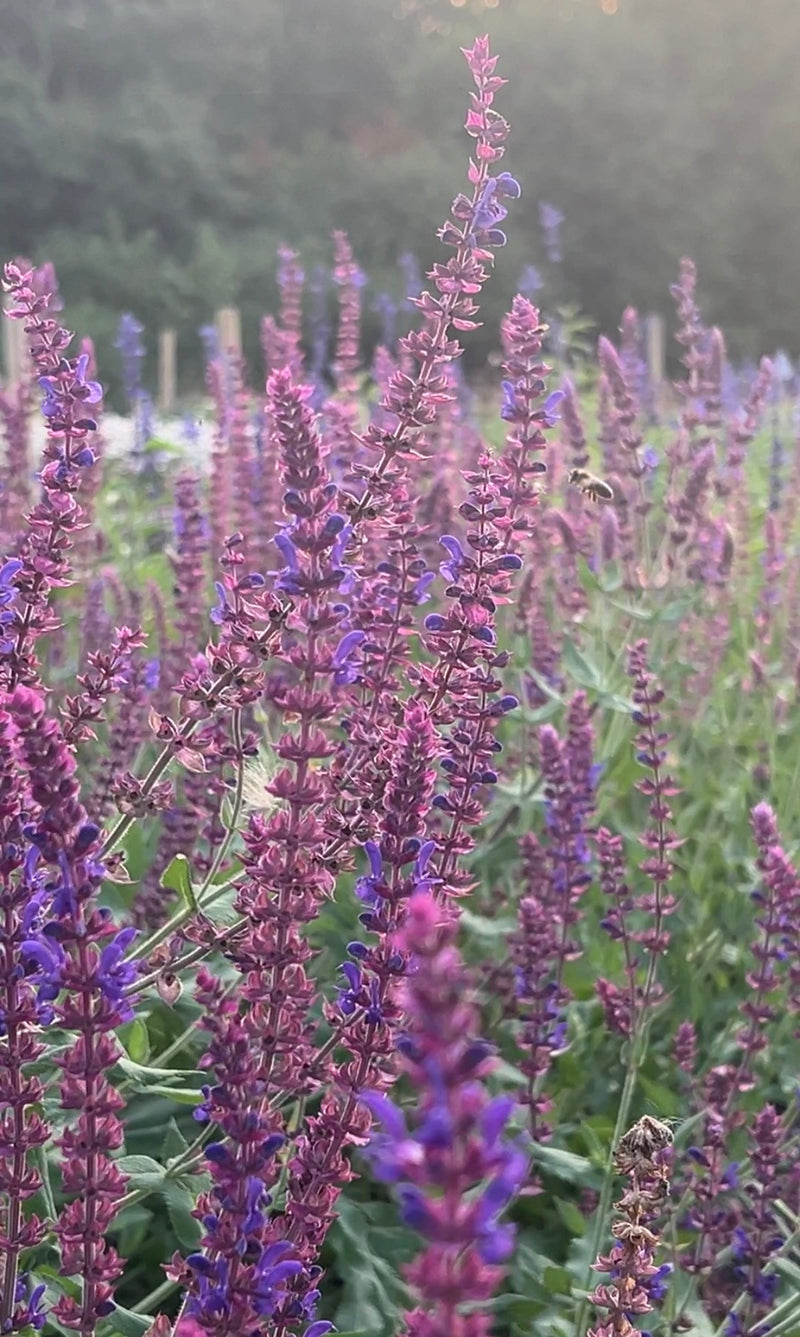
The big, fuzzy, unhurried characters of the cottage garden. Britain has around 24 species — most commonly the buff-tailed, white-tailed, red-tailed and common carder. They are the cool-weather specialists, flying in temperatures other bees won't tolerate, and the long-tongued kinds reach deep nectar wells in foxgloves and salvias that nobody else can. A drift of borage or echinops at peak summer can be solid bumblebees from morning to dusk.
Honeybees
The familiar tan-and-amber striped bees from local hives, working tirelessly in social colonies of thousands. They are generalists — they will work almost any single-flowered nectar source — but they particularly love borage, phacelia, salvia and any flat-open daisy. A working honeybee may visit several thousand flowers in a single day, and the honey she makes is essentially a liquid map of the season's bloom.
Solitary Bees
The unsung heroes — Britain has over 240 species of solitary bee, and between them they do the majority of garden pollination. Each female builds her own little nest, often in soil, hollow stems or bee hotels, and works alone. Look for the small mining bees in spring, the leafcutter bees neatly snipping rose leaves in summer, and the tawny red mason bees on early apple blossom. They are gentle, fascinating and entirely worth getting to know.
Hoverflies
The bee-stripe-mimicking acrobats that hang motionless above a flower and then dart sideways at impossible speed. Far from being pests, hoverflies are the second-most-important group of pollinators after bees, and their larvae are voracious aphid-eaters — a free pest-control service. They love flat, open daisy-type flowers like calendula, cosmos and yarrow, and the marmalade hoverfly with its orange and black bands is one of Britain's most abundant insects.
Butterflies
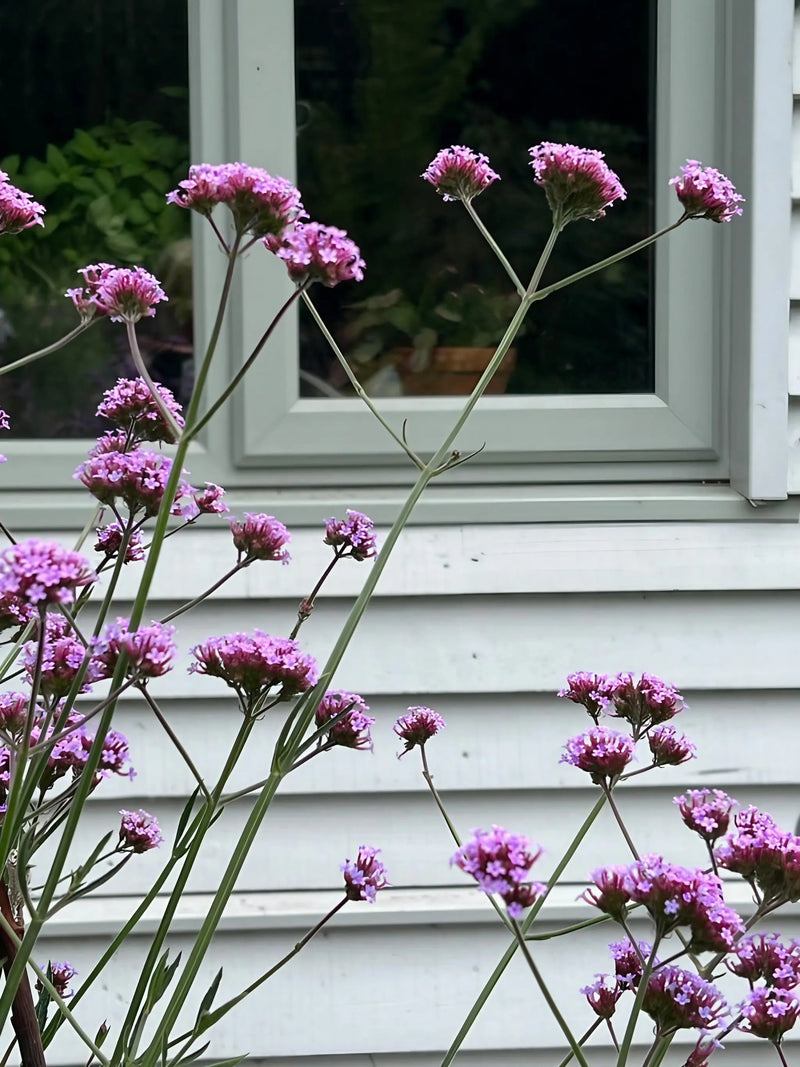
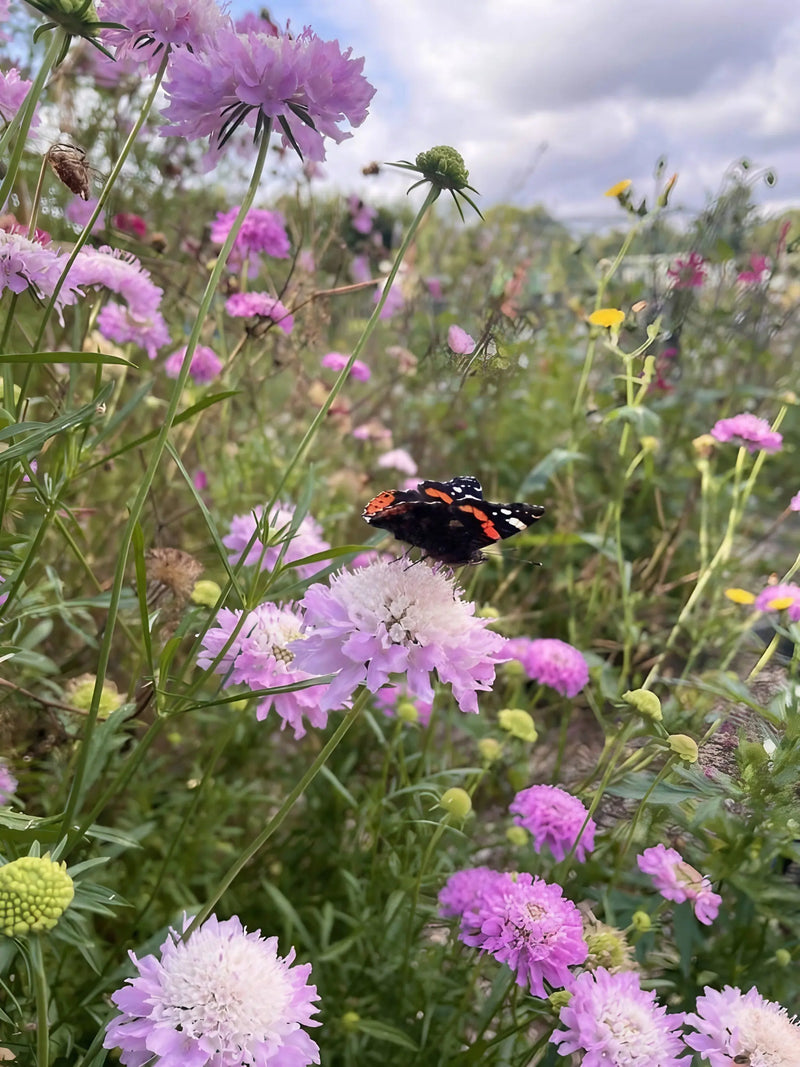
The headline glamour of the pollinator garden. Common species you'll see most are peacock, small tortoiseshell, red admiral, painted lady, brimstone, and the various whites. They want broad landing platforms above deep nectar wells — verbena bonariensis, scabious, echinops and sedum are their cottage-garden temples. Butterflies are sun-lovers, so the warmest hour of a July afternoon is when they truly come out to perform.
Moths
The night shift — and there are more than 2,500 moth species in Britain, against just 59 butterflies. The hawkmoths, in particular, are extraordinary creatures, hovering at evening-scented flowers like hummingbirds with tongues extended into impossibly long flower throats. They are guided by white and pale colours visible at dusk, and by powerful evening scent. A patch of nicotiana on a warm summer evening is one of the great hidden pleasures of the garden.
The Pollinators You'll See Without Looking For Them
Bees and butterflies are the obvious headline acts, but a pollinator garden hosts dozens of less-glamorous visitors too — beetles working through pollen, wasps drinking nectar between hunts, the occasional tiny solitary bee with a fluorescent green sheen on its back. A good pollinator-friendly border will be visited by twenty or thirty distinct species over the course of a summer if you sit and watch with a notebook for a while. It is one of the easiest and most rewarding forms of amateur natural history there is.
What Makes a Pollinator Flower
Not all flowers are equal in pollinator terms. Walk through any garden centre in May and you will find rows of plants labelled "bee-friendly" that are, in honest fact, almost useless to bees. Understanding what genuinely makes a flower valuable to pollinators is the single most important piece of knowledge in this whole guide — get this right and you cannot really go wrong with anything else.
Single Flowers, Not Doubles
This is the golden rule, and it overrides everything else. Single-flowered varieties — the simple, open-petalled, classic flower form, with visible stamens at the centre — almost always outperform the showier double-flowered cousins. Many doubles have so many extra petals that they physically prevent pollinators from reaching the nectar at the heart of the flower. Worse, they have often been bred so far from their wild form that they produce little or no nectar or pollen at all. A double pompom dahlia might be a beautiful cut flower, but to a bumblebee it is essentially a coloured cardboard prop. When choosing pollinator plants, look at the centre of the flower: if you can see the stamens, the bees can reach them. If you cannot, neither can they.
Accessible Nectar
The structure of the flower matters enormously. Different pollinators have different tongue lengths and body sizes, and a flower's geometry determines who can feed at it. Open, shallow flowers like calendula, cosmos and yarrow are universal — anything can land and feed. Tubular, lipped or spurred flowers like salvias, foxgloves and aquilegias suit the longer-tongued bumblebees and moths but exclude shorter-tongued insects. The most pollinator-rich garden mixes both: shallow open landing platforms for the generalists, deep nectar-wells for the specialists.
Colour and Sight
Bees do not see colour as we do — red appears almost black to them, while ultraviolet patterns invisible to us blaze brightly across the petals of many flowers, acting as runway lights guiding bees to the nectar. Bees most strongly prefer blue, purple, white and yellow. Butterflies see the full colour range we do, including red, which is why they will happily visit reds and pinks the bees ignore. Plant a mix of these colour groups and you cover both audiences in one border.
Scent — Especially in the Evening
Scent matters most for moths and for evening pollinators, who rely on it far more than colour in low light. Nicotiana, evening primrose, honeysuckle and night-scented stock are all the equivalent of dinner bells ringing at dusk. Plant something fragrant within nose-distance of where you sit on summer evenings and the moths will quietly come.
The RHS Plants for Pollinators Mark
Look out for the RHS Plants for Pollinators logo (a small bee symbol) on seed packets and plant labels. The Royal Horticultural Society runs ongoing research to identify plants of proven pollinator value, and the logo is awarded only to varieties that demonstrably support significant pollinator activity in trials. It is one of the most useful and trustworthy labels you can follow when buying seeds or plants — and you will find it on the great majority of the plants in our top eleven.
Designing for a Long Season
The single most useful thing you can do for pollinators — once you have chosen good single-flowered varieties — is to plant for a long flowering season. Pollinators are active in Britain from late February right through to October, but most gardens have a glut of flower in June and very little before or after. A pollinator garden designed properly produces nectar continuously, opening the buffet weeks earlier and closing it weeks later than the average border.
Early Spring — February to April
The first warm days bring queen bumblebees blearily out of hibernation, desperate for food after a long fast. This is the hardest time of year for pollinators and the time of greatest impact for your garden. Crocus, pulmonaria, hellebores, snowdrops and the very earliest flowering shrubs are critical. Among annuals from seed, calendula sown in autumn often opens its first flowers in March in mild years, providing a precious early source. Every flower in March is worth twenty in June.
Late Spring — April to May
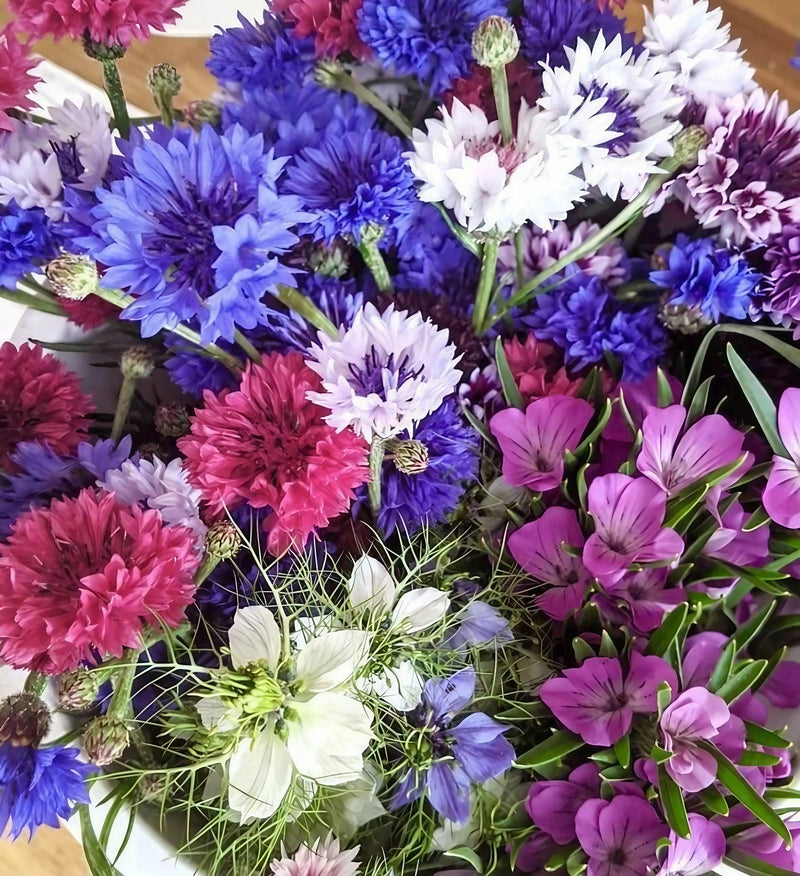
The full cast emerges. Solitary bees are now active, butterflies wake from hibernation, hoverflies appear. Apple blossom is the great late-spring event in the countryside. In the garden, aquilegias, cornflowers from autumn-sown plants, and the first borage and phacelia begin to take over.
Midsummer — June to August
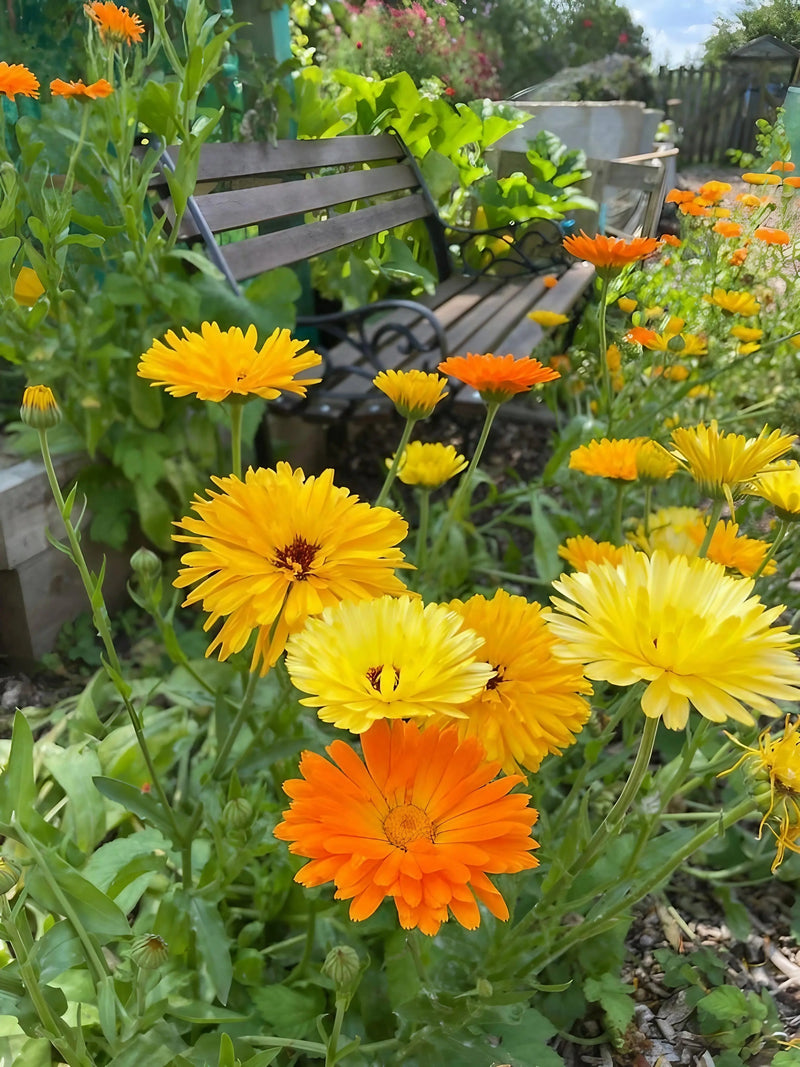
The peak season — but with a known problem. The so-called "June gap" is a curious dip between the spring-flowering shrubs finishing and the summer annuals taking over, when many gardens go briefly quiet. The pollinator-thoughtful garden bridges this with early-flowering perennials (salvia, echinops, scabious) and autumn-sown hardy annuals (cornflower, calendula) that flower earlier than their spring-sown counterparts. From July onwards, the abundance is generally easy — verbena bonariensis, cosmos, borage, scabious, calendula, phacelia all roar at once.
Late Summer and Autumn — August to October
This is when most gardens begin to fade and many pollinators are at their most desperate, with queen bumblebees frantically feeding before hibernation and butterflies preparing for winter. A garden still in flower in late September and October is doing remarkable work. Verbena bonariensis, sedum, late-sown cosmos, autumn-flowering single chrysanthemums and michaelmas daisies all carry the season through to the first frosts.
The Night Shift
Don't forget to plant for moths. Evening-scented nicotiana, night-scented stock, honeysuckle and evening primrose are the dusk equivalent of the bumblebee buffet — a quiet, fragrant second garden that opens just as the day shift goes home. Plant these near a doorway, a path, or where you sit out in summer, and the rewards are quietly spectacular.
Bridging the June Gap
If you make one specific design improvement to your pollinator garden, make this one: identify what is in flower in your garden in the first three weeks of June, and plant more for that window. Most home gardens have a gap precisely when the queen bumblebees are starting their new nests and need a steady supply. Autumn-sown calendulas, cornflowers and phacelia are the simplest fix — they flower from late May into early summer, exactly where the gap usually falls.
Our Top Ten Pollinator Plants (And One for the Moths)
These are our own top picks from the farm — the eleven seed varieties we would plant first if we were starting a pollinator garden from scratch. Every one is a proven nectar source, every one earns its place on a different ground, and between them they cover the full cast of bees, butterflies, hoverflies and moths from spring to autumn. Ranked from one to ten, plus our chosen specialist for the night shift.





The Eleventh Plant — Why a Specialist for Moths
The first ten are the all-round pollinator stars — bees and butterflies in good measure. But moths are the great hidden audience of the summer garden, and they deserve their own pick. Nicotiana 'Sensation Mixed' is our chosen specialist: evening-fragrant, white-and-pale-toned to glow at dusk, with deep trumpet flowers ideal for the hawkmoth's astonishing long tongue. Plant a small patch near where you sit out on summer evenings and a whole second garden opens up after sundown — quietly, fragrantly, and almost entirely unseen by most gardeners.
Beyond the Flowers
Choosing the right plants is the foundation, but there are a handful of small additional things you can do that multiply your garden's value to pollinators many times over. Each of them costs nothing and asks very little of you.
Provide Water
This is the most overlooked single intervention in pollinator gardening. Bees, butterflies and other insects need to drink, particularly in hot weather, and most simply cannot land safely on the surface of a pond or birdbath. A shallow dish — a saucer, a plant pot tray, anything two or three centimetres deep — filled with water and topped with a layer of pebbles or marbles so the insects have somewhere to perch, will become a busy little oasis on warm days. Refresh it once a week. The amount of bee and butterfly activity around a properly designed water dish in a heatwave is genuinely startling.
Step Away from the Pesticides
If you do one single thing for pollinators, it is this: stop using broad-spectrum garden pesticides — particularly the so-called "neonicotinoids" still sold in some products. They are profoundly damaging to bees even at minute residual concentrations. A genuinely pollinator-friendly garden runs without any pesticide use at all, and the surprising thing is how little you actually miss them. The hoverflies you've attracted will deal with the aphids; the small birds will pick off the caterpillars; the natural balance restores itself in a year or two. It is one of the great pleasures of going chemical-free in the garden.
Leave a Little Wildness
The cleanest, tidiest gardens are also the least useful to wildlife. A patch of long grass at the bottom of the garden, an unmown corner, a small pile of stones, a length of hollow bamboo or a few hollow plant stems left standing through winter — these provide nesting sites for solitary bees, overwintering refuges for queen bumblebees, hibernation spots for ladybirds and butterflies. You don't need to abandon order entirely; you just need one or two corners where a little mess is allowed to live undisturbed.
Don't Cut Everything Down in Autumn
The instinct to tidy the borders the moment the last flowers fade is the wrong one for pollinators. Hollow stems are nesting tunnels for solitary bees. Seedheads are winter food for finches and other birds. Last year's leaf-litter shelters chrysalises and overwintering insects. Leave at least some of the structure standing into spring — the borders look beautifully wintered in frost, and the wildlife survives the cold months because of it.
Bee Hotels — A Note of Honest Caution
Bee hotels are wonderful when done well and harmful when done badly. Look for hotels with replaceable, cleanable tubes — single-use cardboard or hollow stem inserts — and replace or sterilise them each year. Permanent drilled wooden blocks that cannot be cleaned can quickly become breeding grounds for parasitic mites and disease. A simple bundle of hollow bamboo or hogweed stems, tied together and replaced annually, is often the kindest option for solitary bees.
A Season of Bloom
Here is what your top-eleven pollinator garden looks like across the year — the season of bloom from each of our recommended plants, mapped month by month. Notice how the perennials and biennials cover the late spring and early summer when many gardens still have little, and how the hardy annuals carry the abundance right through to autumn. Between them, this group of eleven plants gives you continuous nectar from late May to the first frosts, with no June gap anywhere.
Honey-gold cells show the flowering window for each plant — the deeper shade marks peak bloom and pollinator activity.
| Jan | Feb | Mar | Apr | May | Jun | Jul | Aug | Sep | Oct | Nov | Dec | |
|---|---|---|---|---|---|---|---|---|---|---|---|---|
| 1. Salvia (perennial) | ||||||||||||
| 2. Verbena bonariensis | ||||||||||||
| 3. Borage | ||||||||||||
| 4. Phacelia | ||||||||||||
| 5. Cosmos | ||||||||||||
| 6. Echinops (perennial) | ||||||||||||
| 7. Scabious | ||||||||||||
| 8. Calendula | ||||||||||||
| 9. Cornflower | ||||||||||||
| 10. Foxglove (biennial) | ||||||||||||
| 11. Nicotiana (for moths) |
A garden that hums from spring to autumn — and the seeds that get you there.
Our full Plants for Pollinators collection brings together over 140 carefully chosen seed varieties, every one of them proven to support the bees, butterflies, hoverflies and moths that animate the British garden. From the eleven recommended above to dozens more cottage-garden favourites — single-flowered, RHS Plants for Pollinators where applicable, and all selected to give you the longest possible flowering season. Whether you're starting from scratch or filling the June gap, your pollinator garden begins here.
Shop Plants for Pollinators →
0 comments