Borage Seeds (Starflower)
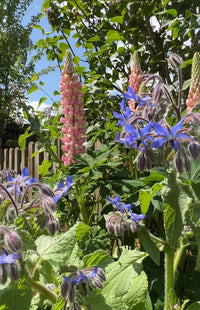
Borago officinalis, or Borage, is a plant that hums with life. It produces clusters of nodding, star-shaped flowers in the most intense, electric sky-blue imaginable. The stems and leaves are covered in silvery hairs, giving the whole plant a halo when the sun catches it.
This is more than just a flower; it is an ancient herb with a cucumber-like scent. It is wild, unruly, and incredibly beautiful, bringing a relaxed, cottage-garden feel to any vegetable patch or flower border.
Why Your Garden Needs Borage
We honestly believe every garden needs a patch of Borage, and here is why: it is a superhero for bees. It refills its nectaries incredibly fast (some say every two minutes!), meaning it provides a near-constant food source for pollinators. If you grow vegetables, planting Borage nearby will guarantee better pollination for your beans and courgettes.
It is also delicious! The bright blue flowers are edible and taste remarkably like fresh cucumber. Freezing them into ice cubes for a gin and tonic or Pimm's is one of the great joys of a British summer.
Understanding the Plant: What is a Hardy Annual?
Borage is a robust Hardy Annual.
This means it completes its life cycle in one year. However, Borage is famous for being a "self-seeder." Once you have it, you usually have it forever! It drops its large black seeds in late summer, and you will find fresh seedlings popping up the following spring. Don't worry—they are easy to pull up or move if they appear in the wrong place.
Growing Guide: How to Sow and Grow
Borage is one of the easiest seeds to grow, making it perfect for beginners or children.
🌱 Germination:
These seeds are large and easy to handle. They grow best when sown directly into the soil outdoors. Sow them about 1-2cm deep (they like to be well-covered) in late spring. Keep the soil moist, and they will burst through in no time.
Where to Sow:
Pick a sunny or partially shaded spot where you are happy for them to stay. Borage grows a long taproot, which makes it very drought tolerant but means it hates being transplanted. If you must start them indoors, use deep modules and plant them out while they are still small.
Care While Growing:
Honestly? They thrive on neglect! They don't need feeding and rarely need watering once established. Just give them room to flop a little—they have a relaxed habit and can get quite wide.
Plant Specifications
Here is a quick reference guide to the key features, helping you decide if this starflower is the right fit for your garden.
| Latin Name | Borago officinalis |
| Common Name | Borage, Starflower |
| Hardiness | H5 (Hardy - withstands cold winters) |
| Light Required | Full Sun to Part Shade |
| Height | ↕️ 60cm (2 ft) |
| Spread | ↔️ 45cm – 50cm |
| Spacing | 🌱 30cm apart |
| Great for | 🐝 The #1 plant for Bees 🍹 Edible flowers (drinks/salads) 🥦 Vegetable companion 🚜 Permaculture |
| Seed Count | Approx.100 seeds per packet |
My Recommended Garden Companions
Borage looks wonderful in a "wild" cottage border or sitting happily in the vegetable patch. Here are my top partners from the shop:
- 🟠 Calendula (Pot Marigold): The vibrant orange of Calendula creates a stunning contrast with the electric blue of Borage. Plant them together in the vegetable patch to create the ultimate pollinator-friendly defence team.
- 💙 Cornflowers (Centaurea cyanus): For a true "English Meadow" look, mix Borage with blue Cornflowers. They flower at the same time and create a sea of blue that bees will spot from miles away.
📅 Sowing & Flowering Calendar
Sow direct outdoors in spring. Successional sowing (every few weeks) keeps the flowers coming all summer.
(↔️ Swipe chart to see all months)
| Month | J | F | M | A | M | J | J | A | S | O | N | D |
|---|---|---|---|---|---|---|---|---|---|---|---|---|
| Indoors | 🟢 | 🟢 | ||||||||||
| Outdoors | 🟢 | 🟢 | 🟢 | 🟢 | ||||||||
| Flowers | 🌸 | 🌸 | 🌸 | 🌸 |
⚠️ A Gentle Note on Handling
Borage stems and leaves are covered in stiff, silvery hairs. While they give the plant a lovely shimmer, they can be a little prickly! It is best to wear gloves when pulling up old plants at the end of the season.
🏆 Officially Recognised Excellence
Borage holds the RHS Award of Garden Merit (AGM). It is also one of the most important plants on the RHS Plants for Pollinators list due to its incredible nectar replenishment rate.
- Regular price
-
£2.30 - Regular price
-
- Sale price
-
£2.30
Couldn't load pickup availability
5.0 / 5.0
(1) 1 total reviews


Borage
- Regular price
-
£2.30 - Regular price
-
- Sale price
-
£2.30