


Deadheading & Pinching Out
The Small Jobs that Double Your Flowers
Five minutes a week with a pair of snips, two simple habits learned in ten minutes — and a cottage garden that produces almost twice the flowers, for almost twice as long, as the one next door. The two highest-leverage techniques in the cutting garden, explained properly.
There is a familiar moment in late July when two cottage gardens, planted with the same seeds in the same week of May, begin to look quite different. One is still going gloriously — cosmos throwing out fresh flowers daily, sweet peas climbing higher and producing more scented stems than there are vases to hold them, salvias humming with bumblebees on freshly-opened spires. The other has begun to flag. The cosmos are tall and leggy with only a thin crown of flowers at the top. The sweet peas have set their first seed pods and the pace has dropped sharply. The salvias bloomed beautifully for three weeks and then quietly stopped.
The difference between those two gardens is almost never the seeds, the soil, or the weather. It is two small habits, learned in ten minutes, that take roughly five minutes a week to maintain. Deadheading and pinching out are the two highest-leverage techniques in the cutting garden — small enough to overlook, generous enough to double your harvest, and once you understand the simple principles behind both, you cannot really un-see how they work. This is your complete guide.
The Two Techniques at a Glance
Technique One
Deadheading — spent flowers off
Technique Two
Pinching out — growing tip off
Time Required
5–10 min per week
Tools Needed
Snips, secateurs or fingers
When to Start
First flowers / plants 15cm
The Result
Almost double the flowers
Why These Two Small Jobs Matter
To understand why deadheading and pinching out work so powerfully, it helps to remember what a flower actually is, from the plant's point of view. A flower is not decoration. It is a reproductive structure — the plant's entire reason for existing, in evolutionary terms — and once the plant has successfully produced viable seed, its job is done. The biological signal goes out: we've made it, slow down. Flowering eases, then stops. Energy redirects to ripening seed rather than producing more blooms. By August, an unmanaged annual border is often visibly winding down.
Both deadheading and pinching out work by interrupting this signal. Deadheading removes spent flowers before they can set seed, keeping the plant in a state of "we haven't reproduced yet, must try again" — so it produces more flowers, and more, and more. Pinching out removes the central growing tip while the plant is still young, redirecting energy into side-branching and producing multiple flowering stems where there would otherwise have been one. Both are tiny interventions. Both are wildly disproportionate in their effect. And both take less time than checking your phone.
The Leverage Principle
Almost nothing else you do as a cottage gardener gives this much return for this little effort. You cannot make a plant grow faster by watering it more. You cannot make it flower harder by feeding it more. But you can — quite reliably — double the season's harvest by spending five minutes a week with a pair of snips. This is the cottage gardener's quiet superpower.
Deadheading — Why, When & How
Deadheading is the simple act of removing spent or fading flowers from a plant before they can develop into ripe seedheads. It is the single most useful habit in the cutting garden, and the one that distinguishes a generous border from a mediocre one. Most gardeners know about it; far fewer do it consistently. The pay-off is enormous.
When to Deadhead
Begin as soon as the first flowers fade and continue for as long as the plant keeps producing. A walk through the cutting beds with a pair of snips every two or three days is ideal in peak season — daily for sweet peas, every two days for cosmos and salvias, every few days for snapdragons and calendulas. The job takes only a few minutes once the rhythm is established.
How to Deadhead Properly
-
Look for the next bud, then cut. Follow the stem from a spent flower back down to the first leaf joint, side bud, or healthy new growth — and cut just above that. Cutting at the wrong point (too high, or to the wrong joint) leaves a stub that does not produce. The plant takes its cue from where you cut.
-
Use snips or secateurs for clean cuts. Sharp, clean snips give a precise cut that heals quickly. Ragged tearing by hand bruises the stem and invites disease. For sweet peas and small-stemmed plants, the fingernails are fine; for tougher stems like salvias and snapdragons, use proper snips.
-
Take the whole spent stem if appropriate. On plants where one stem produces a single flower spike (salvias, foxgloves, snapdragons), cut the whole spent spike back to the base of the plant once flowering is fully over. New side spikes often appear in response — a phenomenon every grower discovers with delight the first time.
-
Drop spent flowers around the plant or compost them. They make a small mulch that breaks down quickly. Do not leave fully-developed seedheads to drop seed if you do not want self-seeding — though for many cottage plants, a little self-seeding is welcome.
The Sweet Pea Rule — and Why It Applies to More Than Sweet Peas
The famous example: sweet peas must be cut every other day, even if you have nowhere to put them. The moment they set seed they stop flowering. The same principle applies — slightly less dramatically — to almost every cut-flower annual. Cosmos, zinnias, snapdragons, calendulas, scabious, ammi: they all reward generous cutting. The act of cutting is deadheading. If you fill the house with flowers from your garden, you are doing the work without realising.
Plants That Genuinely Need Deadheading
Almost all cottage annuals benefit, but the plants where the difference is most dramatic are cosmos, sweet peas, salvias, snapdragons, calendulas, zinnias and scabious. Hardy perennials like echinacea, achillea and rudbeckia also respond well. If you are growing any of these, you are sitting on doubled potential. For specific cultivation details on cosmos, our existing variety guides cover Cosmos 'Sensation Dazzler' and the wider Cosmos range in full.
When NOT to Deadhead
Two important exceptions. First — if you want to harvest seed, leave a few of the best plants undeadheaded toward the end of the season to ripen seed for next year. Second — if you grow plants for their decorative seedheads (nigella, poppies, scabious 'Paper Moon', honesty, alliums), stop deadheading by mid-summer and let the seedheads develop. These are highlight features of the autumn and winter garden.
Pinching Out — Why, When & How
Pinching out is often confused with deadheading — but it is a completely different technique, done at a completely different stage of the plant's life. Deadheading happens once flowering has begun. Pinching out happens before flowering, while the plant is still young and developing its structure. It is the single most transformative thing you can do to a young cosmos, sweet pea, snapdragon or zinnia.
What Pinching Out Actually Does
Most cottage annuals, left to their own devices, grow as a single vertical stem with a flower at the top. When you pinch out the central growing tip while the plant is young, the plant responds by producing side-shoots from the leaf joints lower down — each of which becomes its own flowering stem. One plant pinched out at the right moment will produce four, six, sometimes eight stems where it would otherwise have produced one. The plant ends up shorter, sturdier, far more floriferous, and easier to cut from.
When to Pinch Out
The window is precise but generous. Wait until the plant has developed three or four pairs of true leaves and is roughly 15–20cm tall. Pinch too early and the plant has no energy reserves to respond; pinch too late and the plant has already committed to its vertical structure. For most hardy annuals, this means somewhere between May and early June — for sweet peas, slightly earlier, around four pairs of true leaves.
How to Pinch Out Properly
-
Identify the central growing tip. It is the small cluster of young leaves at the very top of the main stem — the highest point of the plant where new growth is emerging. On a young cosmos or snapdragon, this is unmistakable once you look.
-
Pinch it out cleanly with your fingernails. Take just the top 1–2cm — the soft growing tip itself, including the smallest new leaves. Use your thumbnail and forefinger to break it cleanly at the stem. Snips are fine too if your nails are short or stems are tough.
-
Stand back and trust the plant. The plant will look briefly bewildered. Within a week, side-shoots will begin to emerge from the leaf joints below — typically two to four of them, each of which will grow into a flowering stem. The transformation over the following month is genuinely dramatic.
-
Do not pinch out everything. Some plants — most umbellifers like ammi, plus larkspur and nigella — already branch naturally or flower on the main stem, and need no pinching. Pinching plants that flower only on the main stem can actually reduce the harvest. Stick to the proven pinch-out plants below.
Plants That Genuinely Benefit from Pinching
The classic pinch-out plants are cosmos, sweet peas (at 4 pairs of true leaves), snapdragons, zinnias, cornflowers, dahlias (from tubers), chrysanthemums, basil, sweet williams, and most multi-stem sunflowers. If you are growing any of these, pinching out is non-negotiable for the best possible display. Do not pinch out larkspur, ammi, nigella, poppies or single-stem sunflowers — these flower on the main stem or already branch naturally.
The Anxious Moment
There is a brief psychological hurdle the first time you pinch out a young plant you have nurtured from seed. It feels wrong — destructive — to deliberately break off the top of a healthy plant. The trust comes with experience. After the first season of pinched-out cosmos, when one plant has produced a generous bouquet's worth of stems, you will never again worry about it.
Six Plants Where These Habits Truly Matter
Every plant featured below benefits dramatically from one or both of these techniques. Pinching out the cosmos at 15–20cm doubles the yield. Cutting sweet peas every other day extends their season by weeks. Deadheading salvias keeps them in flower right through to October. These are six of our top picks for gardeners ready to put these small jobs into practice.


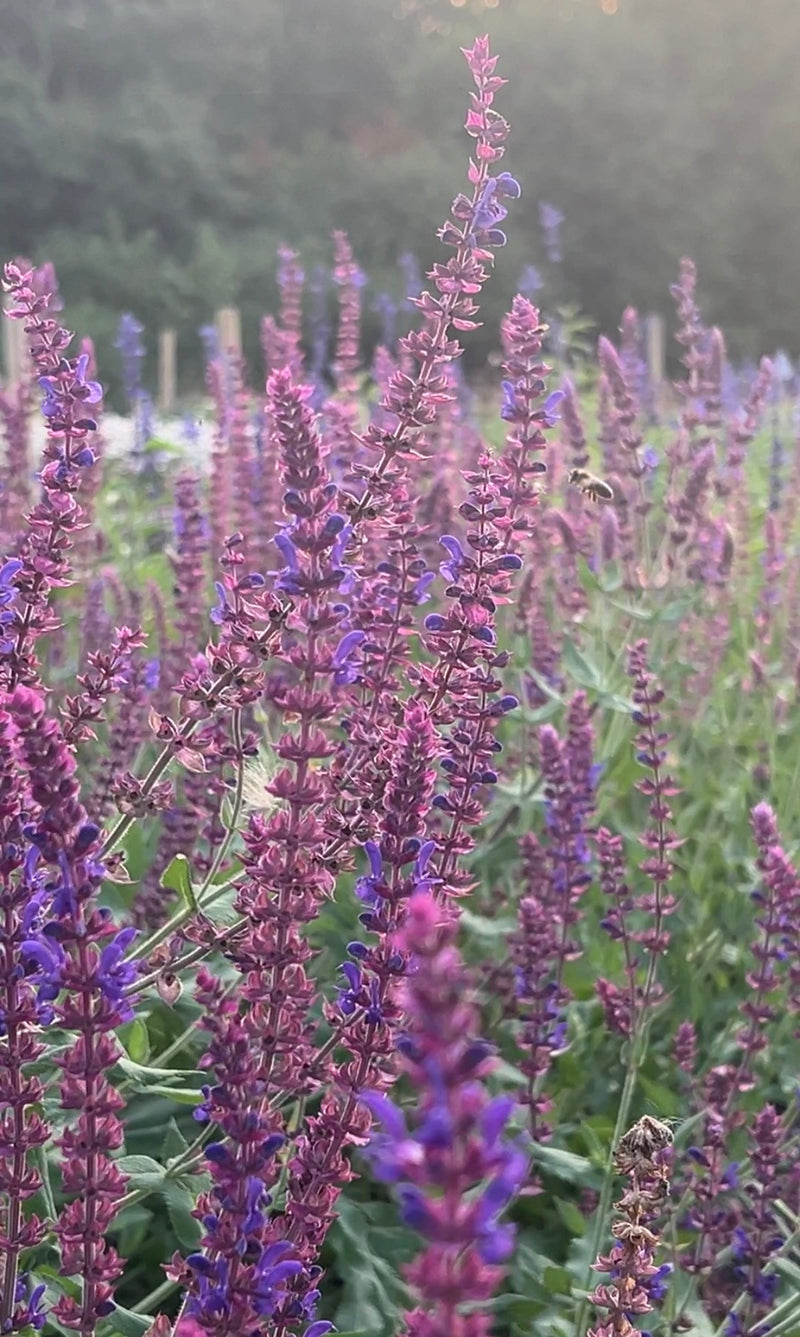


A Note on Sweet Peas
For the full how-to on sweet peas — autumn and spring sowing options, root trainers, planting out timing, and the daily cutting routine that keeps them flowering all summer — our complete Sweet Peas Pillar Guide sits permanently on the growing-guides blog. Add a sweet pea to your basket here and that guide will see you through from seed to bouquet.
Your Quick Reference Table
For when you just need the bullet points — what to do for the most common cottage cutting garden plants, at a glance.
| Plant | Pinch Out? | Deadhead? |
|---|---|---|
| Cosmos | Yes — at 15–20cm tall | Yes — every 2–3 days; or cut for the vase |
| Sweet peas | Yes — at 4 pairs of true leaves | Cut every other day, even if no vase needed |
| Salvias | Not usually | Yes — cut spent spikes back to base for side spikes |
| Snapdragons (Antirrhinum) | Yes — at 15cm tall | Yes — cut spent spires to first side-shoot |
| Zinnias | Yes — at 15cm tall | Yes — cut for the vase, generously |
| Calendula | No — branches naturally | Yes — every few days, very responsive |
| Cornflowers | Yes — at 15–20cm tall | Yes — keeps them flowering for weeks longer |
| Larkspur | No — flowers on main stem | Cut main spike; side spikes follow |
| Ammi majus | No — single stem, branches itself | Optional — but generous cutting helps |
| Nigella | No — leave for seedheads | No — leave to develop seedheads |
| Sunflowers (multi-stem) | Yes — at 30cm tall | Cut for vase, then leave heads for birds |
| Sunflowers (single-stem) | No — single flower at top | Leave heads for birds in autumn |
| Achillea | No | Yes — cut spent flat heads for repeat bloom |
| Dahlias | Yes — at 30–40cm tall | Yes — cut for vase, deadhead religiously |
| Sweet williams (biennials) | Yes — in year-one rosette | Cut for vase; deadhead for second flush |
| Echinops, Honesty, Poppies, Scabious 'Paper Moon' | No | No — leave for seedheads, structural autumn display |
The Bottom Line
If you remember only one thing from this entire guide, let it be this: pinch your cosmos, snapdragons, zinnias, cornflowers and dahlias at 15–20cm tall, and cut your sweet peas every other day. Those five plants, those two habits alone, will transform your cutting garden harvest by genuinely twofold. Everything else in this guide is icing on the cake.
Five minutes a week. A pair of snips. Almost twice the flowers.
Every cottage gardener who plants cosmos, sweet peas, salvias or snapdragons can double their summer harvest with the two small habits in this guide. Our cutting-garden range is selected for the plants that reward these techniques most generously — chosen at Salle Moor Hall Farm for proven performance in UK gardens. Whichever plants you choose, the principles in this guide apply.
Shop the Cutting Garden →
1 comment
Good morning I have just been reading your guide on dead heading versus pinching out. I have been gardening for over sixty years but as they say one can always learn something new everyday and certainly have from your amazing blog. I will be slowly progressing through all your brilliant guides – new bedtime reading – a change from seed catalogues and the old gardening books I have collected through the years and no doubt learning from your experiences. There are also all those new seed packets to consider on your super website. Thank you for all the inspiration you have created in me especially after the last few broiling days here on the South coast when so much has suffered in the relentless heat. Regards DIANA