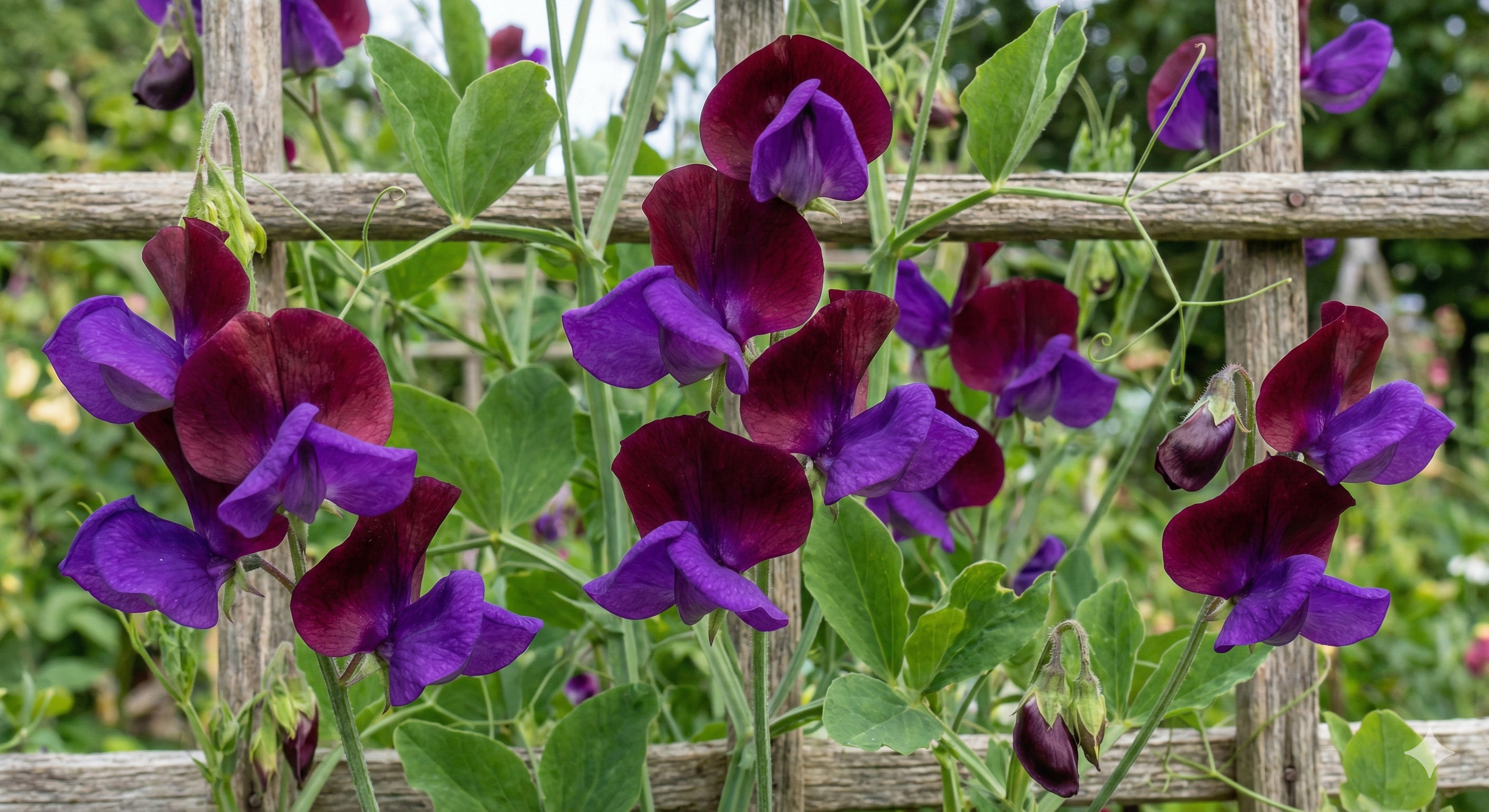
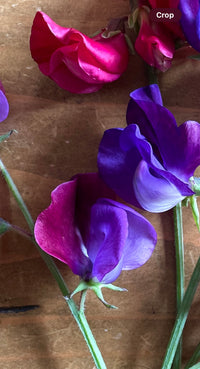
Sweet Pea Purple Pimpernell – purple and burgundy flowers climbing a wooden trellis

Sweet Pea Purple Pimpernell

£2.20
Skip to product information
Sweet Pea Purple Pimpernell – purple and burgundy flowers climbing a wooden trellis
RHS Plants for Pollinators

Sweet Pea Purple Pimpernell

Lathyrus odoratus 'Purple Pimpernell' — Hardy Annual H3; Spencer type; velvety deep purple

Large fragrant flowers in rich velvety deep purple — the dramatic cottage Sweet Pea with sun-stable saturated colour and long Spencer-quality cutting stems.

£2.20

Free UK delivery on seed orders over £30

Dispatched from our Norfolk farm — Royal Mail, usually within one working day.

Your growing year

Sow, plant out and flowering months for this variety

Jan
Feb
Mar
Apr
May
Jun
Jul
Aug
Sep
Oct
Nov
Dec
Sow
Plant out
In flower
SowPlant outIn flower

At a glance

Height
1.8-2.4m
Spread
30cm
Spacing
20-30cm
Position
They perform best in full sun, ideally receiving at least 6 hours of direct sunlight a day.
Colour
Purple
Seeds per packet
20
Soil
They demand moist soil to support their thirsty root system, but the roots must not become waterlogged or they will rot.
Grow guide How to grow Sweet Pea Purple Pimpernell Read the full guide →

About this variety

Large fragrant flowers in a rich velvety deep purple with a slight sheen, and the colour holds without fading in bright sun, which purples frequently do not. On long sturdy Spencer stems, climbing to 2.4m in a season.

A wall of this is a genuinely different thing from a wall of pink sweet peas. It reads as sophisticated rather than nostalgic and it suits a modern scheme, though like any dark flower it needs something pale nearby or it disappears into its own foliage at any distance.

Being vigorous, it will cover a trellis, an arch or a wire fence in one season and flower from June to the first frosts. Sweet peas want the richest ground in the garden, so dig plenty of well-rotted manure or compost into the trench before planting, and give it a support that will take the weight, because a mature vine in full leaf catches a lot of wind.

Pick every flower as it opens. A single seed pod is enough to end the season.
RHS Plants for Pollinators

This plant has been assessed by the Royal Horticultural Society and recommended as especially beneficial to bees, butterflies and other pollinators. Growing plants like this directly supports UK pollinator populations — something close to our hearts at Salle Moor Hall Farm, where we see the difference a cottage garden full of the right plants can make.

Learn more at RHS.org.uk →