
Cobaea scandens 'Purple' Seeds
If you have an ugly fence, a bare trellis, or an archway that needs covering fast, the Cup and Saucer Vine is your answer. This vigorous climber produces masses of lush, tropical foliage and huge, bell-shaped flowers that look like they belong in a jungle.
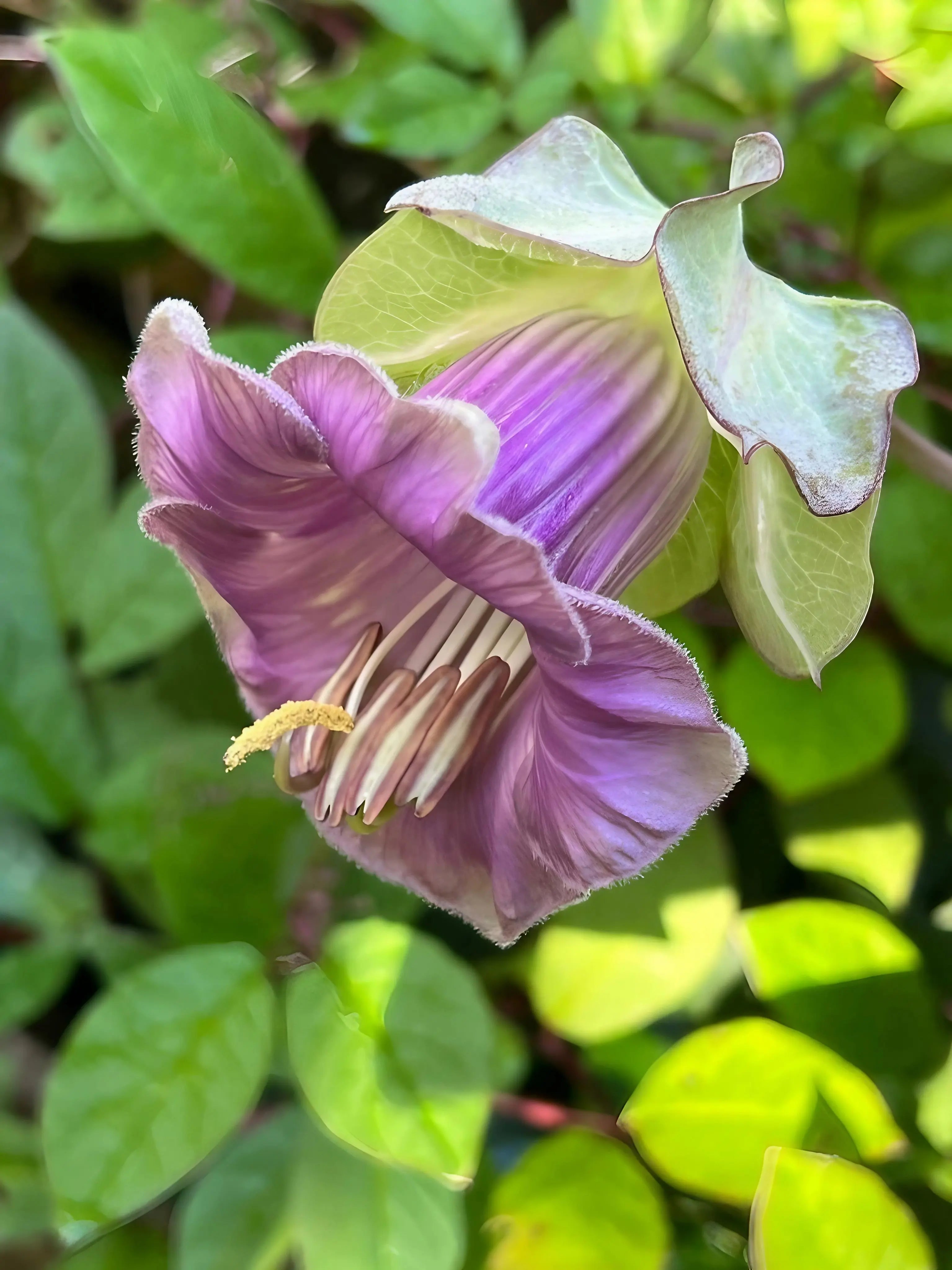
The blooms are fascinating to watch. They emerge as a pale, creamy green "cup" resting on a green "saucer" (calyx). As they mature over a few days, the cup floods with colour, turning a deep, rich inky-purple. It blooms late in the season (August to the first frosts), providing a spectacular finale to the gardening year when other climbers are fading.
Read More
🌿 Understanding the Plant
Cobaea scandens is a Half-Hardy Annual (in the UK).
In its native Mexico, it is a perennial woody vine. In our climate, it grows rapidly from seed, flowers its socks off, and is killed by the first hard frost. It needs a long growing season to flower, so it must be started early indoors.
The "Gripper": This vine climbs using tendrils that branch out and hook onto anything they touch. It is self-clinging but needs a rough surface (trellis, wire, or netting) to grab onto.
🌱 Growing Guide: How to Sow and Grow
Crucial Tip: These seeds are large and flat. If you lay them flat on wet compost, they will rot. Always push them into the soil vertically (on their edge) so water runs off them.
Germination:
Sow indoors early, from January to March. Sow one seed per small pot. They need warmth (20-25°C) to germinate, so a heated propagator or a warm airing cupboard is ideal. Germination takes 14-21 days.
Where to Sow:
They need a sunny, sheltered spot. They will sulk in the shade. Plant them out only when all risk of frost has passed (late May/June).
Care While Growing:
Potting On: These grow fast! You will likely need to pot them on into larger containers with a small cane for support before it's warm enough to plant them outside.
Feeding: Feed with a tomato fertiliser once the first flower buds appear to encourage blooms.
📋 Plant Specifications
| Latin Name | Cobaea scandens |
| Common Name | Cup and Saucer Vine / Cathedral Bells |
| Hardiness | H2 (Half-Hardy - Needs Frost Protection) |
| Light Required | Full Sun ☀️ |
| Height | ↕️ 3m - 4m (Very Tall) |
| Spread | ↔️ 1.5m |
| Spacing | 🌱 60cm apart |
| Great for | 🧱 Covering Fences ⛩️ Arches & Pergolas 🌺 Exotic Gardens 📅 Late Summer Colour |
| Seed Count | Approx. 15 seeds per packet (Large seeds) |
🤝 Perfect Garden Companions
Since Cobaea flowers late in the season (August onwards), the key to creating a display that looks good all summer is to pair it with earlier-flowering companions that bloom in June-July, then gracefully hand over the show to the Cobaea as they fade:
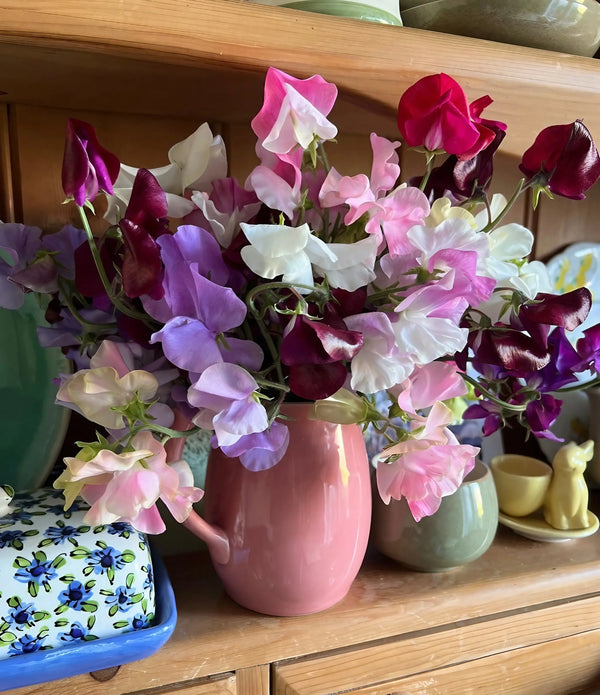
- 🌸 Sweet Pea 'Old Spice Starry Night': The Early Shift! This is the perfect succession planting strategy for keeping your trellis beautiful from June through to the first frosts. Sweet Peas are the quintessential early-summer climber, producing masses of fragrant, ruffled blooms from June onwards, but they have an Achilles heel—they fade badly in the heat of July and August, leaving you with tatty, yellowing foliage and bare stems by late summer. This is where the genius of this pairing lies. Plant Sweet Peas and Cobaea seedlings on the same trellis or support structure in spring. The Sweet Peas will race away first, flowering beautifully from June-July whilst the slower-growing Cobaea is still establishing its root system and building up foliage. As the summer heat intensifies and the Sweet Peas begin to struggle and fade (usually mid-July), the Cobaea hits its stride, producing lush tropical foliage that quickly covers the dying Sweet Pea stems, and then from August onwards it erupts into flower, creating a spectacular late-summer display exactly when the Sweet Peas have finished. The result is continuous colour on the same support from June to October—no gaps, no ugly bare patches, just a seamless handover from one climber to the next. 'Old Spice Starry Night' is a particularly good choice for this pairing because it belongs to the Grandiflora-type Sweet Peas which are famous for their exceptional fragrance (stronger than modern Spencer types) and better heat tolerance than standard varieties, meaning they'll last a bit longer into summer before handing over to the Cobaea. The colour palette is stunning—'Starry Night' produces romantic bicolour blooms in velvety shades of deep violet, indigo, maroon, and purple, creating a moody, dramatic display that complements the deep inky-purple bells of the Cobaea beautifully. The visual contrast works wonderfully too: the delicate, ruffled, small-petaled Sweet Peas create soft, romantic clusters in early summer, whilst the bold, architectural, cup-shaped Cobaea bells provide structural drama in late summer. Both are climbers that use the same support structure, so planting them together is space-efficient—you get two plants' worth of flower power from one trellis. Growing requirements are compatible with careful timing: both need to be sown indoors early in the year (Sweet Peas in October-November for autumn sowing or January-March for spring sowing, Cobaea in January-March), and both need full sun and a sturdy support structure to climb. The key difference is hardiness: Sweet Peas are hardy annuals that can be planted out in early spring (March-April), whilst Cobaea is half-hardy and must wait until all frost risk has passed in late May-June before planting out. This timing difference actually works perfectly—the Sweet Peas get a head start, establish quickly, and begin flowering first, whilst the Cobaea takes its time to catch up and then takes over later. For maintenance, the Sweet Peas require regular deadheading and picking to prolong flowering, whilst the Cobaea is relatively low-maintenance once established but benefits from feeding with tomato fertilizer once buds appear. The succession planting creates not just visual continuity but also ecological benefits—Sweet Peas attract bees and butterflies in early summer with their fragrant blooms, whilst Cobaea provides late-season nectar for pollinators preparing for winter. For best results, sow Sweet Peas in autumn or early spring, plant them out first in early spring, then plant Cobaea seedlings at the base of the same support in late May-June, and watch as they create a perfectly choreographed seasonal display that keeps your trellis beautiful from June to the first frosts.
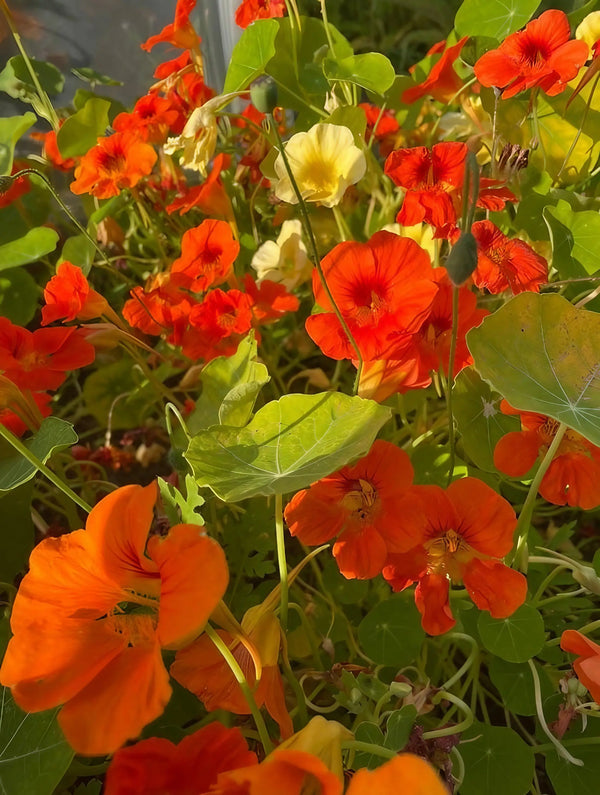
- 🏵️ Nasturtium 'Tom Thumb': The Ground Cover! This pairing solves one of Cobaea's most common aesthetic problems—the "bare legs" issue. Like many vigorous climbing plants, Cobaea puts all its energy into growing upwards towards the light, which means the base of the plant often becomes bare and woody-looking, with the lower foliage dropping off by mid-summer and leaving exposed stems that can look untidy. The solution is to plant a colourful, low-growing ground cover at the base to hide the bare stems whilst adding a complementary colour splash. 'Tom Thumb' is the perfect candidate for this job. Unlike the unruly trailing nasturtium varieties that scramble everywhere, 'Tom Thumb' is a specially bred compact, dwarf variety that forms neat, tidy mounds (20-30cm tall and 30-45cm wide) of round, lily-pad-shaped leaves topped with masses of vibrant, trumpet-shaped flowers in fiery shades of orange, scarlet, and yellow. These cheerful, warm-toned blooms create a stunning colour contrast with the deep inky-purple bells of the Cobaea above—the orange and yellow nasturtiums provide bright, warm, sunny notes at ground level, whilst the purple Cobaea creates cool, sophisticated drama overhead, resulting in a classic complementary colour scheme that's visually striking without being overwhelming. The height layering is perfect: the low-growing nasturtium carpet (20-30cm) completely covers the bare base of the tall Cobaea vine (3-4m), creating natural visual layering and ensuring the display looks full and lush from top to bottom rather than bare and leggy. The textural contrast is equally effective: the bold, rounded lily-pad leaves of the nasturtium create solid, mounded shapes at ground level, whilst the delicate tendrils and large bell-shaped flowers of the Cobaea create vertical interest above. Both plants also share a love of poor soil—this is one of those rare pairings where the "Treat Mean, Keep Keen" rule applies to both species! Nasturtiums famously hate rich soil (it makes them produce leaves at the expense of flowers) and thrive in poor, dry, gritty conditions, whilst Cobaea also prefers lean soil and doesn't need feeding until it begins to flower. This makes them perfect companions culturally—you can grow them together in the same poor, well-drained soil without worrying about one outcompeting the other. Growing requirements align beautifully: both are half-hardy annuals that must be sown indoors in spring (Cobaea January-March, Nasturtiums March-April) and planted out only after all frost risk has passed in late May-June. Both demand full sun and excellent drainage, both are drought-tolerant once established, and both are essentially "plant and forget" performers that reward minimal effort with maximum impact. The flowering times also work perfectly together—Nasturtiums flower from June onwards (providing colour whilst the Cobaea is still establishing), whilst Cobaea flowers from August onwards, creating continuous colour from June to the first frosts. Both are also wildlife champions: Nasturtiums hold RHS Plants for Pollinators status and attract bees, butterflies, and hoverflies, whilst Cobaea provides late-season nectar for pollinators preparing for winter, so planting them together creates a buzzing ecosystem of beneficial insects. There's also a brilliant practical benefit to this pairing—Nasturtiums are edible! Every part of the plant is edible (leaves taste like peppery watercress, flowers add colour to salads, seeds can be pickled as "poor man's capers"), so whilst you're growing a beautiful ornamental display, you're also creating a productive edible garden at the base of your climber. For best results, plant Cobaea seedlings at the base of your trellis in late May-June, then direct-sow Nasturtium seeds in a ring around the base of the Cobaea vine (they hate transplanting so direct sowing is essential), spacing them 15-20cm apart, and watch as they create a cheerful, fiery carpet that perfectly frames the exotic purple bells above whilst hiding the bare stems below.
📅 Sowing & Flowering Calendar
Sow indoors Jan-March. Plant out June. Flowers Aug-Nov.
| Month | J | F | M | A | M | J | J | A | S | O | N | D |
|---|---|---|---|---|---|---|---|---|---|---|---|---|
| Sow Indoors | ✓ | ✓ | ✓ | |||||||||
| Plant Out | ✓ | |||||||||||
| Flowers | ✓ | ✓ | ✓ | ✓ |
Not a Cut Flower
While beautiful on the vine, Cobaea flowers do not last long when cut. Enjoy them in the garden rather than the vase!
Officially Recognised Excellence
This plant is an RHS Award of Garden Merit (AGM) winner, certifying it as a reliable, high-performing plant for British gardens.
Need more detailed growing advice?
Visit our comprehensive growing guides at bishybarnabeescottagegarden.com
- Regular price
-
£2.40 - Regular price
-
- Sale price
-
£2.40
Couldn't load pickup availability
5.0 / 5.0
(2) 2 total reviews


Cobaea scandens Purple
- Regular price
-
£2.40 - Regular price
-
- Sale price
-
£2.40
Looking forward to sowing these think they will look fantastic covering a border fence
All seeds are growing beautifully. I bought seeds from other BIG flower company, only 3 growing from 30. So I'll buy my seeds here in the future