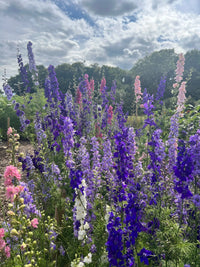


Larkspur Giant Imperial Mix
Consolida ajacis Giant Imperial Mix
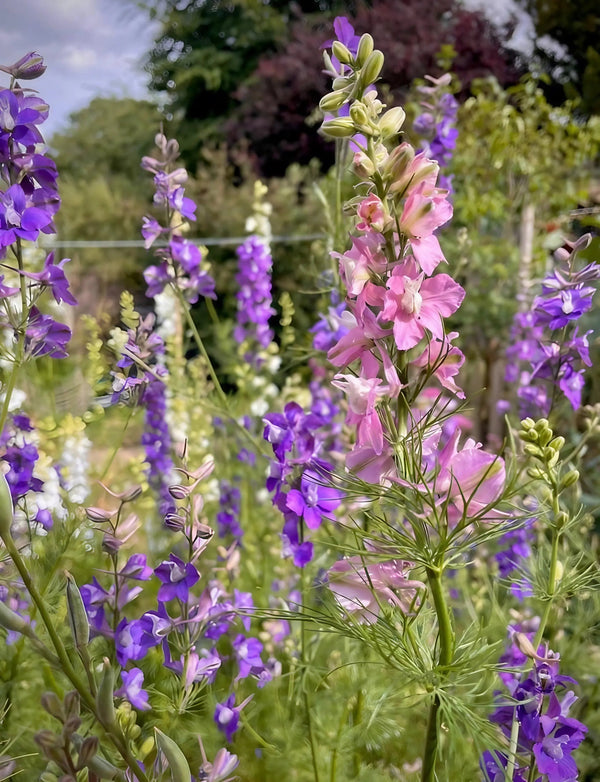
Tall sturdy spires packed with double ruffled flowers in violet, blue, pink, carmine and white — the basal-branching Larkspur giving multiple cutting stems per plant.
About this variety
Consolida ajacis 'Giant Imperial Mix' Branching Cut-Flower Larkspur 'Giant Imperial Mix'
The superior florist-quality strain that produces tall sturdy stems packed with fully double ruffled flowers in a romantic mix of violet, deep blue, rose pink, carmine and pure white — but with a key cutting-garden advantage that distinguishes it from other Larkspurs: 'Giant Imperial' branches from the base, giving you multiple cutting stems from every single plant.
If 'Giant Hyacinth Mix' is the architectural single-stem column Larkspur, 'Giant Imperial' is the productive multi-stemmed cut-flower workhorse. Each plant produces 3–6 sturdy flowering stems from a basal branching structure, dramatically multiplying your cutting harvest from any given garden area. The fully-double ruffled flowers cover the upper portions of each stem in a romantic mix of violet, deep blue, rose pink, carmine and pure white — the classic full cottage Larkspur palette. Tall (90–120cm) with strong rigid stems that need minimal staking. Half-hardy annual relative of the Delphinium (H3), genetically a cool-season specialist. RHS Plants for Pollinators recognised — particularly loved by bumblebees and hoverflies for the deep nectar wells. Excellent fresh cut flower and dries beautifully for winter arrangements; traditionally used as biodegradable wedding confetti.
A note on growing
Larkspur seeds need darkness AND cool conditions to germinate. Direct sow outdoors in September (for the tallest, earliest, most floriferous plants) or March/April. Scatter seeds onto finely raked soil and cover completely with about 5mm of soil — light prevents germination. Direct sowing is strongly recommended — Larkspur has a sensitive taproot.
Larkspur seeds can enter deep dormancy if they get too warm. To guarantee germination success, place the sealed seed packet in the freezer for 7 days before sowing. This "cold shock" mimics a sharp frost and tells the seed that winter is over and it's time to grow.
Plant in full sun in fertile well-drained soil. As fast-growing tall plants, they are "hungry" — digging in well-rotted garden compost before sowing produces much thicker, more floriferous spires. In windy gardens, provide light support with birch twigs or garden twine while plants are still young.
To maximise cutting harvest: cut the main central stem first when about one-third of the flowers are open. This encourages the side branches to develop their own flowering spikes, extending your cutting season considerably.
⚠️ Toxicity warning: all parts toxic if ingested. Wash hands after handling. Keep away from children and pets.
Where it shines
In the cutting garden as the most productive Larkspur — the basal-branching habit means multiple cutting stems per plant, dramatically improving yield from limited space. At the back of cottage borders for vertical structure. As fresh cut flowers with exceptional vase life and dramatic vertical presence. Dried for winter arrangements. As biodegradable wedding confetti — the dried petals retain their colour and create a properly cottage-garden alternative to commercial confetti. In wildlife gardens for bumblebee support.
Plant alongside
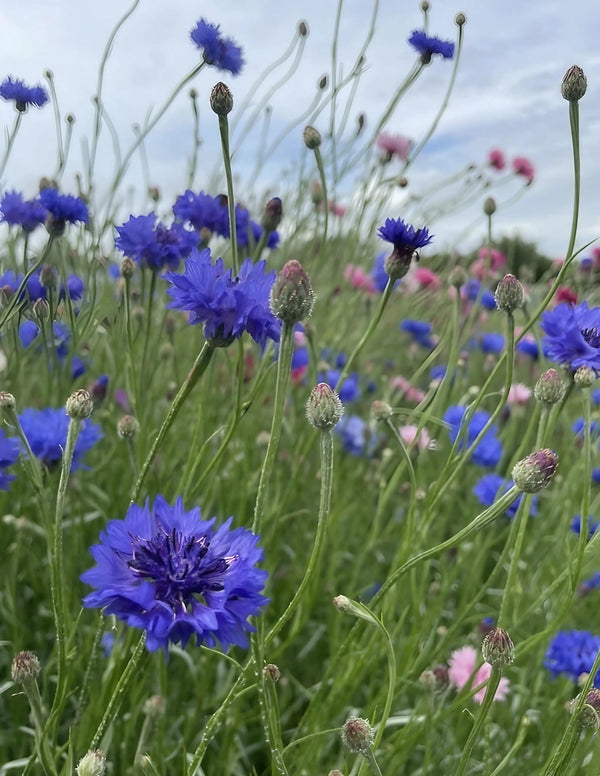
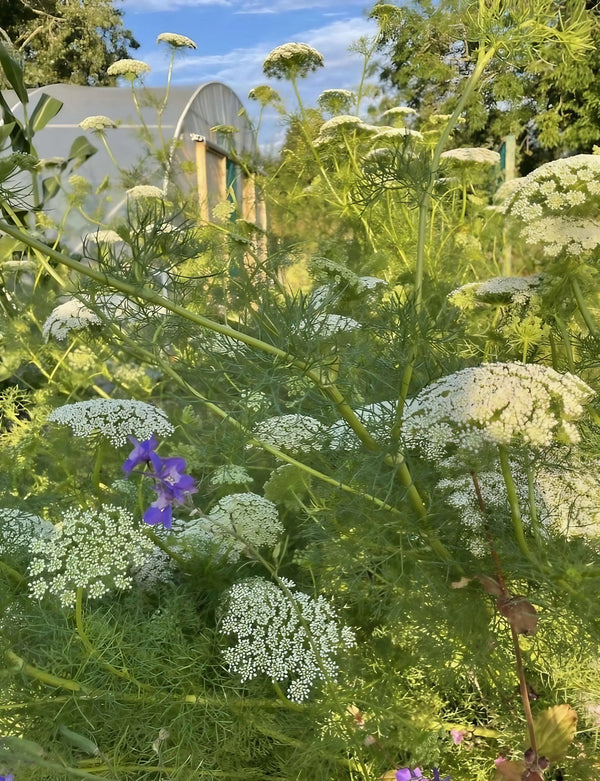
The traditional cottage cutting duo: pair 'Giant Imperial Mix' with Cornflower 'Blue Ball' — Cornflowers and Larkspur are the classical English meadow border combination, with the round heads of the Cornflower contrasting perfectly against the vertical Larkspur spikes. For the complete romantic cutting trio, add Ammi majus (airy white filler) to knit the planting together. With Hollyhock 'Summer Carnival' as the towering Year-1-flowering anchor behind for layered architectural drama.
Plant alongside
Larkspur Giant Imperial Mix pairs beautifully with these cottage garden classics

RHS Plants for Pollinators
This plant has been assessed by the Royal Horticultural Society and recommended as especially beneficial to bees, butterflies and other pollinators. Growing plants like this directly supports UK pollinator populations — something close to our hearts at Salle Moor Hall Farm, where we see the difference a cottage garden full of the right plants can make.
Learn more at RHS.org.uk →