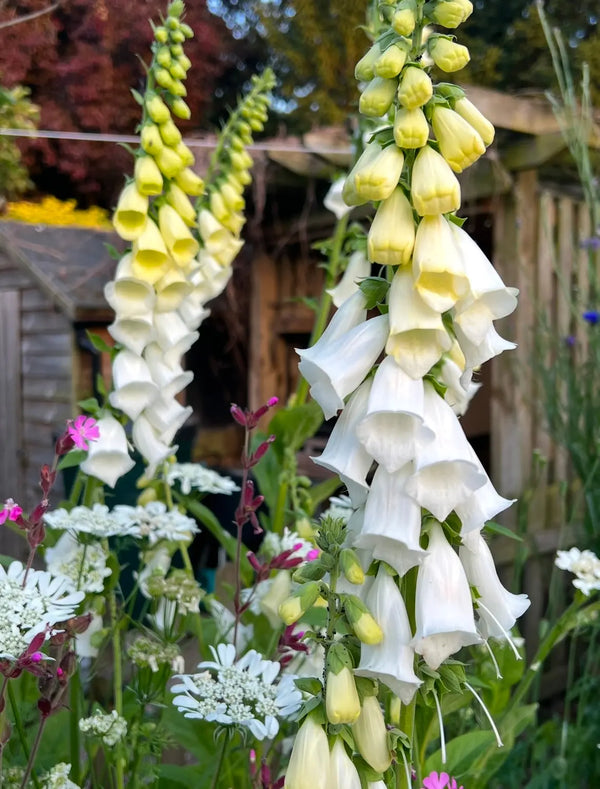
Tall Foxglove Excelsior Mix flowers from Bishy Barnabees Cottage Garden display tubular white, yellow, and pink blooms in the garden, surrounded by green leaves with trees and a building softly blurred in the background.

Foxglove Excelsior Mix

£2.15
Skip to product information
Tall Foxglove Excelsior Mix flowers from Bishy Barnabees Cottage Garden display tubular white, yellow, and pink blooms in the garden, surrounded by green leaves with trees and a building softly blurred in the background.
RHS Plants for Pollinators

Foxglove Excelsior Mix

Digitalis purpurea 'Excelsior Mix' — improved heritage strain

3 reviews

The improved heritage Foxglove with horizontal flower placement — dense symmetrical spires up to 1.5m in cream, pink, rose and purple. The architectural cottage Foxglove.

£2.15

Free UK delivery on seed orders over £30

Dispatched from our Norfolk farm — Royal Mail, usually within one working day.

Your growing year

Sow, plant out and flowering months for this variety

Jan
Feb
Mar
Apr
May
Jun
Jul
Aug
Sep
Oct
Nov
Dec
Sow
Plant out
In flower
SowPlant outIn flower

At a glance

Height
Up to 1.5m
Spread
45cm
Spacing
50cm
Position
Shade to partial shade
Colour
Mixed
Seeds per packet
1,000
Soil
Moist, humus-rich soil
Grow guide How to grow Foxglove Excelsior Mix Read the full guide →

About this variety

The difference from a wild foxglove is where the bells sit. A wild plant hangs its flowers down one side of the stem. 'Excelsior' carries them all the way round, held out horizontally, so the spire is a dense even cylinder rather than a one-sided flag.

That gives you noticeably more flower per stem and a symmetrical, deliberate look at 1.2 to 1.5m, in cream, soft pink, deep rose and purple. It is the foxglove for a planting that is designed rather than allowed to happen, and for cutting, where a spire that looks the same from every side is worth having.

The flip side is that it loses some of the wild charm. If what you want is the plant that leans out of a hedge bank in June, the ordinary species does it better. The improved habit also softens over generations; self-sown offspring hold the colours reasonably well but drift back towards the one-sided wild arrangement.

Every part of a foxglove is highly toxic and eating any of it can be fatal. Wear gloves to handle the plants and keep the seed away from small children.

RHS Plants for Pollinators

This plant has been assessed by the Royal Horticultural Society and recommended as especially beneficial to bees, butterflies and other pollinators. Growing plants like this directly supports UK pollinator populations — something close to our hearts at Salle Moor Hall Farm, where we see the difference a cottage garden full of the right plants can make.

Learn more at RHS.org.uk →