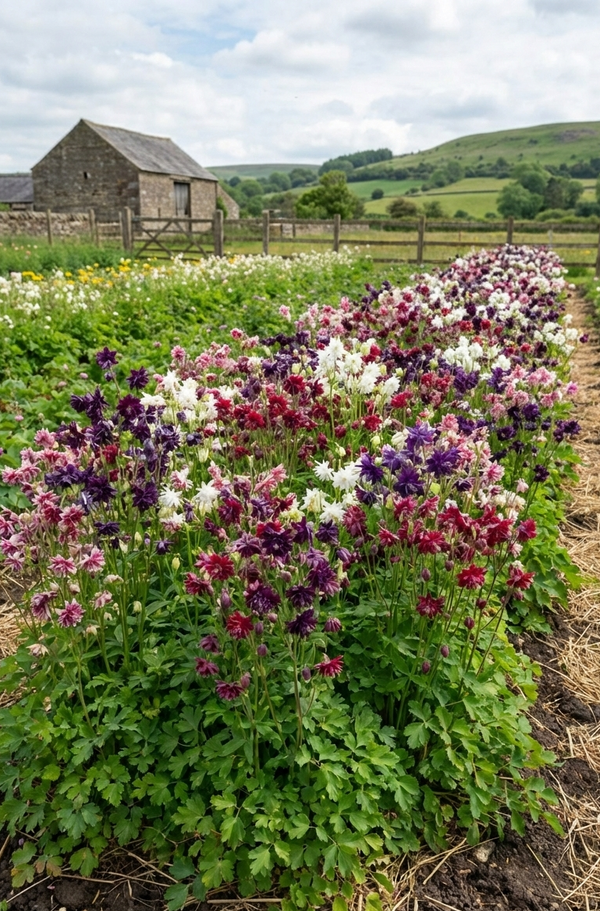
Aquilegia William Guinness (Aquilegia vulgaris) – deep purple and white bicolour flowers

Aquilegia William Guinness

£1.95
Skip to product information
Aquilegia William Guinness (Aquilegia vulgaris) – deep purple and white bicolour flowers
RHS Plants for Pollinators

Aquilegia William Guinness

Aquilegia vulgaris 'William Guinness' (syn. 'Magpie')

Jet-black and pure-white bicoloured flowers on tall airy stems — the most dramatic Granny's Bonnet in the cottage garden, and a true May showstopper.

£1.95

Free UK delivery on seed orders over £30

Dispatched from our Norfolk farm — Royal Mail, usually within one working day.

Your growing year

Sow, plant out and flowering months for this variety

Jan
Feb
Mar
Apr
May
Jun
Jul
Aug
Sep
Oct
Nov
Dec
Sow
Plant out
In flower
SowPlant outIn flower

At a glance

Height
60cm – 80cm
Spread
40cm – 50cm
Spacing
30cm-40cm
Position
Partial shade preferred for deepest colour; full sun tolerated
Seeds per packet
50
Grow guide How to grow Aquilegia William Guinness Read the full guide →

About this variety

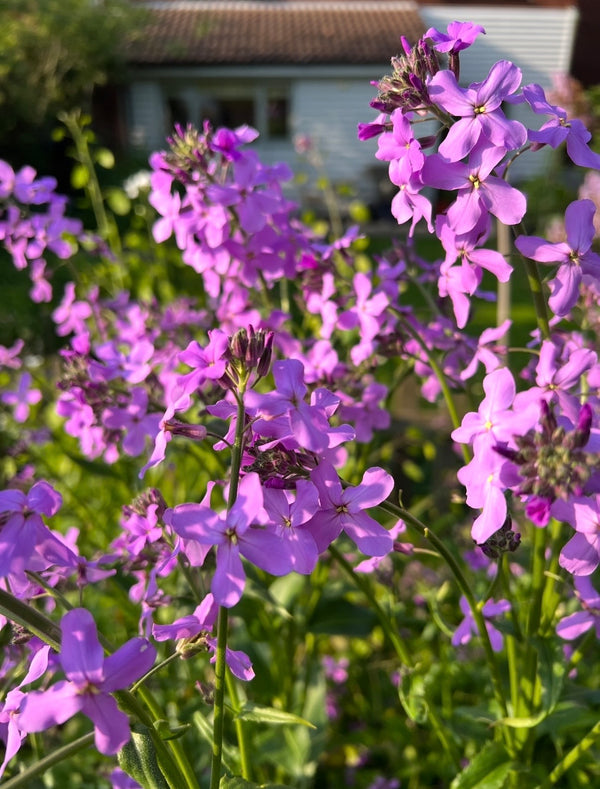
Deep purple-black petals edged in pure white, nodding on tall airy stems above the usual ferny aquilegia foliage. It goes by Magpie as often as by its proper name, and the reason is obvious the moment it opens.

Black flowers are difficult in a garden. They read as a hole at any distance and they disappear entirely against dark soil or an evergreen hedge. What makes this one work is the white edging, which draws the outline and stops the flower vanishing. Put it where the light comes from behind or beside it, and give it pale companions; against white or cream it is one of the most striking things you can grow from a packet.

The name commemorates a William Guinness, and there is rather more myth than fact about who he actually was. Some accounts say a nineteenth-century Irish gardener, others a member of the brewing family. Either way it has been a fixture of British cottage gardens for well over a century. Flowering is May into June and no longer, the foliage tires by late July, and self-sown seedlings will be crosses rather than copies.
RHS Plants for Pollinators

This plant has been assessed by the Royal Horticultural Society and recommended as especially beneficial to bees, butterflies and other pollinators. Growing plants like this directly supports UK pollinator populations — something close to our hearts at Salle Moor Hall Farm, where we see the difference a cottage garden full of the right plants can make.

Learn more at RHS.org.uk →