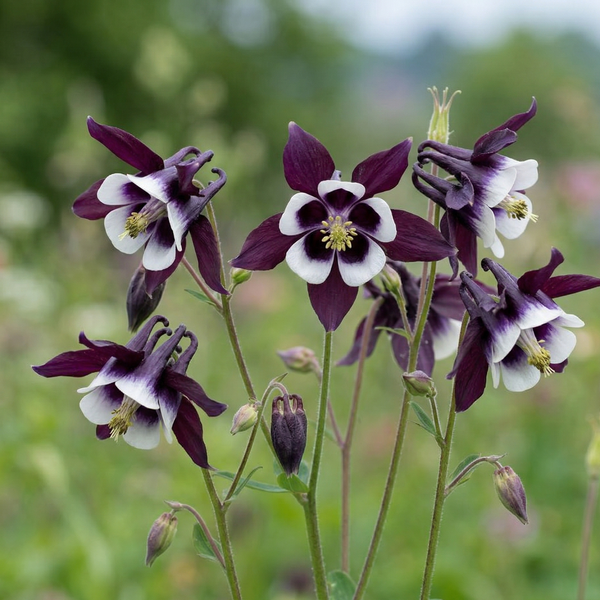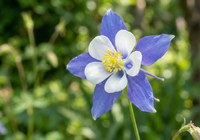
A close-up of Aquilegia Columbine Blue by Bishy Barnabees Cottage Garden Ltd, showing its blue and white petals with yellow stamens against a softly blurred green background.

Aquilegia Columbine Blue

£2.55
Skip to product information
A close-up of Aquilegia Columbine Blue by Bishy Barnabees Cottage Garden Ltd, showing its blue and white petals with yellow stamens against a softly blurred green background.
RHS Plants for Pollinators

Aquilegia Columbine Blue

Aquilegia 'Columbine Blue'

1 reviews

Classical white-and-powder-blue spurred flowers on graceful stems — the traditional Granny's Bonnet that has been grown in British cottage gardens for 400 years.

£2.55

Free UK delivery on seed orders over £30

Dispatched from our Norfolk farm — Royal Mail, usually within one working day.

Your growing year

Sow, plant out and flowering months for this variety

Jan
Feb
Mar
Apr
May
Jun
Jul
Aug
Sep
Oct
Nov
Dec
Sow
Plant out
In flower
SowPlant outIn flower

At a glance

Height
60–75cm
Spread
35cm
Spacing
40cm
Position
Full sun to partial shade
Colour
Blue
Seeds per packet
50
Soil
Fertile, moist but well-drained; humus-rich preferred
Grow guide How to grow Aquilegia Columbine Blue Read the full guide →

About this variety

The classical spurred granny's bonnet: nodding flowers in white with soft powder-blue spurs, on fine stems above light green divided foliage. This is the original form, grown in British gardens for four hundred years, and the shape the Barlow doubles were bred away from.

The five spurs arranged in a ring are what gave the plant its common name. Columba is Latin for dove, and the old herbalists thought the flower looked like a circle of doves drinking together. Once you have seen it you cannot unsee it.

It is a plant for dappled shade under deciduous trees and at a woodland edge, hardy to anything a British winter offers, and it cuts well; the nodding heads bring a looseness to a spring vase that stiffer flowers cannot. Be realistic about the season though. It flowers in May and June and that is the whole of it, and by late July the foliage looks tired and often mildewed. Cut it to the ground and it makes a fresh rosette. Aquilegias cross freely with anything nearby, so seedlings will be their own thing rather than this one.
RHS Plants for Pollinators

This plant has been assessed by the Royal Horticultural Society and recommended as especially beneficial to bees, butterflies and other pollinators. Growing plants like this directly supports UK pollinator populations — something close to our hearts at Salle Moor Hall Farm, where we see the difference a cottage garden full of the right plants can make.

Learn more at RHS.org.uk →