

Forget-me-not Blue
Myosotis sylvatica — woodland forget-me-not; forget-me-not blue
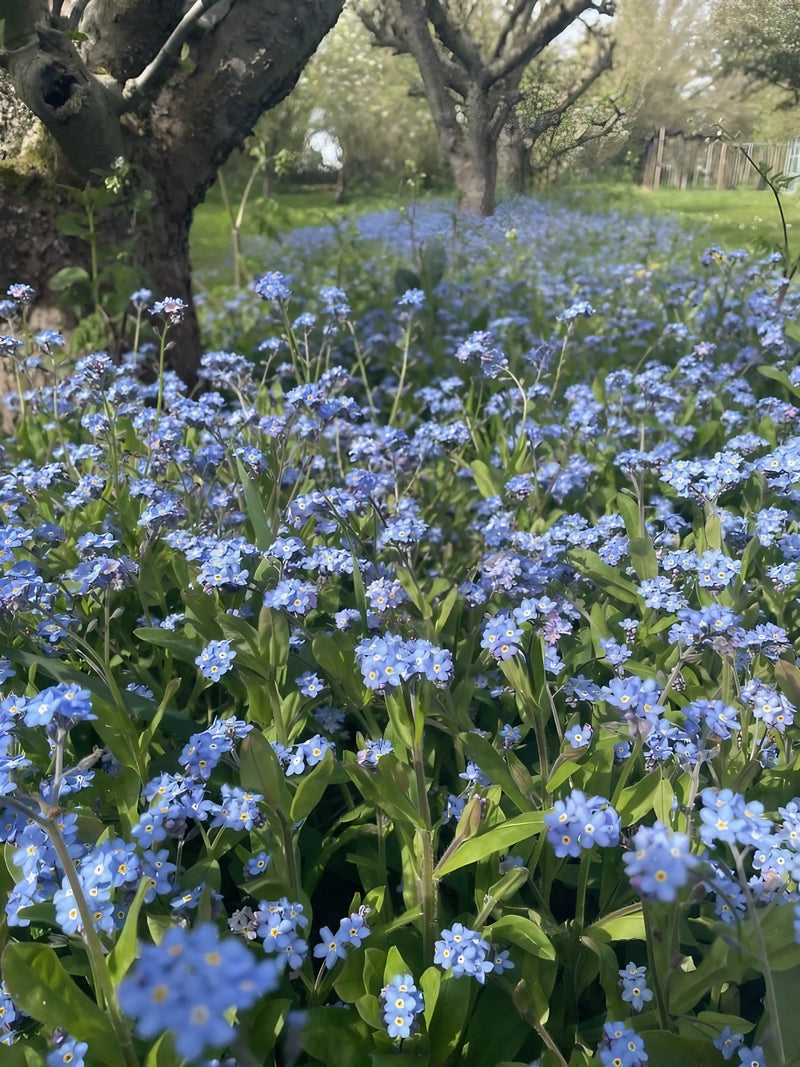
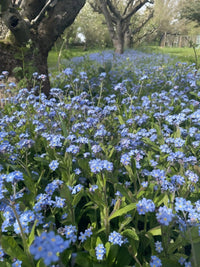
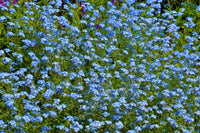
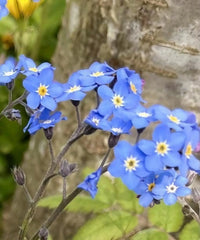
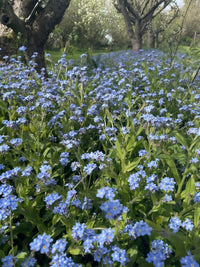
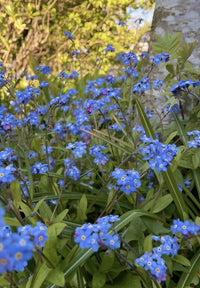
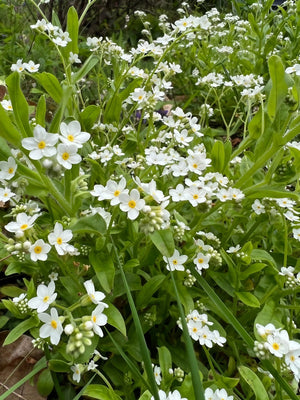
A nostalgic spring carpet of intense clear blue with yellow eyes — the classic English Forget-me-not for cottage borders, woodland edges, and tulip underplanting.
About this variety
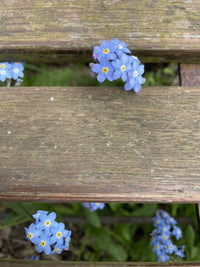
Clouds of tiny five-petalled flowers in a clear saturated blue, each with a small yellow eye, carpeting shady corners from April through June at 20 to 30cm. Under tulips it is such a standard pairing that it has become a cliché, and like most garden clichés it got there by being right.
It is a biennial. Sown from May to July it makes a low rosette through summer and autumn, sits out the winter without protection, flowers the following spring, sets seed and dies. It drops hundreds of seeds while it does it, so a garden that has forget-me-nots once tends to have them permanently. That is really the whole management question with this plant. You are not deciding whether to grow it, you are deciding whether to let it stay.
Be ready for how it finishes. By late June the plants are mildewed, grey and thoroughly unattractive, and they want pulling out and composting rather than leaving to look at. Pull them before the seed is fully shed if you want fewer next year, and after, if you want more. It is one of the earliest food sources for solitary bees, which is worth something in April.
Plant alongside
Forget-me-not Blue pairs beautifully with these cottage garden classics

RHS Plants for Pollinators
This plant has been assessed by the Royal Horticultural Society and recommended as especially beneficial to bees, butterflies and other pollinators. Growing plants like this directly supports UK pollinator populations — something close to our hearts at Salle Moor Hall Farm, where we see the difference a cottage garden full of the right plants can make.
Learn more at RHS.org.uk →