


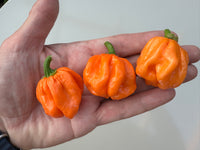
About this variety
Most scotch bonnets sold as seed are just that — "scotch bonnet", a type rather than a variety, and what comes up can be anything from a squat yellow pod to something much closer to a habanero. Freeport is a named Jamaican selection, which means it has been kept true and comes up the same every time. That consistency matters more here than with almost any other chilli, because the scotch bonnet is doing something a habanero does not: carrying a tropical, almost floral perfume underneath a genuinely serious heat, and doing it reliably.
The flavour arrives before the burn, which is the whole point of the pepper. There is a sweetness and a fruitiness that reads as tropical, with a lift at the back most people call floral. Then the heat follows, and it is the real thing. This is the pepper that jerk is built on, and if you have ever wondered why a homemade jerk marinade tastes flat, this is usually the missing part. Blitzed with allspice, thyme, ginger and spring onion it makes the marinade whole. It also makes the kind of island pepper sauce you keep on the table and put on everything.
Be patient at the start. Chinense seed is slow, and this one is slower than most: allow up to four weeks at 25-28C before you give up on a tray, and keep the warmth steady rather than letting it swing overnight. Sow in January so the plant has the whole season ahead of it. In the UK it wants to stay under cover from start to finish, in a greenhouse or polytunnel, because the pods need warmth well into autumn to colour and sweeten. Given that, it crops steadily into October. Grow it if you cook Caribbean food and have somewhere warm to keep it.


