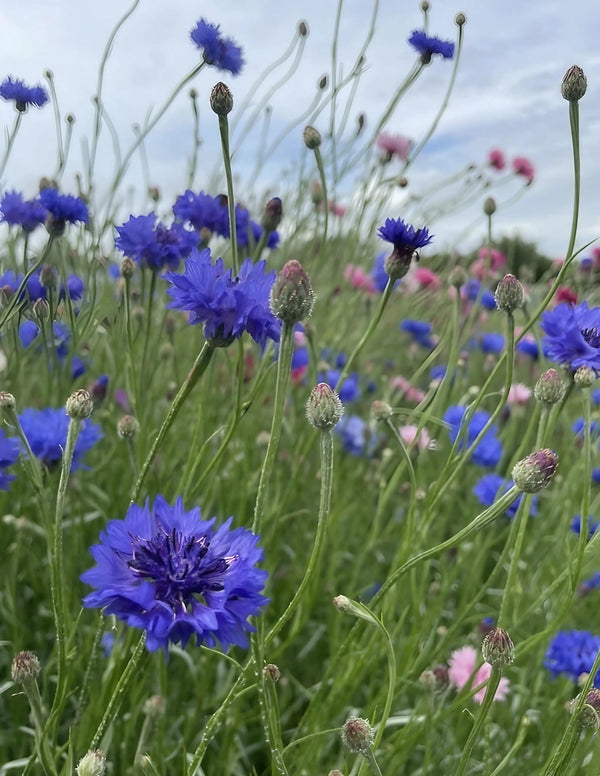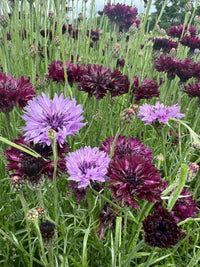
Cornflower Black & Mauve Mix (Centaurea cyanus) – light purple and deep burgundy flowers in a field

Cornflower Black & Mauve Mix

£2.30
Skip to product information
Cornflower Black & Mauve Mix (Centaurea cyanus) – light purple and deep burgundy flowers in a field
RHS Plants for PollinatorsBeginner friendly

Cornflower Black & Mauve Mix

Centaurea cyanus — Cornflower, Black Ball + Mauve Ball mix

1 reviews

A curated blend of deep maroon 'Black Ball' and dusty lilac 'Mauve Boy' — the vintage cornflower mix that makes ready-made designer bouquets straight from the cutting patch.

£2.30

Free UK delivery on seed orders over £40

Dispatched from our Norfolk farm by Royal Mail, usually within one working day.

Your growing year

Sow, plant out and flowering months for this variety

Jan
Feb
Mar
Apr
May
Jun
Jul
Aug
Sep
Oct
Nov
Dec
Sow
Plant out
In flower
SowPlant outIn flower

At a glance

Height
75–90cm
Spread
30cm
Spacing
30cm
Position
Full sun
Colour
Lilac, Mixed, Purple
Seeds per packet
200
Soil
Lean, well-drained — no manure or fertiliser; poor soil produces best plants
Grow guide How to grow Cornflower Black & Mauve Mix Read the full guide →

About this variety

Two varieties in one packet: the near-black 'Black Ball' and the dusty lilac 'Mauve Boy', put together because they do something for each other that neither does alone. The dark gives the planting weight and the mauve stops it going funereal.

Both are double Ball types, considerably fuller than a wild cornflower, on silver-green stems long enough to cut. Pick a handful, drop them in a jug, and you have something that looks like it cost money. That is the whole appeal of this mix.

What you cannot do is control the ratio. It comes as a blend rather than as two packets, so some rows come out heavier on the dark and some on the mauve, and there is no sorting at the seedling stage because the colour does not show until the buds open. If you need a particular balance, grow the two separately and combine them in the vase. Keep cutting or deadheading either way. A cornflower left to set seed decides it has finished, and a plant that stops in July gives you nothing in September.
Plant alongside

Chosen by us, not by an algorithm

RHS Plants for Pollinators

This plant has been assessed by the Royal Horticultural Society and recommended as especially beneficial to bees, butterflies and other pollinators. Growing plants like this directly supports UK pollinator populations — something close to our hearts at Salle Moor Hall Farm, where we see the difference a cottage garden full of the right plants can make.

Learn more at RHS.org.uk →
  • 5 stars: 1 (100%)
  • 4 stars: 0 (0%)
  • 3 stars: 0 (0%)
  • 2 stars: 0 (0%)
  • 1 star: 0 (0%)