Oxeye Daisy Seeds
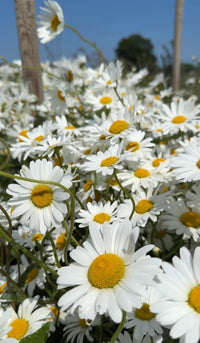
The Oxeye Daisy (also known as the Moon Daisy or Dog Daisy) is the definitive wildflower. It produces large, cheerful flower heads with pure white petals surrounding a vibrant yellow eye. These bob and sway on tall, wiry stems, creating that classic, rippling meadow effect in the breeze.
This is the backbone of any rewilding project. It is a tough, vigorous native perennial that establishes quickly and returns year after year, expanding to form large, weed-suppressing clumps. Whether you have a dedicated meadow, a wild corner, or just a sunny border that needs brightening up, this plant guarantees a display from May right through to September.
Read More
🌿 Understanding the Plant
Oxeye Daisy is a Hardy Perennial.
It dies back to a low rosette of green leaves in winter and shoots up tall flower stems in spring.
The Spreader: It spreads via underground rhizomes and by self-seeding. This makes it brilliant for filling space, but do give it room! It effectively "knits" a wildflower patch together.
Top Tip: Don't feed it! Like most wildflowers, it thrives in poor, low-nutrient soil. If you put it in rich, manured soil, it will grow too tall and flop over.
🌱 Growing Guide: How to Sow and Grow
This is one of the easiest wildflowers to establish.
Germination:
Sow directly outdoors in Autumn (Sept-Oct) or Spring (March-May). Scatter the seeds onto bare, raked soil (not onto grass!). Press them in or rake very lightly. They need light to germinate. Germination takes 14-28 days.
Where to Sow:
It loves full sun. It thrives in well-drained soil, especially chalky or sandy ground. It is the perfect pioneer plant for new banks or verges.
Care While Growing:
The "Hay Cut": If growing in a meadow, cut the plants down to the ground in late summer/autumn *after* they have shed their seeds. Remove the cuttings (hay) to keep the soil fertility low. This mimics the traditional hay-making cycle.
📋 Plant Specifications
| Latin Name | Leucanthemum vulgare |
| Common Name | Oxeye Daisy / Moon Daisy |
| Hardiness | H7 (Very Hardy Native) |
| Light Required | Full Sun ☀️ |
| Height | ↕️ 60cm - 80cm |
| Spread | ↔️ 45cm+ |
| Spacing | 🌱 30cm apart (or scatter) |
| Great for | 🦋 Meadow Creation 🐝 Pollinators 🧱 Poor Soil 🌙 Moon Gardens |
| Seed Count | Approx. 1000 seeds per packet |
🤝 Perfect Garden Companions
Oxeye Daisies are the foundation of a meadow. Pair them with other tough natives:
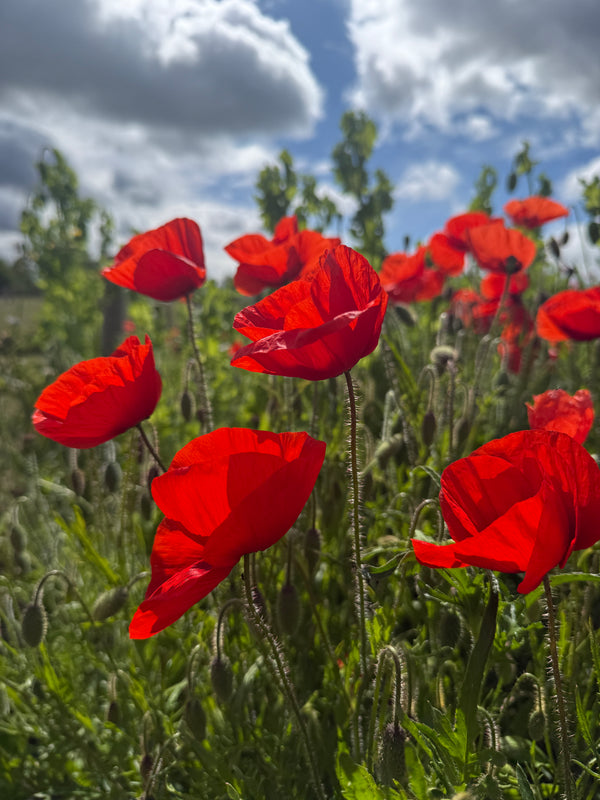
- 🔴 Flanders Poppy: The Instant Colour. Oxeye Daisies are perennials that take a year to establish. Sow annual Poppies in the same patch to give you a splash of red in the first summer while the daisies grow their roots.
- 🌾 Yellow Rattle: The Grass Killer. If you are planting into grass, you need Yellow Rattle. It weakens the grass, stopping it from smothering your Oxeye Daisies. Sow them together in Autumn.
📅 Sowing & Flowering Calendar
Sow in spring or autumn. Flowers May to September.
| Month | J | F | M | A | M | J | J | A | S | O | N | D |
|---|---|---|---|---|---|---|---|---|---|---|---|---|
| Sow Outdoors | 🟢 | 🟢 | 🟢 | 🟢 | 🟢 | 🟢 | ||||||
| Flowers | 🌸 | 🌸 | 🌸 | 🌸 | 🌸 |
⚠️ Invasive Warning
Oxeye Daisies are tough! Do not plant them in a formal, delicate flower bed as they will take over. Keep them for the "wild" parts of your garden where they can spread freely.
🏆 Officially Recognised Excellence
Oxeye Daisy is one of the most valuable plants for biodiversity. It is listed on the RHS Plants for Pollinators list and provides an essential landing pad for butterflies and hoverflies.
- Regular price
-
£2.10 - Regular price
-
- Sale price
-
£2.10
Couldn't load pickup availability
4.0 / 5.0
(4) 4 total reviews


Oxeye Daisy
- Regular price
-
£2.10 - Regular price
-
- Sale price
-
£2.10