
Lettuce Tom Thumb
Heritage compact Victorian butterhead lettuce - in cultivation since the 1850s
The tiny Victorian butterhead that grows where nothing else fits - one head per person, perfect for containers, window boxes, and intercropping, ready in seven to nine weeks.

About this variety
Lactuca sativa 'Tom Thumb' Heritage compact butterhead lettuce, miniature size
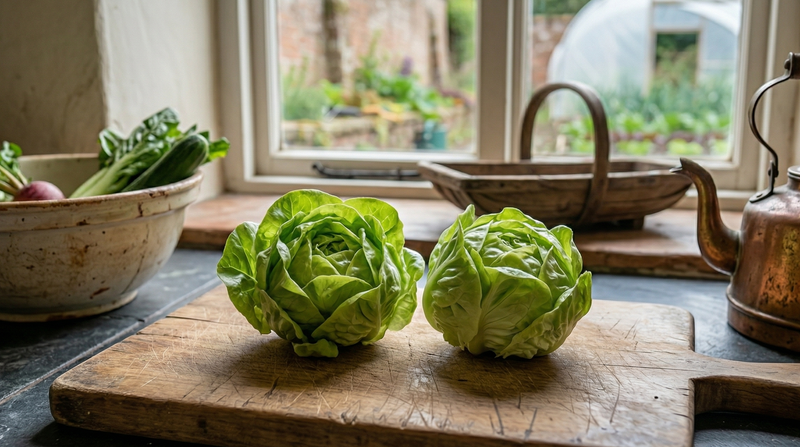
The tiny Victorian butterhead lettuce that grows where almost nothing else will fit. Tom Thumb is one of the oldest varieties still in continuous cultivation — first listed in seed catalogues in the 1850s — and it remains in the catalogue for one immediate reason: the heads are very small. A mature Tom Thumb is roughly the size of a tennis ball or even slightly smaller, and a single plant occupies barely 15cm of bed space. For container gardeners, small-plot growers, balcony allotmenteers, and anyone wanting a single-portion lettuce that does not require a whole bed, Tom Thumb is genuinely the answer.
The variety is a butterhead type — the leaves are tender, smooth-edged, soft, and almost buttery in texture, with that classic gentle "proper lettuce" flavour that has fallen out of British supermarket fashion but remains beloved by anyone who tries it. The colour is pale yellow-green at the heart, slightly darker on the outer leaves, occasionally with a faint pink tinge at the edges of leaves grown in cool conditions. A single Tom Thumb head dressed with vinaigrette is enough for one person, providing the perfect "side salad" portion without leaving half a lettuce abandoned in the fridge.
Tom Thumb matures faster than full-size butterhead varieties — typically 7–9 weeks from sowing — and is reasonably heat-tolerant for an old-fashioned variety. The compact size also makes it useful as an intercrop between slower-growing plants like sweetcorn, broccoli, or peppers; the lettuce can be harvested long before the slower crop needs the space.
Tom Thumb is open-pollinated heritage with over 175 years of continuous cultivation history. Seed saved from your best plants will grow true the following year.
A note on growing
Sow indoors from February to April for the earliest crops, or direct outdoors from April through to August. Sow seed at 1cm depth, thinly. Germination takes 7–14 days; cooler conditions (10–18°C) produce the best germination. Soil above 25°C dramatically reduces germination.
Thin seedlings to 15cm apart in rows 20cm apart — closer than larger lettuces because Tom Thumb hearts are genuinely small. For container growing, a 25cm pot accommodates three plants comfortably. Window boxes can hold a row of five or six.
Water consistently — drought-stressed lettuces become bitter and prone to bolting. Mulch around plants to retain moisture. Slugs are the main pest. For continuous summer supply, sow short rows every two to three weeks from April to August.
Harvest from June onwards by cutting the entire heart cleanly at soil level — Tom Thumb does not produce a useful second flush.
Where it shines
In the kitchen, the single-portion size is the entire point. Dress one head per diner with vinaigrette for the simplest summer side salad. Halve and use as edible bowls for prawn cocktail or chicken Caesar. Quarter and braise briefly in butter as a continental-style side. Use whole leaves as edible plates for canapés. The flavour is mild and broadly compatible — this is salad as backdrop rather than as star, allowing dressings and accompanying ingredients to shine.
In the garden, Tom Thumb is the lettuce that fits where others don't. Plant in containers on the patio. Sow as an intercrop between slower-maturing plants. Tuck plants into the gaps in flower borders. Grow in window boxes. Children find the tiny hearts particularly charming — "their own little lettuce" is a useful kitchen-garden gateway plant for small gardeners. Pair with Little Gem and Lollo Rossa for a complete three-variety lettuce mix in one bed.
Plant alongside
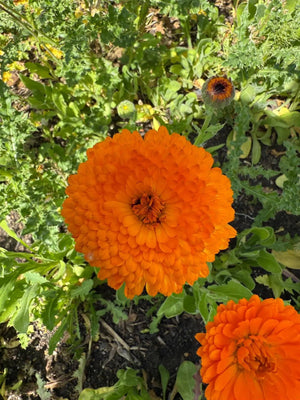
Lettuce is the universal companion plant. Tom Thumb particularly suits intercropping between slow-growing crops (sweetcorn, brassicas, peppers, climbing beans). Calendula 'Neon' attracts beneficial predators. Sow alongside taller plants that provide light afternoon shade in summer heat. Avoid sites where established perennial brassicas might attract aphids that will then spread to the lettuce.
Plant alongside
Lettuce Tom Thumb pairs beautifully with these kitchen garden companions