Cabbage Savoy Cordesa F1
The first club root-resistant Savoy cabbage
The crinkle-leaved Savoy cabbage with the breakthrough that matters - genuine club root resistance, so you can grow Savoys even in soil that has previously beaten ordinary brassicas.

About this variety
Brassica oleracea 'Cordesa' F1 Club root-resistant Savoy cabbage, autumn cropping
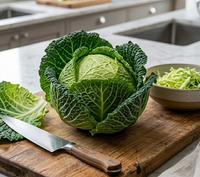
The first Savoy cabbage to offer genuine club root resistance — and that single fact changes everything for any gardener whose soil has ever played host to brassicas before. Cordesa F1 produces compact, heavy heads with the deeply crinkled blue-green leaves that define a proper Savoy, alongside a flavour that is sweeter, finer, and more complex than smooth-leaved cabbages can manage. From a sowing in March or April, plants are ready to harvest from September through to early December, standing well through autumn frosts so you can cut as needed rather than all at once.
Savoy cabbages have a different character to ordinary green cabbage. The crinkled "crepe" texture of the leaves catches sauces and dressings beautifully, holds its structure when slow-cooked, and produces a more refined texture in coleslaw than smooth varieties. The flavour is fuller and less harsh — what some cooks call "the cabbage for people who like cabbage." Pair this with the F1 hybrid breeding behind Cordesa, which delivers uniformity, vigour, and the all-important club root resistance, and you have one of the most quietly useful brassicas in the autumn kitchen garden.
The club root resistance matters more than any other feature. Club root is a soil-borne fungal disease that can render ground unusable for brassicas for many years — once present, conventional cabbages produce stunted plants, swollen distorted roots, and almost no usable harvest. Cordesa was bred specifically to grow normally in club root-infested soil, making it the variety to choose if you have ever lost a brassica crop to the disease or if you grow on heavy, acidic, or poorly-drained ground where the disease tends to thrive.
Note: Cordesa is an F1 hybrid, so seed saved from your crop will not grow true. Fresh seed each year is needed for consistent results.
A note on growing
Sow indoors from March to May at 13–15°C in trays or modules of seed compost, covering seeds with 1cm of compost. Germination takes 7–14 days. Move seedlings to a bright, cooler position to grow on. Alternatively, direct sow outdoors from late March into a well-prepared seedbed at 1.3cm depth, in shallow drills 30cm apart, for transplanting later.
Transplant into final position from May to July, once plants have four true leaves. Plant firmly — so firmly the plant cannot be pulled out by a leaf without tearing — spacing 40–45cm apart in both directions. Brassicas dislike loose soil; if planting into freshly-dug ground, tread the area firm before planting. Net immediately against cabbage white butterfly from transplanting through to September, and earth up around the base of each stem in autumn for additional stability against winter winds.
Water generously after planting and through any dry spells. Feed with a high-nitrogen liquid feed through the growing season to support strong leaf development. Harvest from September onwards by cutting at the base with a sharp knife. The good standing ability of Cordesa means heads keep their condition in the ground for weeks — cut as you need them rather than all at once.
Where it shines
In the kitchen, Savoy cabbage outperforms smooth-leaved varieties in any preparation involving long cooking, sauces, or texture. Shred and slow-braise with bacon, onion, and stock for a rich autumn side. Stuff the larger outer leaves with rice and minced meat for cabbage rolls, where the crinkled texture holds the filling beautifully. Slice finely for sauerkraut — the deeper flavour of Savoy produces a more complex ferment. Use in winter stews, soups, and casseroles where its structure stands up to long cooking without collapsing to mush. Genuinely outstanding in colcannon and bubble-and-squeak.
In the garden, Cordesa fills the autumn brassica slot in a year-round cabbage rotation — sown alongside summer Cabbage Greyhound in spring, transplanted in early summer, then harvested through the autumn months when Greyhound is finished but before winter Red Drumhead reaches full size. For any garden with a history of club root, Cordesa is genuinely the only Savoy variety worth growing.
Plant alongside
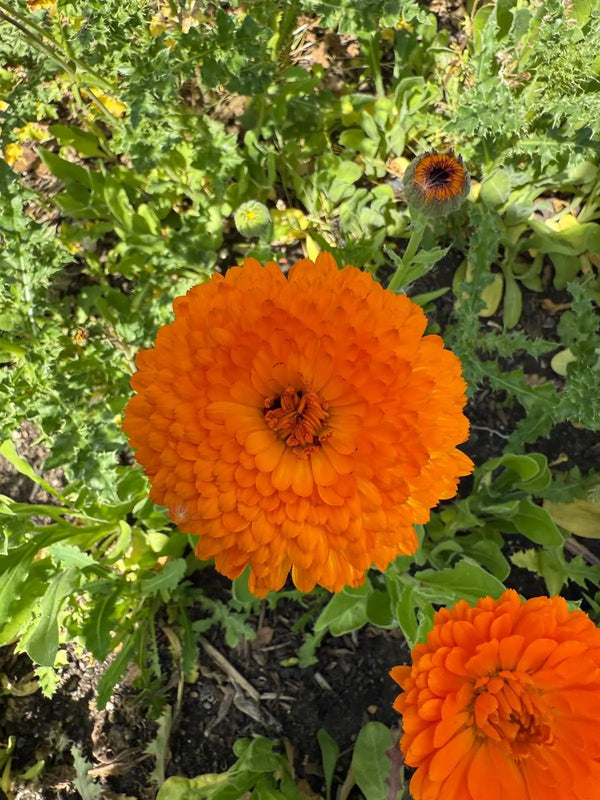
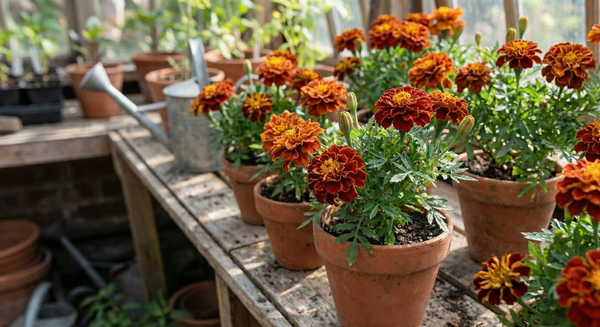
Cabbage benefits from companion plants that deter cabbage white butterflies and aphids. Plant alongside French Marigold 'Spanish Brocade' whose strong scent confuses egg-laying butterflies, and Calendula 'Neon' to attract hoverflies whose larvae devour aphids. Onions and leeks planted between cabbage rows deter cabbage root fly. Avoid planting near strawberries, runner beans, or tomatoes. For year-round cabbage harvest, pair Cordesa with Greyhound (summer) and Red Drumhead (winter) for unbroken cropping from May to December.
Plant alongside
Cabbage Savoy Cordesa F1 pairs beautifully with these kitchen garden companions