Cabbage Red Drumhead
Heritage red drumhead cabbage in continuous cultivation since the 1860
The cabbage of the British winter kitchen - dense purple-red drumhead heads that stand through frost and improve with every cold night, perfect for braising, pickling, and Christmas plates.

About this variety
Brassica oleracea 'Red Drumhead' Heritage red drumhead cabbage, dating from the 1860s
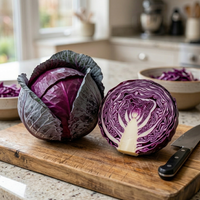
The cabbage of the British winter kitchen. Large, dense, drumhead-shaped heads in deep burgundy-purple, with tightly-wrapped leaves around a solid central heart and few outer leaves to be wasted. This is the cabbage of braised red cabbage with apple and warming spice. Of vivid purple coleslaw that turns the simplest summer plate into something eye-catching. Of pickled red cabbage that keeps through the winter in jewel-bright, jewel-sharp perfection. A heritage variety in continuous cultivation since the 1860s.
What sets Red Drumhead apart from quicker-maturing summer cabbages is its frost-hardiness. Established plants in the ground stand through frosts that would flatten most autumn crops, remaining available for harvest from September well into December and beyond in a mild winter. Better still, the flavour and colour both improve with cold — every frost that passes over the plants deepens the colour and sweetens the flavour as sugars concentrate in response to the cold. A head harvested in late November after six weeks of autumn frosts is significantly more beautiful and significantly more flavourful than one harvested in early September before the cold has done its work.
Red Drumhead is open-pollinated heritage, meaning seed saved from your best heads will grow true to type the following year. The variety has been in continuous cultivation since the 1860s — making a single packet the start of a 160-year unbroken garden tradition.
A note on growing
Sow indoors or in a seedbed from April to May for a maincrop autumn and winter harvest. Sow seeds at approximately 1.5cm depth in seed compost. Germination takes 12–20 days. Once seedlings have four true leaves, transplant into their final position in firm, fertile soil — well-manured the previous autumn for best results — allowing 45cm between plants in both directions.
Red Drumhead asks for adequate space, consistent moisture, and protection from the cabbage white butterfly. Net the plants from transplant in June through to September — a single generation of caterpillars can reduce a large healthy plant to a skeleton of leaf veins in under two weeks, and the damage to young plants is rarely fully recovered. Fine mesh netting costs almost nothing and removes the problem entirely. Plant firmly — so firmly the plant cannot be pulled out by a leaf without tearing — to prevent wind-rock damage to the root system.
Harvest from September onwards, but resist the urge to cut the heads the moment they look ready. Every frost improves the head — if the heads are firm and the outer leaves intact, they are better left standing than cut. The hardier the autumn weather, the better the eventual head. Lift only when needed, leaving the rest in the ground until December or beyond.
Where it shines
In the kitchen, Red Drumhead is genuinely transformative. Slow-braised for hours with apple, cider vinegar, brown sugar, and warming spices for the classic winter side. Pickled in red wine vinegar with peppercorns and bay leaves for a jewel-bright jar that keeps for months. Shredded raw into vivid purple coleslaw with carrot and apple. Stir-fried with bacon and chestnuts as a Christmas-table side. Used as the structural foundation of borscht, where its colour and density both contribute. The flavour is rich and hearty, sweeter than green cabbage and with that distinctive earthy depth that pairs naturally with rich winter foods.
In the garden, Red Drumhead pairs with summer-maturing Greyhound to extend cabbage harvest across the full year — Greyhound maturing in spring and early summer when Red Drumhead is still a small transplant, and Red Drumhead coming into its own in autumn and winter when Greyhound is long finished. The two varieties share growing requirements, companion plants, and crop rotation needs, making them natural bedfellows in the kitchen garden. Together they provide a complete year-round cabbage harvest with barely any seasonal overlap.
Plant alongside
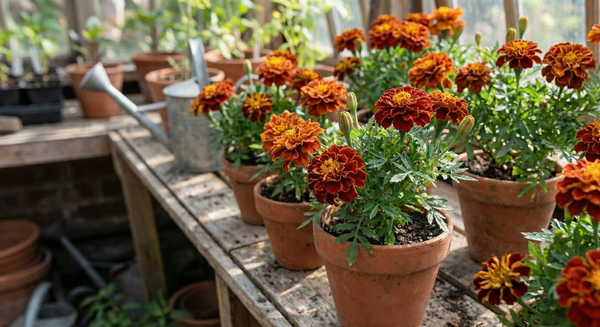
Cabbage benefits from companion plants that deter cabbage white butterflies and aphids. Plant alongside French Marigold 'Spanish Brocade' whose strong scent confuses egg-laying butterflies, and Nasturtiums which act as a sacrificial decoy crop. Onions and leeks planted between cabbage rows deter cabbage root fly and aphids. Avoid planting near strawberries, runner beans, or tomatoes. For year-round cabbage harvest, pair Red Drumhead in the autumn brassica bed with Greyhound for the summer brassica bed.
Plant alongside
Cabbage Red Drumhead pairs beautifully with these kitchen garden companions