Cynoglossum officinale Seeds
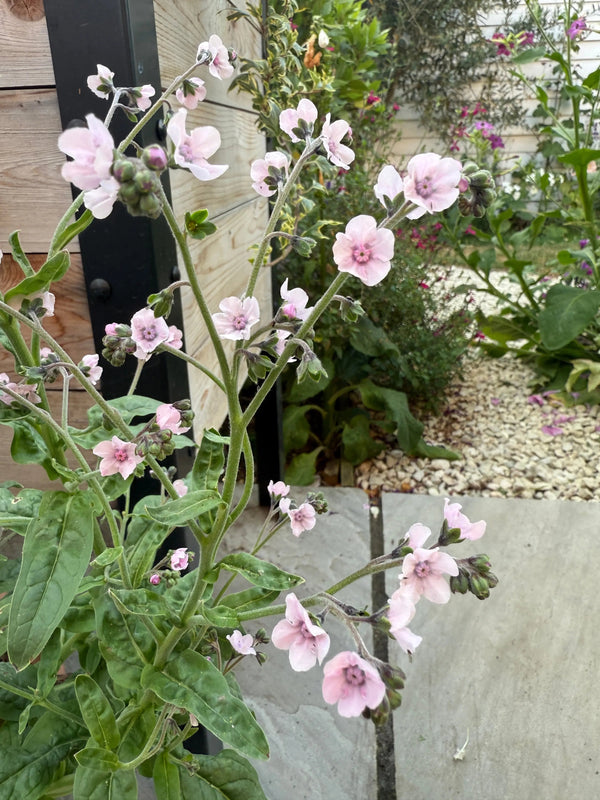
While most wildflowers are bright and breezy, Houndstongue brings a touch of dramatic, gothic beauty to the wild garden. This native biennial produces tall, sturdy stems topped with clusters of small, funnel-shaped flowers in a unique shade of deep, dull maroon-red (sometimes fading to violet).
The name comes from the texture of its leaves—long, broad, and covered in soft, greyish hairs that feel rough yet velvety, just like a dog's tongue. It is a structural, architectural plant perfect for dry banks, coastal gardens, or wild borders where you want something darker and more interesting than the standard daisy shapes.
Read More
🌿 Understanding the Plant
Cynoglossum officinale is a robust Hardy Biennial (H7). As a native wildflower, it is perfectly adapted to the UK climate, surviving the coldest winters with ease. It follows a two-year cycle: forming a velvety grey-green rosette in its first year and sending up its structural flower spikes the following summer.
Nature's Velcro: A distinctive feature of Houndstongue is its seed production. After flowering, it develops four-part nutlets covered in tiny hooked prickles (burrs). Designed by nature to hitch a ride on passing animals, these "sticky" seeds are a fascinating example of botanical dispersal, though they are best planted at the back of borders away from long-haired pets!
RHS Plants for Pollinators: This species is officially recognized for its high nectar value. It is a vital food source for bumblebees and other long-tongued insects during the early summer months, making it a critical addition to any biodiversity-focused wild garden.
🌱 Growing Guide
Houndstongue is a tough, low-maintenance native that thrives on neglect once established.
How to Sow:
Sow directly outdoors in Autumn (September-October) or Spring (March-May). Scatter the large seeds onto bare, raked soil and cover lightly (approx. 5-10mm deep). Autumn sowing is often more successful as the natural winter cold helps to break seed dormancy, leading to stronger spring germination.
Where to Plant:
They demand full sun or partial shade and thrive in dry, sandy, or chalky soils. Houndstongue is an ideal choice for coastal gardens or well-drained banks. It deeply dislikes heavy, waterlogged clay; if your soil is damp, consider growing in a raised area or adding plenty of grit to the planting site.
Ongoing Care:
Once established, this plant is exceptionally drought-tolerant and requires almost no intervention. If you wish to prevent the plant from self-seeding and spreading via its "sticky" seeds, simply cut the flower stems down to the base immediately after the flowers fade in July.
📋 Plant Specifications
| Botanical Name | Cynoglossum officinale |
| Common Name | Houndstongue / Gypsy Flower |
| Plant Type | Hardy Biennial Wildflower |
| Hardiness | H7 (Ultra Hardy Native) |
| Light Requirements | Full Sun / Part Shade ⛅ |
| Height | 60cm - 80cm |
| Spread | 45cm |
| Spacing | Plant 40cm apart |
| Flowering Period | May to July (Year 2) |
| Perfect For | 🌑 Gothic & Moody Borders 🌾 Naturalistic Wildflower Meadows 🏖️ Dry, Coastal or Sandy Soils 🐝 High-Quality Bumblebee Forage |
| Seeds per Packet | Approximately 35 large seeds |
🤝 Beautiful Wild Combinations
Houndstongue looks its best in a naturalistic or wild setting. Pair it with these available species from our collection:
- 🕊️ White Campion: The Contrast. The pure white flowers of the Campion provide a luminous backdrop that makes the sombre, dull maroon of the Houndstongue truly stand out. Both species thrive in similar dry, hedgerow-style conditions.
- 🐍 Viper's Bugloss: The Coastal Duo. If you have sandy or dry soil, grow these two together. The electric blue spikes of the Echium and the deep maroon-red of the Cynoglossum create a high-impact, bee-friendly display that looks spectacular on coastal banks.
📅 Sowing & Flowering Calendar
Direct sow in autumn for the strongest plants, followed by dramatic maroon spikes the following early summer.
| Month | J | F | M | A | M | J | J | J | A | S | O | N | D |
|---|---|---|---|---|---|---|---|---|---|---|---|---|---|
| Direct Sow | ✓ | ✓ | ✓ | ✓ | ✓ | ||||||||
| Flowers (Yr 2) | ✓ | ✓ | ✓ |
⚠️ Pet Warning
The seed burrs of Houndstongue are incredibly "hooked" (functioning like nature's Velcro). If you have long-haired pets, we recommend planting this at the back of a border where they won't brush past it, or cutting the flower stems before the seeds fully ripen.
🏆 Native Gothic Beauty
Known for its stamina and ability to thrive on dry, sandy soils, Cynoglossum officinale is an essential choice for those wanting to create a moody, structural wild garden that supports essential early-summer pollinators.
📖 Want more detailed growing advice?
View our Complete Growing Guide for Wildflowers →
- Regular price
-
£3.20 - Regular price
-
- Sale price
-
£3.20
Couldn't load pickup availability


Cynoglossum Officinale
- Regular price
-
£3.20 - Regular price
-
- Sale price
-
£3.20