Annual Pollinator

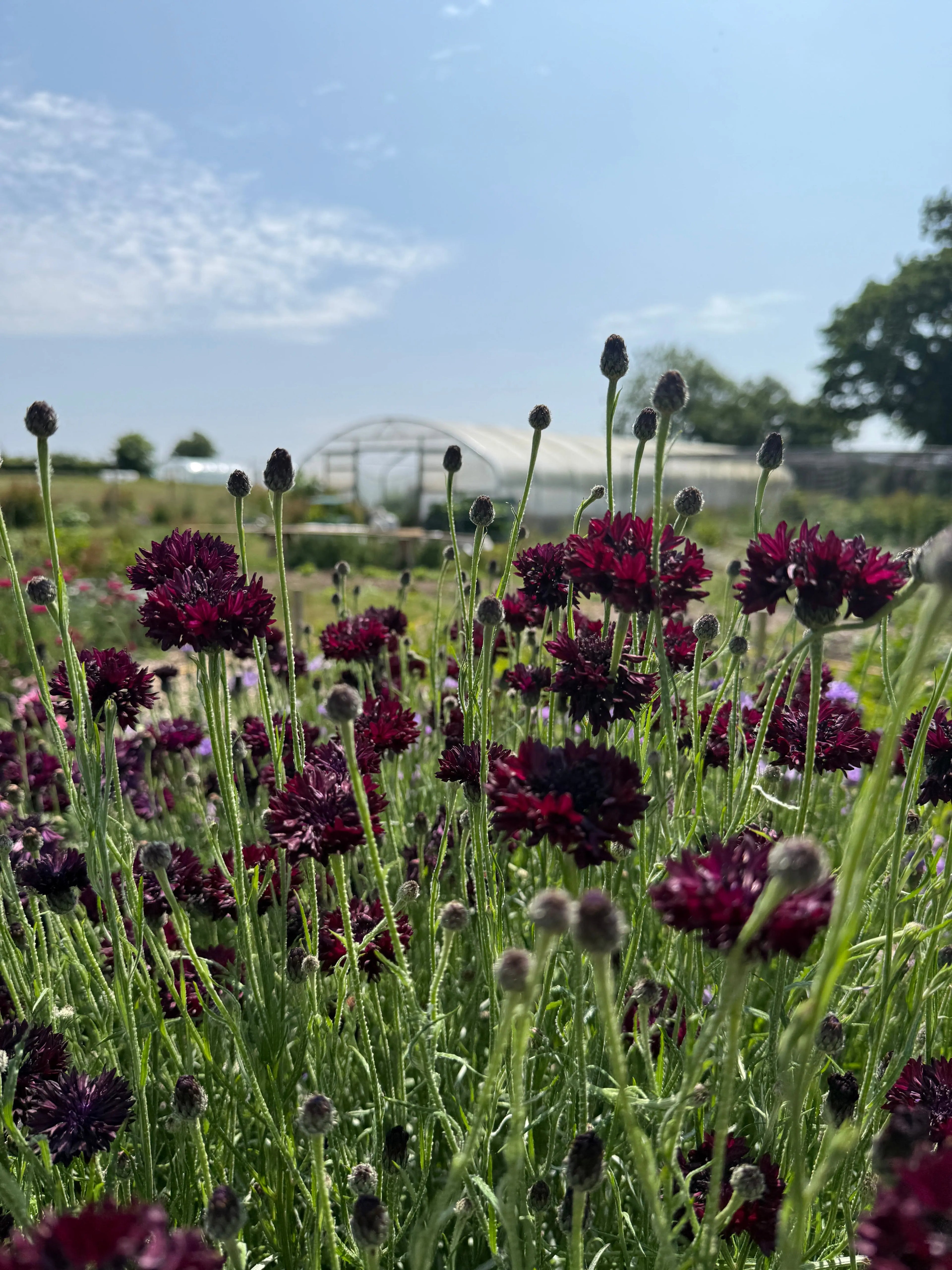
Cornflower Black Ball

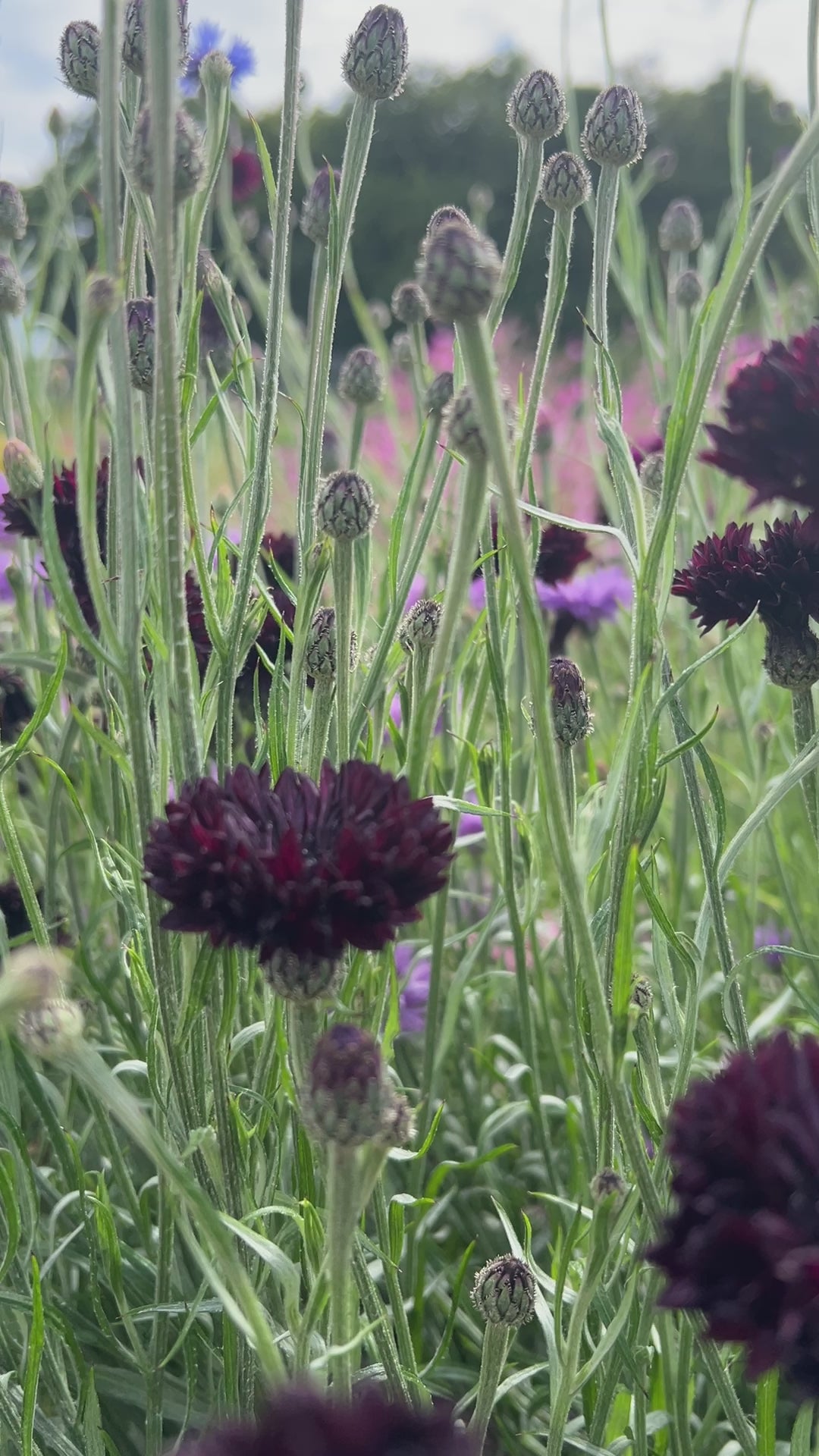
Centaurea cyanus 'Black Ball' — darkest cornflower; fully double Ball type

£2.30approx. 200 seeds

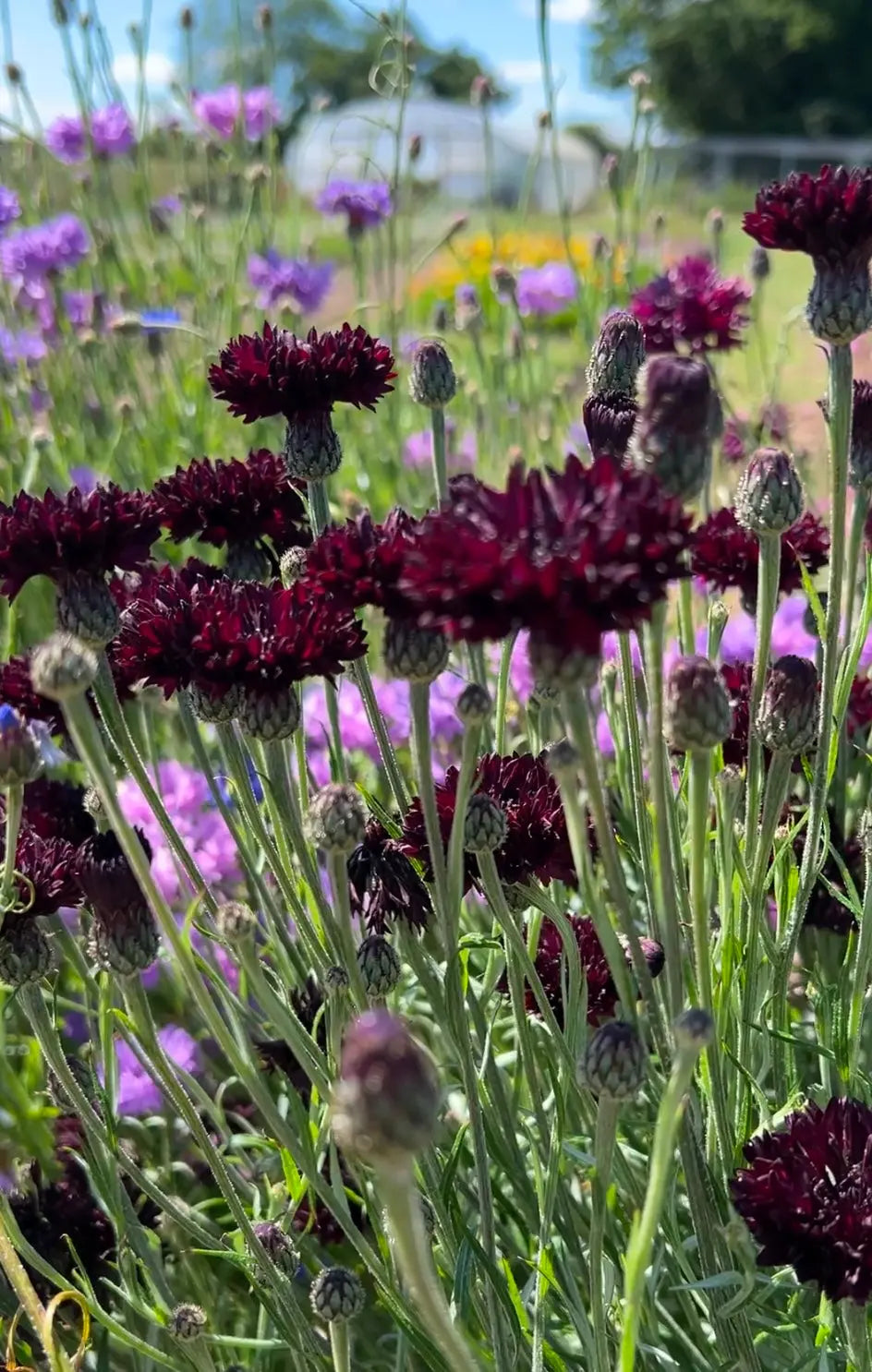
Deep velvet maroon-chocolate cornflowers like crushed blackberries — the sophisticated dark double "Ball" type that turns standard borders into Dutch oil paintings.

Sowing months
JanFebMarAprMayJunJulAugSepOctNovDec
Height
Up to 90cm
Spread
30cm
Spacing
30cm
Position
Full sun
Soil
Lean, well-drained — no manure or compost; poor soil produces strongest stems
Grow guide
How to grow Cornflower Black Ball
Read the full guide →
About this variety

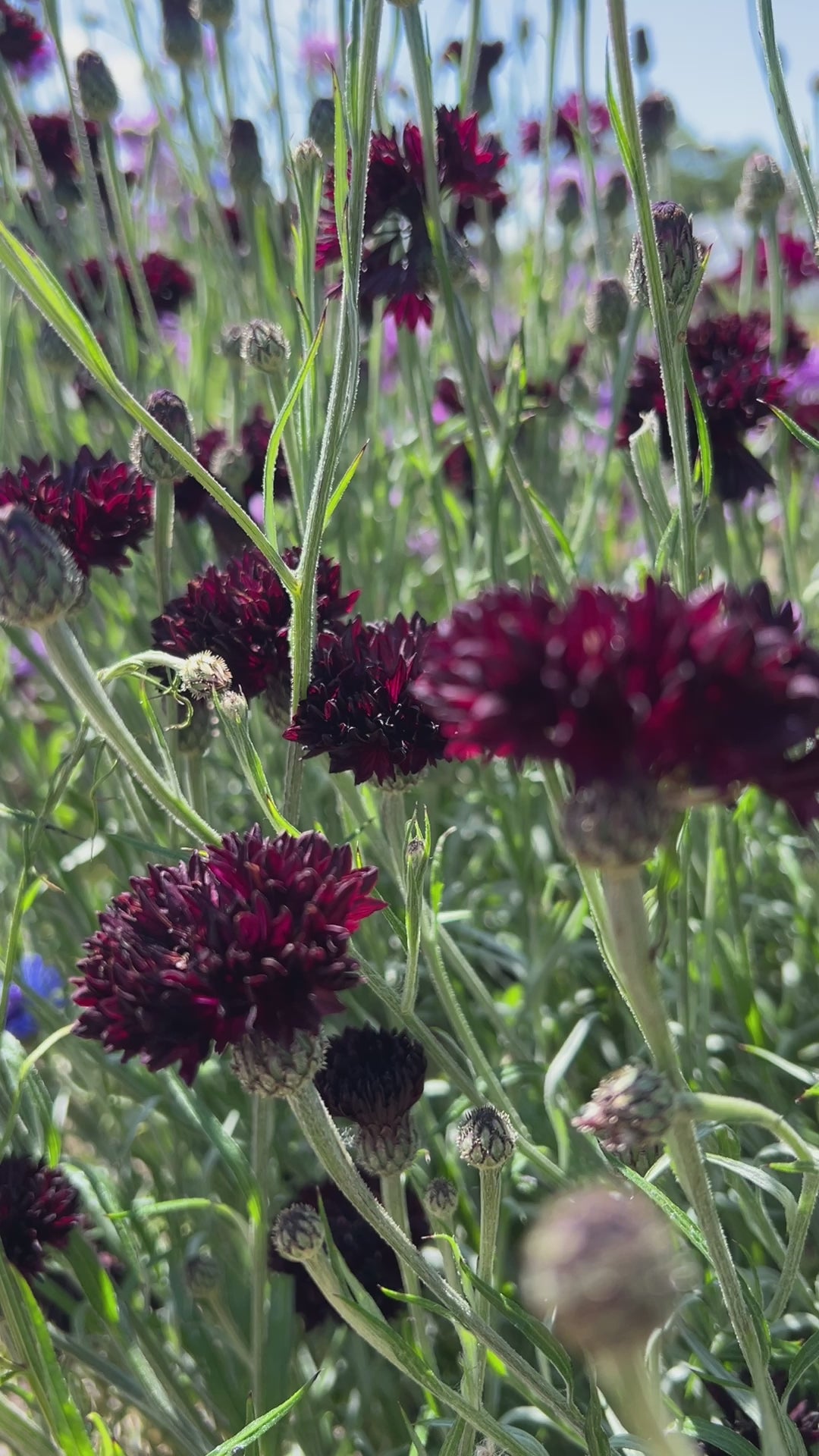
It is not black. It is a deep velvet maroon-chocolate, the colour of crushed blackberries, and only at a distance does it pass for black. Close up there is plum and burgundy in it.

That distance effect is worth thinking about before you plant a row. Very dark flowers absorb light and read as gaps rather than colour from more than a few paces, so a block of 'Black Ball' on its own tends to disappear into a border. It is at its best with something pale hard against it: white ammi, cream cosmos, lime bupleurum. The same rule applies in a vase, where the contrast is what makes the arrangement.

The blooms are dense double Ball types, far more substantial than a wild cornflower, on silvery stems that cut well. It is the one to grow if the ordinary cobalt blue feels too obvious. Sow it in September rather than spring if the ground is workable. Autumn-sown cornflowers build a root system over winter and come up markedly bigger and more branched the following summer than anything sown in March.
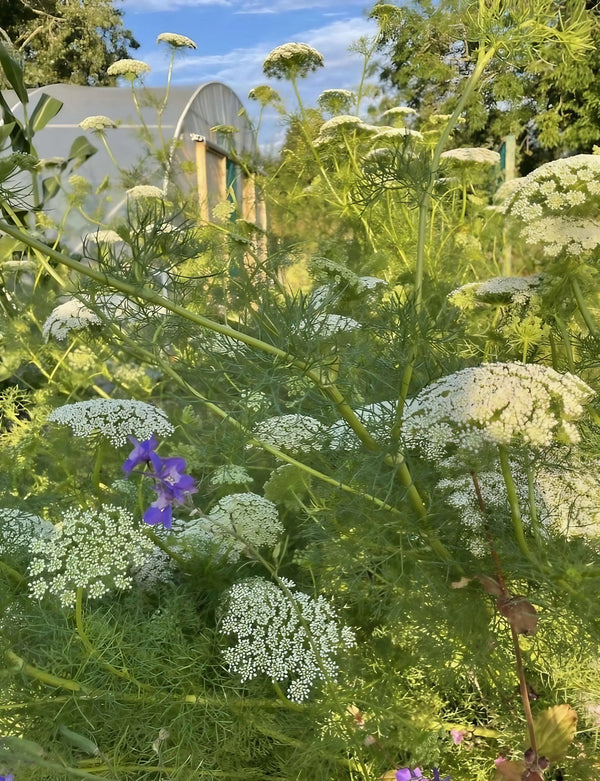
Plant alongside

Cornflower Black Ball pairs beautifully with these cottage garden classics

RHS Plants for Pollinators

This plant has been assessed by the Royal Horticultural Society and recommended as especially beneficial to bees, butterflies and other pollinators. Growing plants like this directly supports UK pollinator populations — something close to our hearts at Salle Moor Hall Farm, where we see the difference a cottage garden full of the right plants can make.

Learn more at RHS.org.uk →