


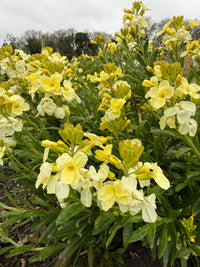
Wallflower Ivory White
Erysimum cheiri 'Ivory White' — Biennial
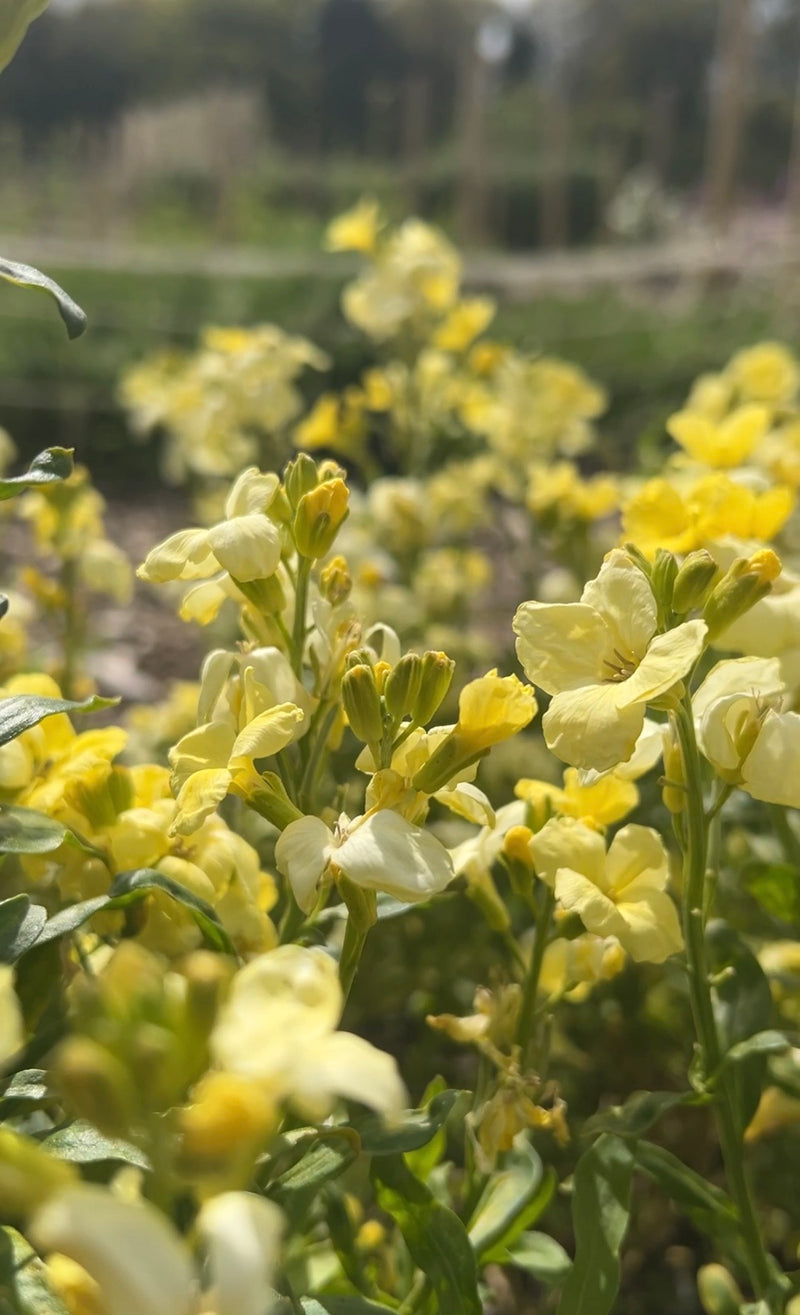
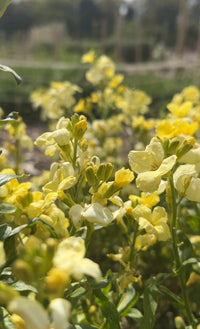
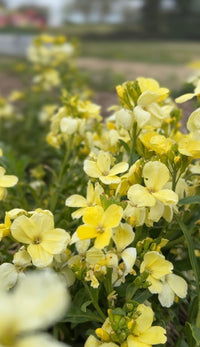
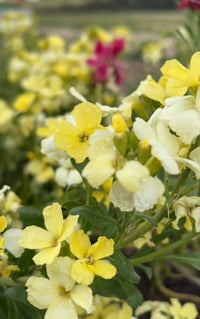
Dense spikes of creamy-white Wallflower blooms with sweet honey-and-primrose fragrance — the elegant cool-toned cottage biennial for white spring gardens and dark corners.
About this variety
Erysimum cheiri 'Ivory White' Cream Wallflower 'Ivory White'
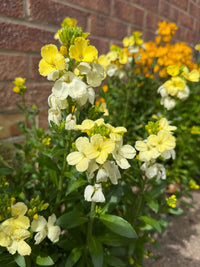
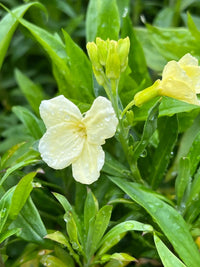
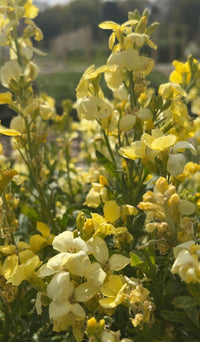
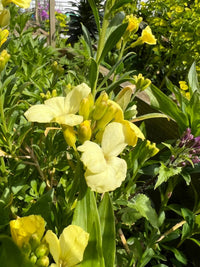
Dense spikes of creamy-white Wallflower blooms with a rich sweet perfume of honey and primrose — Wallflower 'Ivory White' brings cool elegant calm to the spring cottage border, lighting up dark corners and creating sophisticated "white garden" displays that bridge winter and summer with effortless style. RHS Plants for Pollinators.
While traditional Wallflowers are known for their fiery oranges and yellows, 'Ivory White' brings cool elegant calm. This variety produces dense spikes of creamy-white flowers that look almost like miniature stocks, set against lush dark green foliage. The colour is not pure cold white but a warm cream — luminous in low spring light and exceptionally beautiful as light fails in early-evening spring gardens. The scent is genuine and lovely: a rich sweet perfume with notes of honey and primrose that lingers in the cool spring air. The perfect plant for lightening up a dark corner or creating a sophisticated "White Garden" display early in the year, bridging the gap between winter and summer with effortless style. Hardy biennial (H5). RHS Plants for Pollinators — widely recognised as one of the single most important early-spring nectar sources for queen bumblebees as they begin foraging after winter hibernation. Two-year schedule: sow in late spring/summer of Year 1; rosette through winter; flowering display early the following year (March–May).
A note on growing
Standard Wallflower biennial cycle:
- Sow May/June/July outdoors
- Pinch growing tip at 15cm for bushy habit
- Transplant to final flowering position October, planting firmly
- Flowers March–May the following year
⚠️ Toxicity note: all parts are poisonous if ingested.
Where it shines
In white moon gardens and elegant cool-toned cottage borders where the cream luminosity creates sophistication. Lightening up dark corners — pale cream Wallflowers genuinely brighten shaded positions where most spring plants struggle to show. As an underplanting for white or pastel tulips for cool spring schemes. In wildlife gardens for the high early-spring bumblebee value. As a cut flower for fragrant indoor white spring arrangements.
Plant alongside
For early-summer transition into sophisticated late-spring drama, the creamy Wallflowers act as a bright foil for the near-black velvety maroon pincushions of Scabious 'Black Knight' (when both flower briefly together), creating a chic modern combination. For the ethereal carpet: pairing the taller 'Ivory White' with a frothy understorey of Forget-me-not 'White' creates a luminous all-white display that glows in low spring light. With Hesperis 'White' (Sweet Rocket) for continuing white-and-fragrance into early summer.
Plant alongside
Wallflower Ivory White pairs beautifully with these cottage garden classics
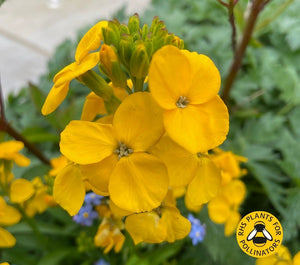
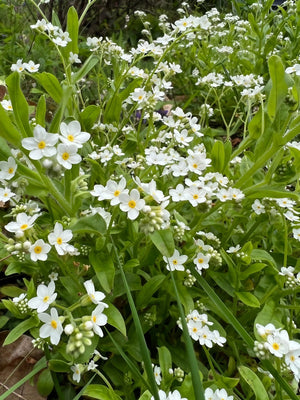
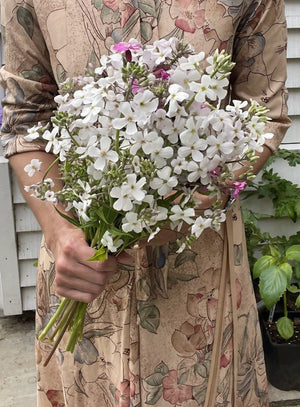

RHS Plants for Pollinators
This plant has been assessed by the Royal Horticultural Society and recommended as especially beneficial to bees, butterflies and other pollinators. Growing plants like this directly supports UK pollinator populations — something close to our hearts at Salle Moor Hall Farm, where we see the difference a cottage garden full of the right plants can make.
Learn more at RHS.org.uk →