

Poppy Hungarian Blue
Papaver somniferum 'Hungarian Blue' -- Breadseed Poppy
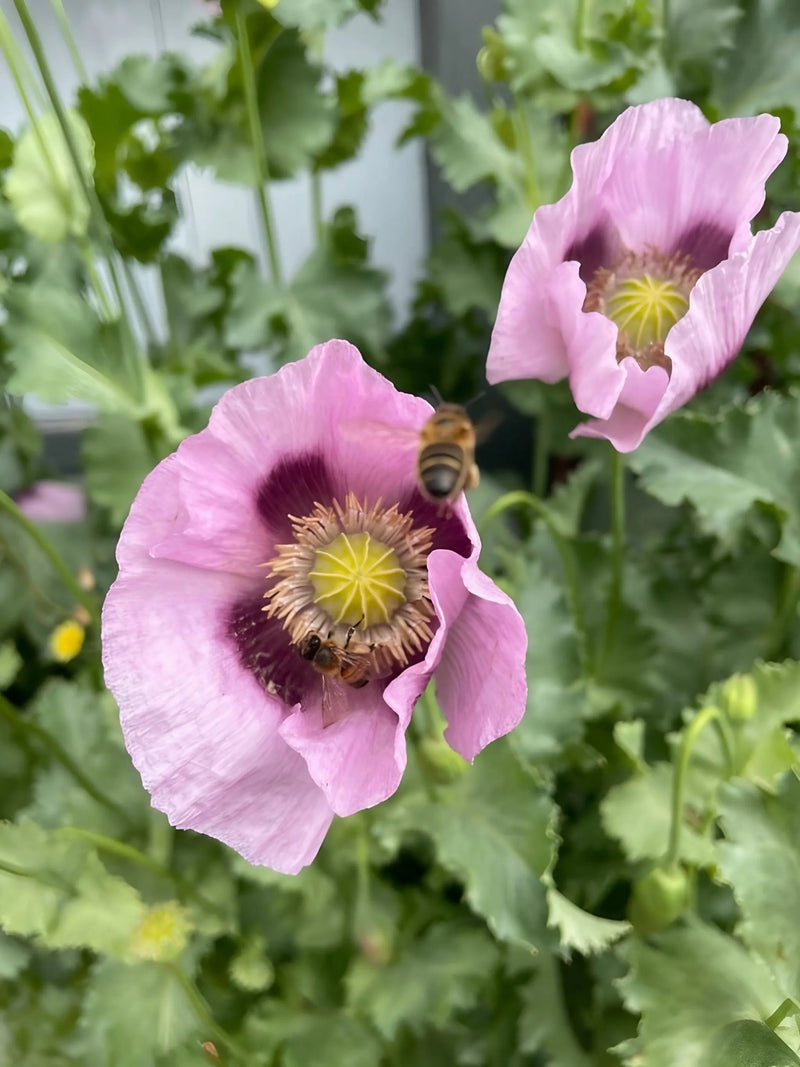
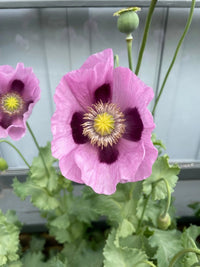
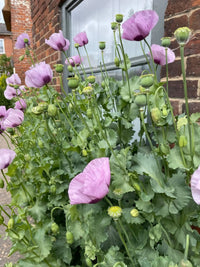
Large violet-purple bowl flowers above silver-blue foliage — followed by big seed pods packed with the slate-blue "breadseed" poppy seeds prized for baking.
About this variety
Papaver somniferum 'Hungarian Blue' Hungarian Blue Breadseed Poppy 'Hungarian Blue'
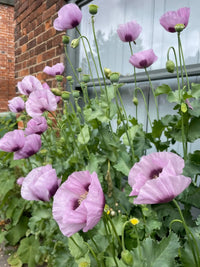
Tall elegant stems carrying large single violet-purple bowl-shaped flowers against beautiful silver-blue glaucous foliage — followed by large fat seed pods packed with edible slate-blue "breadseed" poppy seeds. 'Hungarian Blue' is the definitive dual-purpose cottage poppy: simultaneously a stunning ornamental and the seed source for genuinely outstanding home-baked poppyseed bread, lemon-poppyseed cakes and bagel toppings.
This is the breadseed poppy par excellence — the variety that has been grown for centuries in Hungary and across Central Europe specifically for its exceptional culinary seeds, while also being one of the most refined large-flowered cottage garden Papaver somniferum varieties. The flowers are large single bowls (8–10cm across) in a clear violet-purple shade that reads beautifully against the characteristic silver-blue glaucous foliage that all somniferum varieties share. Tall elegant stems reach 75–100cm, carrying the flowers high above the foliage so they read clearly across the cottage border. After the petals fall, the seed pods are exceptionally large — fat fully-rounded pepper-pot heads that contain hundreds of the slate-blue seeds prized for baking. Hardy annual (H5). Height 75–100cm. RHS Plants for Pollinators.
The dual-purpose value: 'Hungarian Blue' is the variety to grow if you want to combine ornamental cottage beauty with practical kitchen value. The seeds are exactly the "blue poppy seeds" sold in supermarkets for baking — but home-grown seeds are significantly fresher and produce dramatically better flavour in finished baked goods.
A note on growing
Like all poppies, has a sensitive taproot — must be direct-sown where it is to flower. Autumn sowing (September–October) is recommended — natural cold stratification over winter produces stronger earlier-flowering plants the following year. Spring sowing (March–May) also works.
Rake soil to fine tilth. Scatter seeds thinly on the surface (do not cover — seeds need light to germinate). Press firmly into soil. Germination 14–21 days. Full sun, well-drained soil. Don't feed. Thin to 30cm spacing for the largest flowers and biggest seed pods.
Harvesting the seeds: leave the seed pods on the plant until completely dry and brown (usually August–September). At this stage, gently shake or upend the pods — the small "windows" near the top of the pod open as it ripens, and the seeds shake out cleanly. Each pod typically contains several hundred seeds. Store seeds in airtight containers in a cool dark place; they keep for many months.
⚠️ Important toxicity note: only the fully-dried mature seeds are food-safe — green pods, leaves, and immature seeds are toxic. Wait for full pod ripening before harvesting. Wear gloves when handling green plant material.
Where it shines
In the cottage kitchen garden as the perfect ornamental-and-edible plant — pair productive culinary value with proper cottage flower beauty in a single plant. In ornamental cottage borders, where the violet-purple bowls and silver foliage look properly refined. As an architectural autumn seed-pod plant — the large pepper-pot heads are exceptional in dried arrangements and dramatically architectural in the autumn border. In any cottage garden where the gardener is also a baker.
Plant alongside
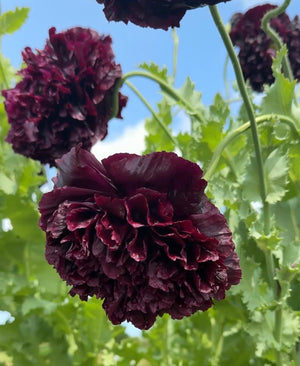
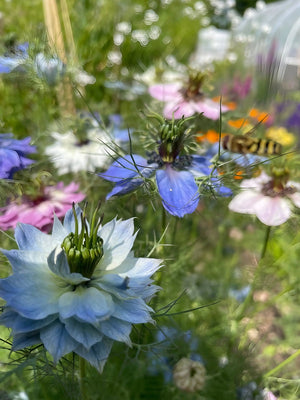
For an all-Papaver somniferum cottage scheme, combine 'Hungarian Blue' with Poppy 'Black Peony' (matching height; deep velvet maroon contrast), Poppy 'Lauren's Grape' (similar silver foliage; deeper purple flowers) and Poppy 'Lilac PomPom' (lavender doubles). For a productive ornamental kitchen border, pair with Nigella 'Miss Jekyll Mixed' (matching cottage palette; the Nigella seeds are also edible Kalonji) and Cornflower 'Blue Ball'.
Plant alongside
Poppy Hungarian Blue pairs beautifully with these cottage garden classics
RHS Plants for Pollinators
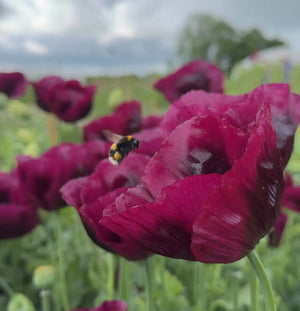
This plant has been assessed by the Royal Horticultural Society and recommended as especially beneficial to bees, butterflies and other pollinators. Growing plants like this directly supports UK pollinator populations — something close to our hearts at Salle Moor Hall Farm, where we see the difference a cottage garden full of the right plants can make.
Learn more at RHS.org.uk →