
Dahlia Pompone Double Mixed
Dahlia variabilis Pompon Group 'Pompone Double Mixed'
Small perfectly formed ball-shaped double flowers in vintage cottage shades on tall stems — the geometrically precise pompone dahlia for cottage borders and vintage bouquets.
About this variety
Dahlia variabilis 'Pompone Double Mixed' Pompone Dahlia 'Double Mixed'
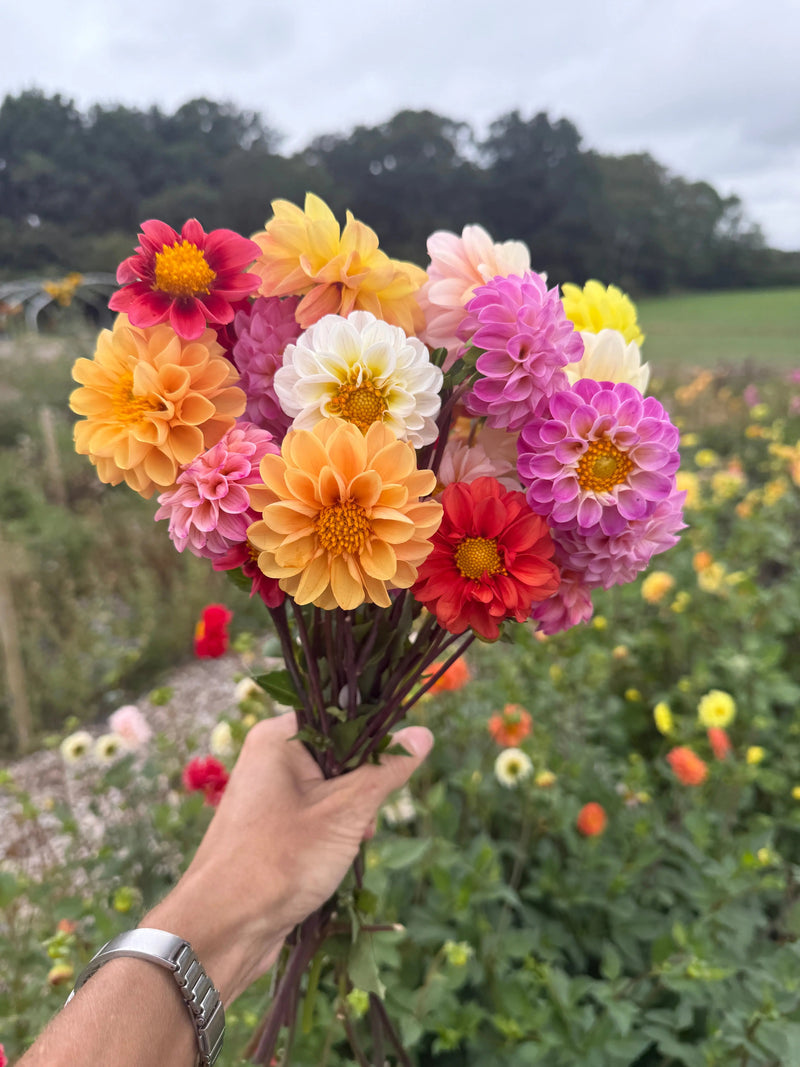
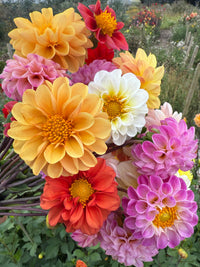
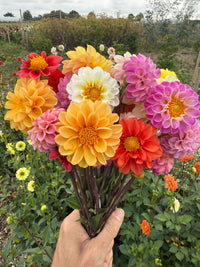
Small but perfectly formed ball-shaped flowers in fully double form, in a wide band of vintage cottage shades — the geometrically precise pompone form on tall 90–120cm stems, bringing height, structure and proper old-world charm to the late-summer border and ready-made vintage character to any bouquet.
The pompone dahlia is the geometrically perfect cousin in the dahlia family — small (typically 5–7cm), tightly-packed double balls with hundreds of curled petals arranged into compact spheres of pure colour. Where decorative dahlias are flamboyant and cactus dahlias are spiky, pompones are quietly precise — and they have a particular cottage-garden charm that's distinctly different from showier dahlia forms. The mix produces flowers in a wide range of vintage cottage shades — soft pinks, deep ruby reds, bright yellows, oranges and creamy whites — on tall 90–120cm plants with strong stems that hold the geometric heads beautifully. Half-hardy perennial typically grown as an annual from seed. Flowers from July to first autumn frosts. Excellent cutting flower with proper vintage character.
A note on growing
Pompone dahlias from seed can be slightly trickier than other dahlia types: some seed batches need a period of winter chilling (cold stratification) before they germinate, while others come up reliably in spring. To maximise germination success, sow indoors from February to April — surface-sow onto moist seed compost and cover with a fine layer of vermiculite. Maintain 15–20°C; germination is variable, typically 10–28 days. If seeds fail to emerge within a month, place the tray in the fridge for 2 weeks then return to warmth — this cold-stratification trick often triggers the next wave of germination.
Plant out only after all risk of frost has passed (late May or June) in full sun and deep, rich, fertile soil. Dahlias are hungry plants — dig in plenty of organic matter and feed weekly with potash-rich (tomato) fertiliser once buds form. Space 50cm apart. Pinch out the top growing tip at 15cm for bushy multi-stemmed growth. At the end of the season, tubers can be lifted after the first frost and stored frost-free for replanting.
Where it shines
At the back of cottage borders where the 90–120cm height provides structure and the small precise pompone heads read as vintage cottage character. In the cutting garden as a properly old-fashioned cut flower — pompone dahlias bring genuine vintage authenticity to bouquets that larger modern dahlia forms can't match. In rustic wedding flowers, where the small ball-shaped heads work beautifully in mixed cottage-style arrangements. As a structural late-summer plant when many other border plants are winding down.
Plant alongside
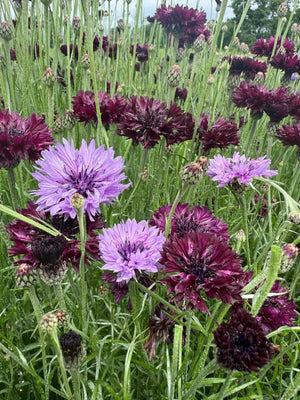
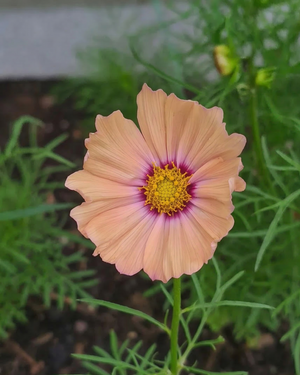
For a vintage cottage cutting scheme, combine pompone dahlias with Cornflower 'Black & Mauve Mix' (vintage palette match), the dusty smoky pink of Cynoglossum 'Mystery Rose', and the airy white lace of Ammi majus. For warm-tone harmony in borders, pair with Cosmos 'Apricotta' and Calendula 'Touch of Red'.
Plant alongside
Dahlia Pompone Double Mixed pairs beautifully with these cottage garden classics