


Cornflower Red Boy
Centaurea cyanus 'Red Boy' — ruby-red selected form of a naturally blue species
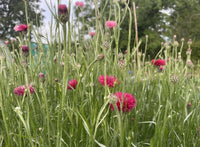
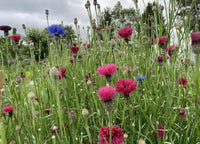
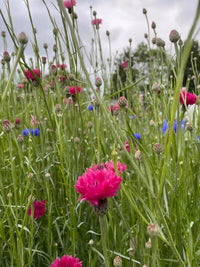
Rich, deep carmine-pink ruby cornflowers like crushed velvet — the warm-toned berry sister of the cornflower family, with edible petals and exceptional pollinator value.
About this variety
Centaurea cyanus 'Red Boy' Cornflower 'Red Boy'
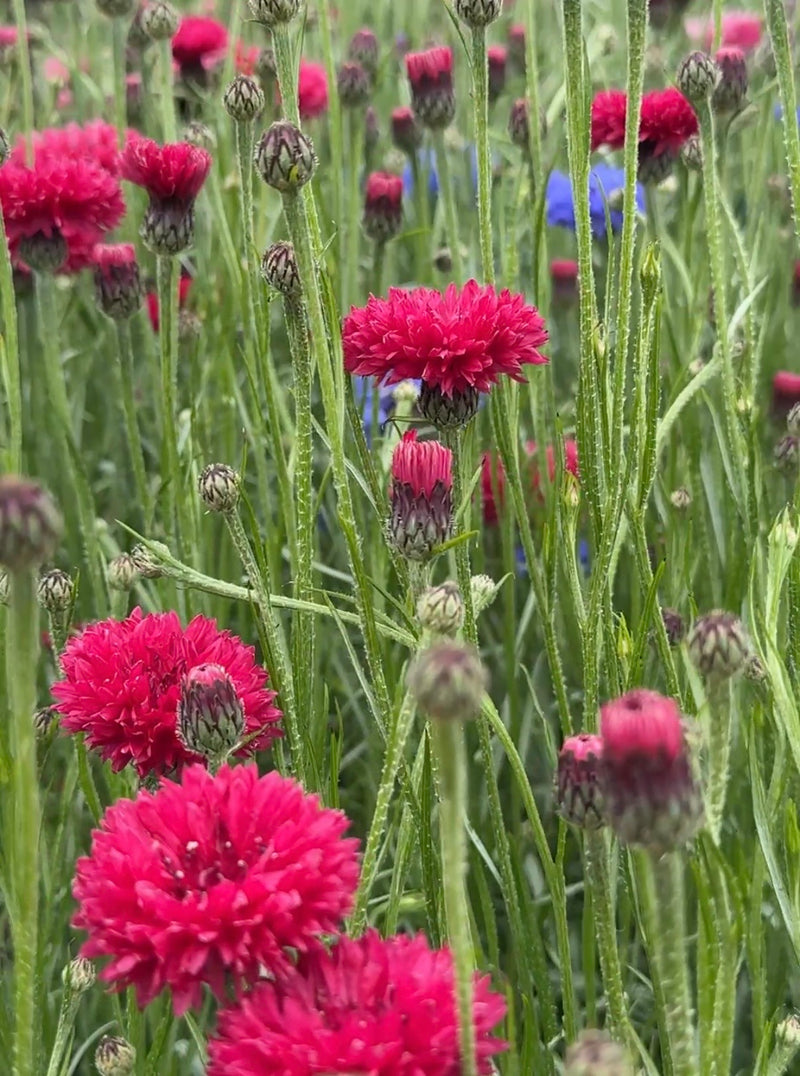
Despite its name, 'Red Boy' isn't a harsh fire-engine red — it's a rich, deep carmine-pink ruby shade that looks like crushed velvet, bringing warmth and romance to the cottage garden with the same fully double, ruffled form that defines the "Ball"-type cornflower family.
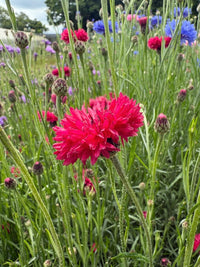
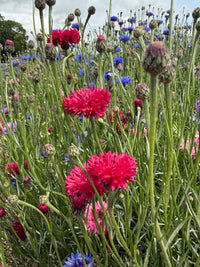
This is the carmine-ruby cornflower, and the name slightly undersells the actual colour. Each fully double, ruffled bloom is a deep berry-tone that reads as ruby in strong sunlight and shifts toward crushed-velvet carmine in softer light — the kind of warm, almost-red-but-not-quite shade that brings genuine warmth to a cottage planting without the harshness of true scarlet. Tall on silvery-green stems (75–90cm) with characteristic cornflower foliage, this variety retains all the classic informal meadow charm of the family while offering something distinctly different from blue or maroon. Hardy annual (H7), edible petals (genuinely beautiful sprinkled over a white pavlova or summer salad), RHS Plants for Pollinators recognised, drought-tolerant once established.
A note on growing
Direct sow outdoors in September for the autumn-sown advantage, or March to May for summer flowering. Cornflowers have deep taproots and resent being moved — direct sowing is essential. Sow at 1cm depth in well-drained soil. Germination 10–14 days. Full sun is required. Average to lean soil produces the strongest, most upright plants — rich ground gives floppy stems. Plants reach 75–90cm and benefit from twiggy support inserted early to prevent flopping in heavy rain. Deadhead weekly or cut for the vase to maintain continuous flowering until the frosts.
Where it shines
In warm-toned cottage borders, where the carmine-ruby adds berry-coloured romance amongst greens, blues and other warm shades. As a cutting flower for warm-toned bouquets — particularly outstanding alongside the apricot-and-blush of Cosmos 'Apricotta' for properly romantic summer arrangements. In cottage garden seed mixes for naturalistic warm meadow plantings. As an autumn-sown crop where the strong root development gives bigger, more architectural plants the following year. The edible petals are particularly photogenic — the ruby colour holds well even after drying.
Plant alongside
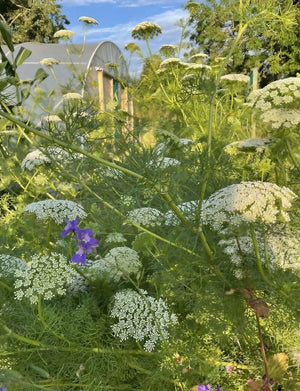
For a high-energy jewel-box cottage scheme, combine 'Red Boy' with the classic sapphire of 'Blue Ball' for a timeless cornflower pairing — both are exceptional bumblebee plants and the contrast is genuinely striking. For a soft texture match, the lacy white of Ammi majus provides a neutral backdrop that lets the berry tones truly pop. For a warm cottage cutting scheme, pair with Cosmos 'Apricotta' and Calendula 'Touch of Red'.
Plant alongside
Cornflower Red Boy pairs beautifully with these cottage garden classics


RHS Plants for Pollinators
This plant has been assessed by the Royal Horticultural Society and recommended as especially beneficial to bees, butterflies and other pollinators. Growing plants like this directly supports UK pollinator populations — something close to our hearts at Salle Moor Hall Farm, where we see the difference a cottage garden full of the right plants can make.
Learn more at RHS.org.uk →