

Corncockle
Agrostemma githago — Corncockle; traditional British arable wildflower
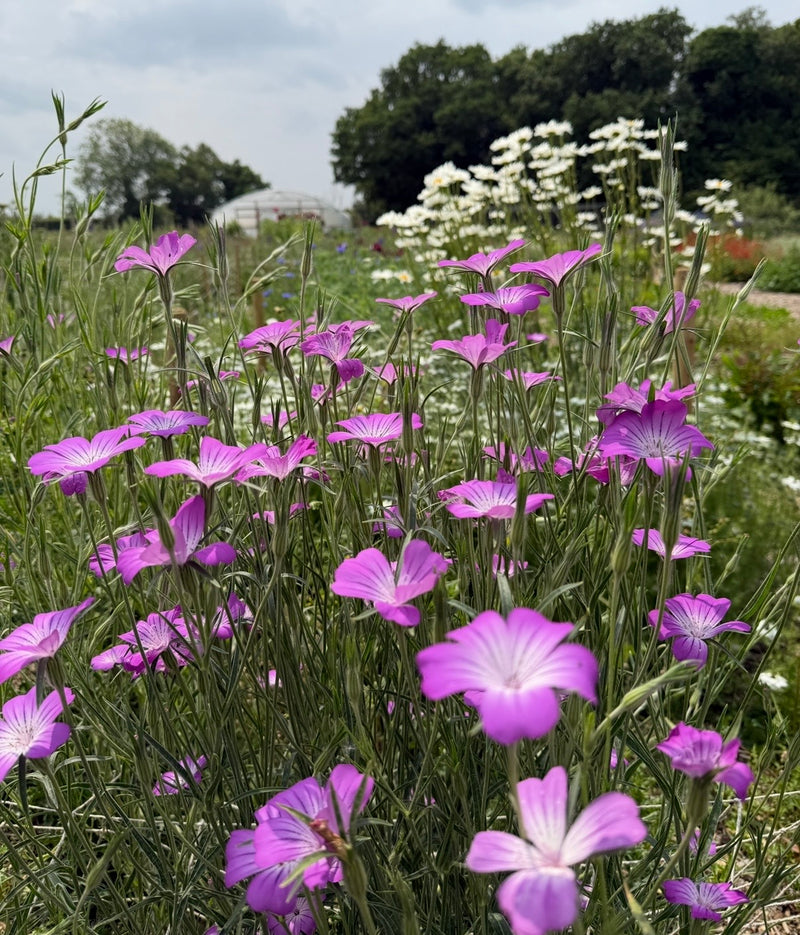
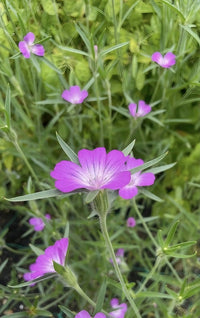
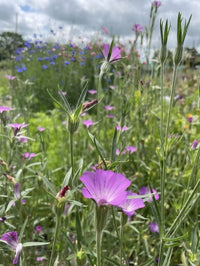
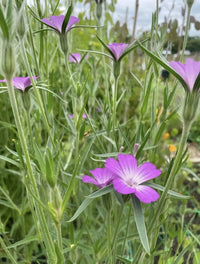
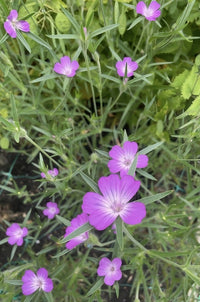
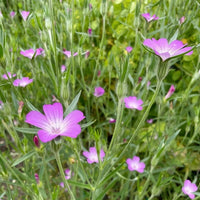
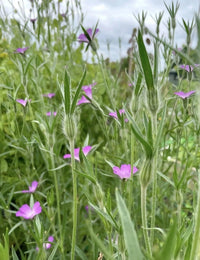
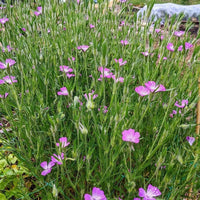
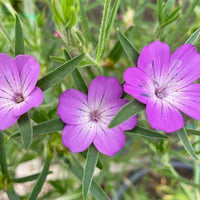
Tall slender stems with magenta-pink trumpet flowers and black-speckled white centres — the iconic British cornfield wildflower, weaving through cottage borders.
About this variety
Agrostemma githago Corncockle / Common Corncockle
Tall, slender, wiry stems carrying large open trumpet flowers in a glowing magenta-pink, fading to a soft white centre delicately speckled with black guide lines — Corncockle is the iconic British wildflower of the lost cornfield meadow, a plant of grace, movement and quiet historical resonance.
Once a common sight in every cornfield in Britain, Corncockle has become a rare beauty — modern herbicides and seed-cleaning techniques essentially eliminated it from agricultural landscapes by the 1950s. What survives in cottage gardens and dedicated wildflower meadows is genuinely a piece of British natural heritage. The plant produces tall (75–90cm), slender wiry stems with the silky-textured trumpet flowers held airily above, swaying in the slightest breeze. The colouring is genuinely beautiful — large open magenta-pink trumpets with white centres marked by delicate black "honey guide" lines that direct pollinators to the central nectar. Hardy annual, RHS Plants for Pollinators recognised, with the long-tubed flowers particularly valued by long-tongued bumblebees. Self-seeds reliably once established.
A note on growing
Corncockle is genuinely easy to raise from seed but has one specific requirement — it deeply resents being moved due to a sensitive taproot. Direct sowing into its final position is essential. Sow direct outdoors in September for early summer flowers the following year, or March to May for a continuous mid-to-late summer display. Scatter onto finely raked soil and cover with about 1cm of soil. Germination is rapid, 7–14 days. Full sun, in poor to average well-drained soil — Corncockle thrives in lean ground and resents rich, fertilised conditions. The "weaving" growth habit (slender wiry framework rather than dense mound) means the plant is biologically designed to grow up through taller grasses and companion plants for natural support. In a border, plant in groups so the stems can lean against each other.
⚠️ Important safety note: All parts of Corncockle, especially the seeds, are poisonous if ingested. Wear gloves when handling and take care in gardens used by pets that chew foliage.
Where it shines
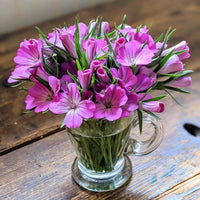
In wildflower meadows and naturalistic plantings where the historical and ecological resonance is genuinely valuable. In cottage borders for its airy, weaving character — Corncockle interlaces beautifully with companion plants rather than competing with them. In "moon gardens" — the white-centred flowers catch low evening light beautifully. In wildlife gardens, where the long-tubed flowers serve long-tongued bumblebees that struggle with shorter, simpler flower forms. As a cut flower for tall, romantic, slightly wild-looking arrangements.
Plant alongside
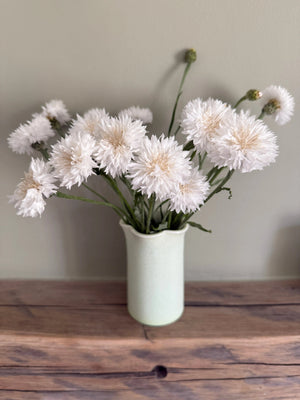
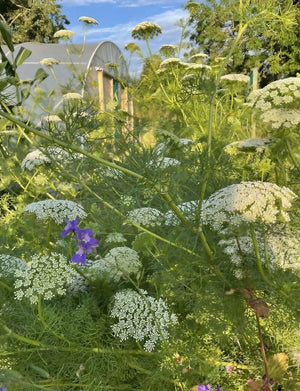
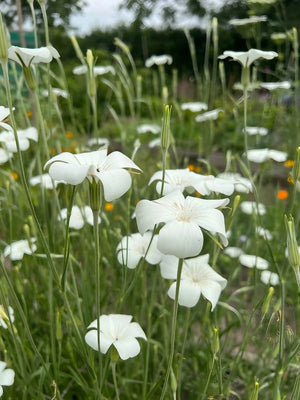
For an authentic British cornfield meadow scheme, combine with Cornflower (the indigo-blue counterpart), Painted Daisies (multi-coloured warm meadow), and the white form Corncockle 'Bianca' for a layered native meadow look. In the cottage border, pair with Ammi majus for airy white contrast, or with Larkspur for tall blue companions.
Plant alongside
Corncockle pairs beautifully with these cottage garden classics

RHS Plants for Pollinators
This plant has been assessed by the Royal Horticultural Society and recommended as especially beneficial to bees, butterflies and other pollinators. Growing plants like this directly supports UK pollinator populations — something close to our hearts at Salle Moor Hall Farm, where we see the difference a cottage garden full of the right plants can make.
Learn more at RHS.org.uk →