Skip to product information
1 of 7

Corncockle 'Bianca' Seeds

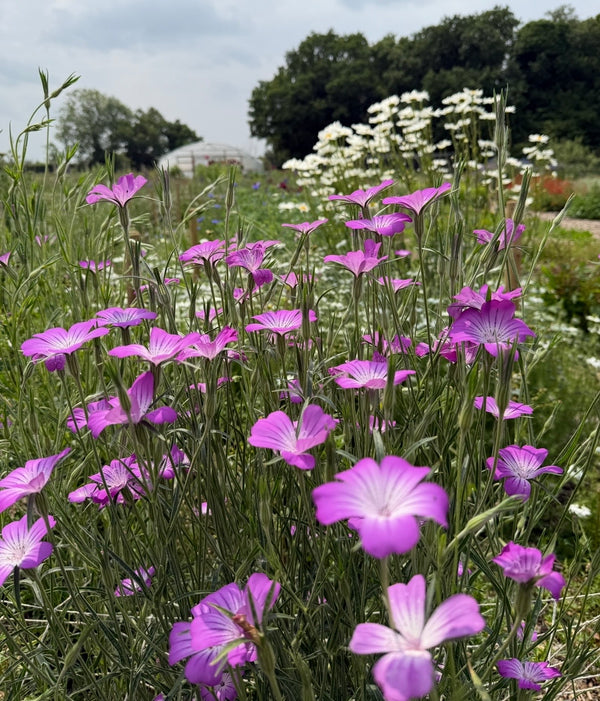
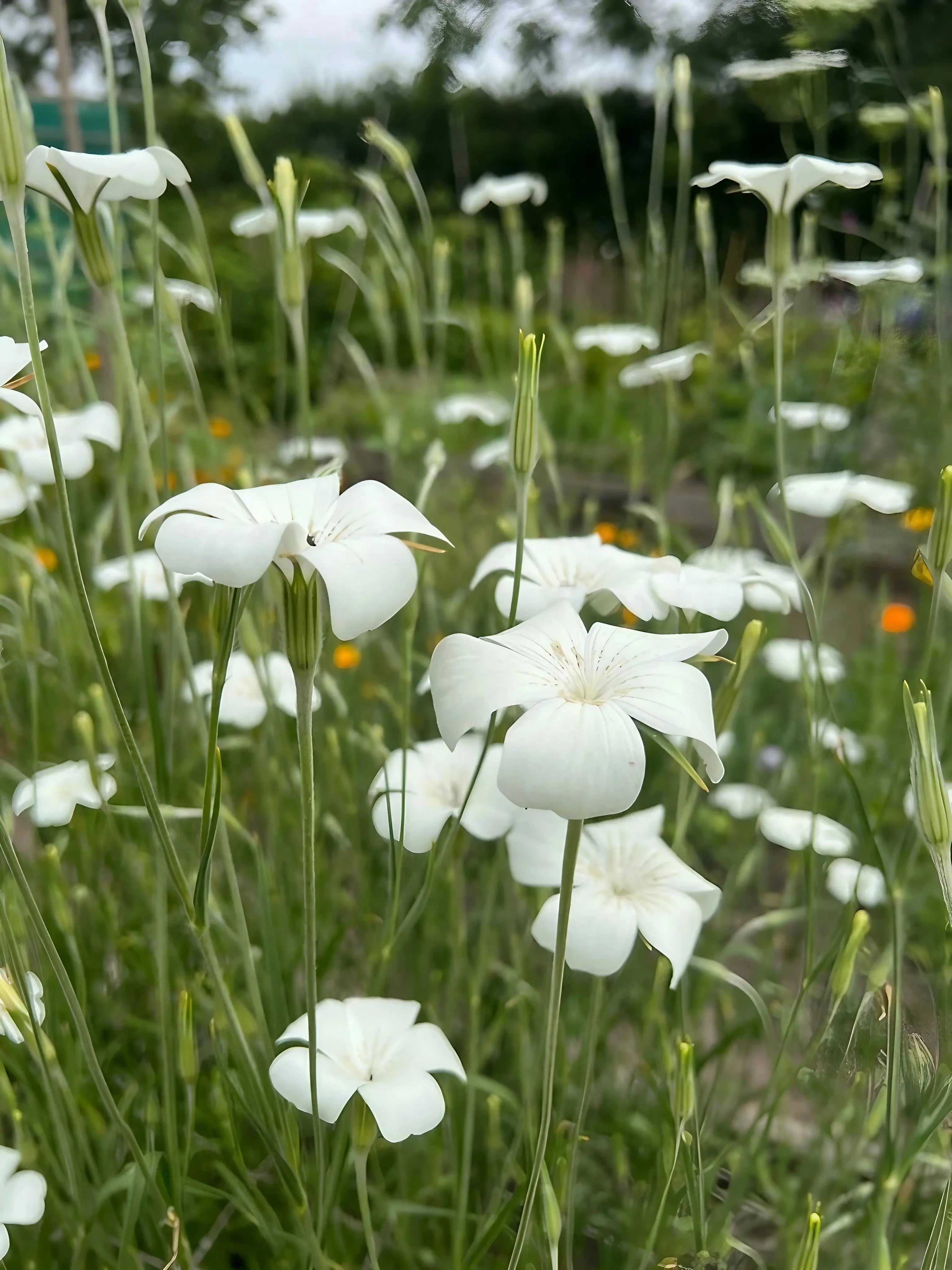
Once a common sight in British cornfields, the Corncockle has become a rare garden treasure. 'Bianca' is the stunning pure white form of this wildflower, producing large, open trumpets with silky petals that seem to glow against their slender, silver-grey stems.

This is a plant of grace and movement. It doesn't form a heavy clump; instead, it sways gently in the breeze, weaving its way through other plants. It is the perfect choice for a "Moon Garden" or a white border, where its luminous blooms catch the low evening light. It is incredibly easy to grow, beloved by bees, and adds a touch of wild, timeless romance to any space.


Read More

🌿 Understanding the Plant

Corncockle is a Hardy Annual.

It completes its life cycle in one season. It is a "cool season" flower, meaning it establishes best in the cooler days of spring or autumn.

The "Weaving" Habit: Agrostemma has tall, thin, wiry stems. It isn't designed to stand alone in a pot; it likes to grow up through other plants (like grasses or cornflowers) which help support it. It creates a natural, intermingled look.

🌱 Growing Guide: How to Sow and Grow

This plant has a long taproot and hates being transplanted. Direct sowing is essential.

Germination:
Sow directly outdoors in Autumn (Sept) for taller, earlier plants, or Spring (March-May). Scatter seeds onto raked soil and cover with 1cm of soil. Germination is rapid (7-14 days).

Where to Sow:
They need full sun. They are not fussy about soil pH but prefer it to be well-drained. They will flop in heavy shade or very rich, manured soil.

Care While Growing:
Support: Because the stems are slender and tall (up to 90cm), plant them close together or amongst other plants so they can self-support. If growing in an exposed spot, some twiggy sticks will help.

📋 Plant Specifications
Latin Name Agrostemma githago 'Bianca'
Common Name White Corncockle
Hardiness H7 (Very Hardy - to -20°C)
Light Required Full Sun ☀️
Height ↕️ 60cm - 90cm (Tall)
Spread ↔️ 30cm
Spacing 🌱 20cm apart
Great for 🌙 Moon Gardens
🐝 Bees & Butterflies
🌾 Meadow Style
✂️ Cut Flowers
Seed Count Approx. 100 seeds per packet
🤝 Perfect Garden Companions

Corncockle 'Bianca' is the ghostly, luminous form of the traditional pink wildflower, and its pure white blooms demand different companions than its colourful cousins. This is a plant for sophisticated white gardens, moonlit borders, and elegant naturalistic plantings where subtlety and refinement reign over bold colour. The silvery-white petals seem to glow at dusk, creating an ethereal, romantic atmosphere that pairs beautifully with other pale flowers or striking colour contrasts:

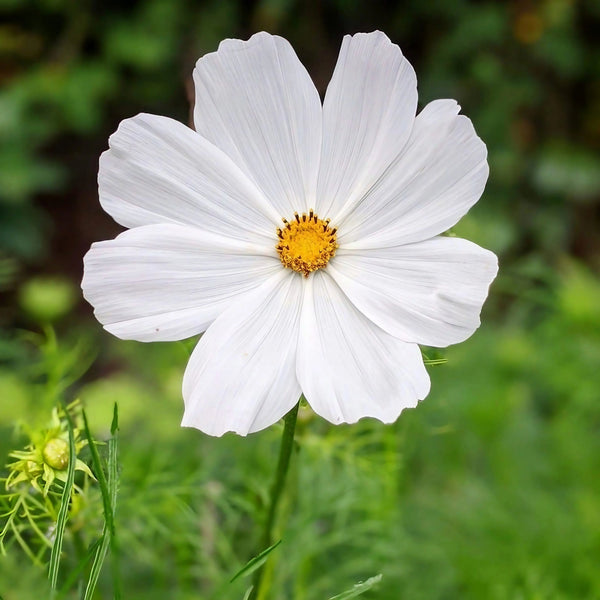
  • ☁️ Ammi Majus (Queen Anne's Lace): The White Haze – The Cloud Garden Pairing! This is the ultimate white-on-white pairing for sophisticated gardeners who understand that "white" isn't a single colour but a complex spectrum of tones, textures, and luminosities. Ammi majus (Bishop's Flower or Queen Anne's Lace) is one of the most beloved cutting garden plants in existence, producing tall (90-120cm), branching stems topped with large, flat-topped umbels of tiny white lace-cap flowers that create a delicate, airy, cloud-like effect. The individual flowers are minute, but they're clustered into horizontal platforms (10-15cm across) that look like intricate white doilies or snowflakes suspended in mid-air. When planted together, Corncockle 'Bianca' and Ammi majus create a stunning "white cloud garden" where layers of different white textures interweave to create depth, movement, and ethereal beauty. The aesthetic combination is breathtaking: Corncockle 'Bianca' produces tall (60-90cm), slender stems topped with large (4-5cm), open trumpet flowers in pure snow-white with silky, slightly translucent petals that catch and reflect light beautifully. Against its silvery-grey stems, the white flowers appear to float and glow, especially in evening light. Ammi majus, meanwhile, creates horizontal clouds of tiny white flowers that form a misty, lacy haze throughout the border. The contrast between the two whites is subtle but significant: Corncockle's flowers are larger, more substantial, and have a smooth, silky texture, whilst Ammi's are tiny, delicate, and create a fine, lace-like texture. Together they create a layered white tapestry where solid meets airy, bold meets delicate, and vertical meets horizontal. The height relationship works beautifully: both are tall plants (Corncockle 60-90cm, Ammi 90-120cm), so they grow together as equals, interweaving their stems naturally without one dominating the other. Plant them in mixed drifts where they can support each other structurally (both have relatively slender stems), creating a self-supporting thicket of interlocking white flowers that sway together in the breeze. The "see-through" quality of both plants is crucial: neither forms a solid wall of foliage or flowers—instead, both are airy and translucent, allowing you to see through them to the plants behind, creating depth and layers rather than flat blocks of colour. This makes them perfect for the middle of borders where they add height without blocking the view. The cultural compatibility is excellent: both are hardy annuals, both demand full sun and well-drained soil, both thrive in poor to average soil (rich soil creates weak, floppy stems), both are drought-tolerant once established, and both prefer "lean and mean" growing conditions. Crucially, both have sensitive taproots and dislike transplanting, so direct sowing in autumn (September) or spring (March-May) is essential for both. The autumn sowing advantage is significant: both plants benefit enormously from September sowing, establishing massive root systems over winter that produce taller, stronger, more floriferous plants the following summer. Autumn-sown Ammi can reach 120cm+ tall (vs 60-80cm for spring sowings), whilst autumn-sown Corncockle produces earlier flowers and more robust stems. The flowering synchronization is perfect: both bloom from mid-June through August-September, providing 3-4 months of continuous overlapping white glory. Both are also excellent "cut-and-come-again" plants—regular harvesting for bouquets encourages more flowering and extends the display well into autumn. The cut flower excellence is outstanding: this is the dream pairing for wedding florists and anyone who loves loose, naturalistic "just-picked-from-the-meadow" style bouquets. Ammi is the florist's gold standard for white filler (often called "cheaper gypsophila" but infinitely more beautiful), providing those essential airy clouds that soften and lighten any arrangement, whilst Corncockle 'Bianca' adds larger, more substantial white blooms on tall (60-90cm), elegant stems. Harvest both together for stunning all-white bouquets that look expensive, sophisticated, and effortlessly elegant. The vase life is excellent: Ammi lasts 7-10 days in water (RHS Award of Garden Merit for cut flower performance), whilst Corncockle lasts 5-7 days. The moon garden magic: this pairing is absolutely essential for "moon gardens" designed to be viewed at dusk and into the evening. Both plants have white flowers that reflect moonlight and seem to glow luminously in fading daylight, creating an ethereal, ghostly effect that transforms the garden as darkness falls. Plant them near seating areas, pathways, or windows where you can enjoy their magical glow during summer evenings. The pollinator value is exceptional: both are certified RHS Plants for Pollinators (Ammi holds RHS Award of Garden Merit specifically for its wildlife value), attracting bees, hoverflies, butterflies, and beneficial insects throughout summer. The flat, accessible flower heads of Ammi are particularly beloved by tiny solitary bees and parasitic wasps, whilst Corncockle's deep trumpet flowers provide nectar for long-tongued bees. Together they create a buzzing, biodiverse white garden that supports the entire ecosystem. For best results, sow both directly into prepared soil in September (for strongest plants) or March-May (for same-year flowers), spacing Ammi seeds 30cm apart and Corncockle seeds 20cm apart in generous mixed drifts. Plant close together so they interweave and support each other naturally—their interlocking stems create mutual stability without needing stakes. Choose a sunny spot with well-drained soil, water until established, then enjoy months of sophisticated white elegance. This is the ultimate pairing for anyone who believes that white gardens are the height of horticultural sophistication—proof that restraint and subtlety can be far more striking than bold colour!
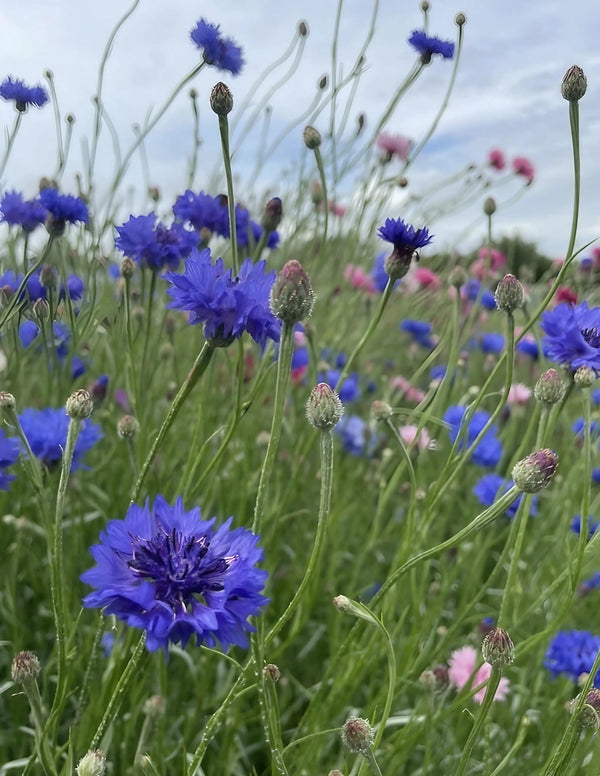
  • 💙 Cornflower 'Blue Ball': The Meadow Classic – Recreating Lost Britain! This pairing brings together two of the most iconic cornfield wildflowers in British history—the white form of Corncockle alongside the brilliant blue Cornflower—to recreate the romantic image of the lost English countryside before modern agriculture eliminated these beautiful "weeds" from our fields. This is botanical conservation meets garden design, honouring heritage whilst creating a stunning display of contrasting colours that captures the essence of a summer meadow. Cornflower 'Blue Ball' (Centaurea cyanus) is the classic cottage garden variety, producing masses of fully double, ruffled pompom flowers in the most intense, electric shade of true blue that seems almost unnatural in its vividness. Unlike wispy wild cornflowers, 'Blue Ball' has dense, rounded, substantial blooms (hence the name) sitting atop tall, silvery-grey stems reaching 75-90cm—perfectly matching the height of Corncockle 'Bianca'. The colour combination is absolutely arresting and works on multiple levels. First, the stark contrast: pure snow-white against brilliant electric blue creates maximum visual impact, like summer clouds against a clear sky. This is one of the most crisp, clean, fresh colour pairings in gardening—there's nothing muddy or ambiguous about it. The white makes the blue appear even more intensely saturated, whilst the blue provides a vibrant backdrop that prevents the white from appearing washed-out or boring. Second, the "cool summer meadow" aesthetic: both colours are from the cool side of the colour wheel (whites and blues), creating a calming, refreshing, sophisticated palette that evokes clear skies, sea breezes, and cool morning mist. This is the antithesis of hot-toned "fire" borders—instead, it's all about serenity, elegance, and timeless beauty. Third, the nostalgic cornfield recreation: historically, white Corncockle and blue Cornflowers grew together in British wheat fields for centuries, creating the iconic patchwork landscape that defined rural England until herbicides eliminated them in the 1950s-60s. Planting them together is an act of remembrance and conservation, bringing back a vanished ecosystem and honouring our agricultural heritage. Every time you look at this pairing, you're seeing what our grandparents saw as children—the countryside as it once was. The structural harmony is excellent: both plants have tall (75-90cm), slender, upright stems that sway together synchronously in the breeze, creating natural movement and rhythm. Both have wiry stems that benefit from mutual support—plant them close together in mixed drifts where they can interweave and stabilize each other without needing stakes. Both produce flowers at similar heights, creating an even canopy of white-and-blue rather than distinct height layers, which creates a seamless, naturalistic meadow effect rather than a formal "structured" border. The cultural compatibility is perfect: both are hardy annuals, both demand full sun and well-drained soil, both thrive in poor to average soil (rich soil creates weak, leggy growth), both are extremely drought-tolerant once established, and both prefer "lean and mean" conditions that mimic their natural cornfield habitat. Both also dislike root disturbance and perform best when direct-sown into the ground in autumn (September—the secret to giant plants!) or spring (March-May). The autumn sowing advantage is crucial: September-sown plants establish massive root systems over winter, resulting in taller stems (90cm vs 60cm), earlier flowering (weeks ahead of spring sowings), and far more prolific blooming with hundreds of flowers per plant. Both Corncockle and Cornflower are transformed by autumn sowing—it's genuinely worth the extra effort. The flowering synchronization is excellent: both bloom from June through August-September, providing 3-4 months of continuous overlapping colour. Both are also "cut-and-come-again" plants—regular deadheading or harvesting for bouquets encourages more flower production, extending the display well into autumn until first frosts. The pollinator value is exceptional: both are certified RHS Plants for Pollinators, producing high-quality nectar and pollen that attracts bees, butterflies, hoverflies, and beneficial insects throughout summer. Cornflowers are particularly beloved by bumblebees (who cling to the flowers whilst feeding) and honeybees, whilst Corncockle's deep trumpet flowers provide nectar for long-tongued pollinators. Together they create a buzzing, biodiverse wildflower meadow that supports the entire food web. The cut flower excellence is outstanding: both produce tall (75-90cm), sturdy stems perfect for cutting, both last 5-7 days in water, and both look absolutely stunning together in loose, naturalistic "meadow-picked" style bouquets. The white-and-blue combination is classic, fresh, and universally appealing—perfect for summer weddings, garden parties, or simply bringing the meadow indoors. Harvest regularly to encourage more blooms. The edible bonus: Cornflower petals are 100% edible with a mild, slightly sweet flavour, making beautiful garnishes for cakes, salads, drinks, or frozen into ice cubes for summer cocktails. (Note: Corncockle is NOT edible—it's poisonous, so never eat any part of it.) The self-seeding future: both plants self-seed enthusiastically if you leave some flowers to set seed at the end of the season, returning year after year to create a permanent wildflower meadow that requires zero maintenance once established. For best results, sow both together in September (for strongest, earliest plants) or March-May (for same-year flowers), spacing seeds 15-20cm apart in generous mixed drifts. Plant close together so they support each other naturally—their interlocking stems create mutual stability. Choose a sunny spot with well-drained, poor to average soil, water until established, then enjoy months of nostalgic British meadow magic. This is heritage gardening at its finest—recreating the lost landscapes of our ancestors whilst creating breathtaking beauty!
📅 Sowing & Flowering Calendar

Sow outdoors in autumn or spring. Flowers mid-summer.

Month J F M A M J J A S O N D
Sow Outdoors
Flowers
⚠️

Toxicity Warning

Unlike Cornflowers, all parts of the Corncockle plant (especially the seeds) are poisonous if ingested. Do not eat, and take care in gardens with pets that are prone to chewing plants.

🏆

Officially Recognised Excellence

Agrostemma is a biodiversity hero. It is listed on the RHS Plants for Pollinators list, producing easily accessible nectar for bees and butterflies.

Need more detailed growing advice?
Visit our comprehensive growing guides at bishybarnabeescottagegarden.com

Regular price
£2.35
Regular price
Sale price
£2.35
Tax included. Shipping calculated at checkout.

    3 total reviews

    Corncockle Bianca - Agrostemma githago - Bishy Barnabees Cottage Garden Ltd
    Corncockle Bianca - Agrostemma githago - Bishy Barnabees Cottage Garden Ltd
    Corncockle Bianca - Agrostemma githago - Bishy Barnabees Cottage Garden Ltd
    Corncockle Bianca - Agrostemma githago - Bishy Barnabees Cottage Garden Ltd
    Corncockle Bianca - Agrostemma githago - Bishy Barnabees Cottage Garden Ltd
    Corncockle Bianca - Agrostemma githago - Bishy Barnabees Cottage Garden Ltd
    Corncockle Bianca - Agrostemma githago - Bishy Barnabees Cottage Garden Ltd