



Aster Ostrich Plume
Callistephus chinensis 'Ostrich Plume Mixed'
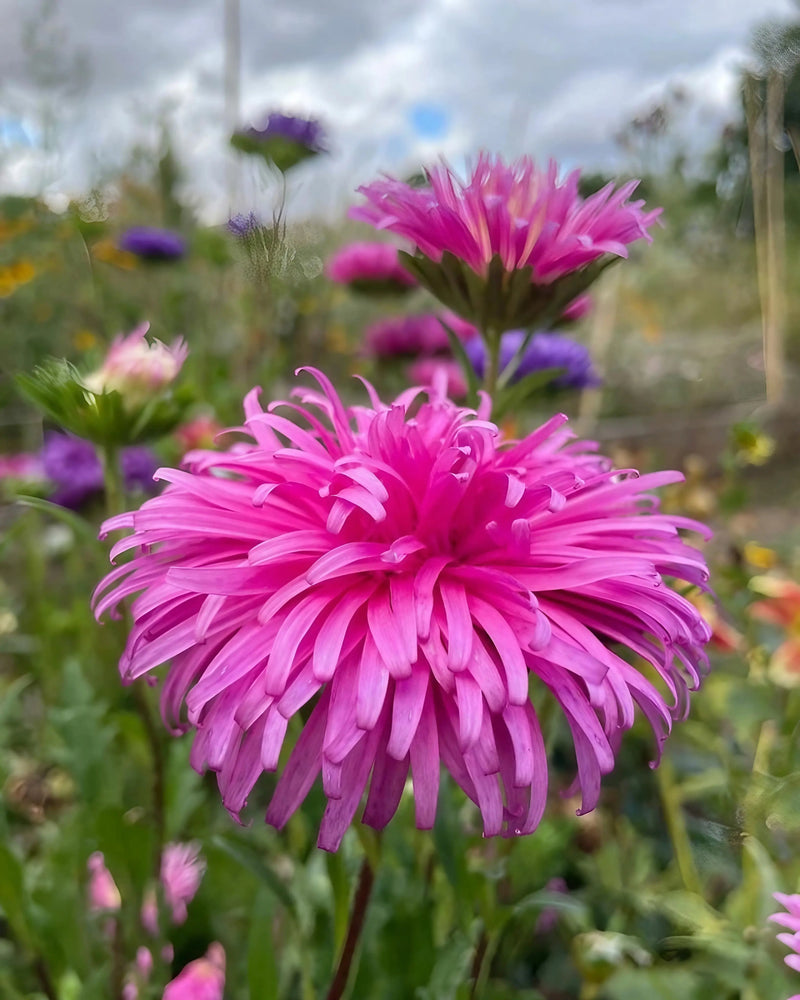
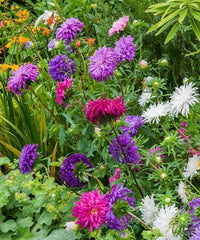
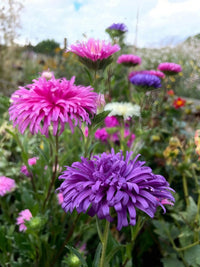
Shaggy heirloom China aster with long curled petals like ostrich plumes, in shell-pink, lavender, crimson and white — the late-summer cut flower with retro charm.
About this variety
Aster (Callistephus chinensis) 'Ostrich Plume' China Aster 'Ostrich Plume'
Massive, shaggy heads composed of long, curled and twisted petals that resemble the feathery plumes of an ostrich — an heirloom China aster with serious retro charm in shades of shell-pink, deep violet, lavender, crimson and pure white.
If you love the look of expensive florist chrysanthemums but want something easy to grow from seed, 'Ostrich Plume' is the answer. This heirloom variety has been grown for over a century, prized for its uniquely shaggy, plumed flower form — long, narrow, curled petals that twist and curl outward in every direction, creating a soft, almost-feathered appearance that is utterly unlike the flat-petalled asters most gardeners know. The mix produces flowers in soft cottage tones from shell-pink through lavender to deep crimson, on strong 50–60cm stems suitable for cutting. RHS Plants for Pollinators recognised. As with all Callistephus asters, this is a half-hardy annual flowering August to October — providing fresh, long-stemmed beauty for your autumn vases just as the rest of the garden begins to fade.
A note on growing
Sow indoors from March to April. Surface-sow onto moist compost and cover with a fine 3mm sprinkling of vermiculite — Aster seeds germinate best with this very light covering. Maintain 18–21°C; germination takes 10–14 days. Plant out after the last frost in late May or June, in full sun and rich, moisture-retentive soil. Asters are hungry plants and reward generous compost or organic matter dug in before planting. Space 30cm apart. Rotation matters: never plant asters in the same ground two years running to prevent wilt disease build-up. In windy gardens, the shaggy flower heads can be top-heavy — provide netting or stakes.
Where it shines
In the cutting garden as a soft, romantic, cottage-style filler — the shaggy plumes work particularly well in arrangements that lean rustic or retro. The exceptional vase life (up to two weeks in cool conditions) makes them outstanding for cutting. In the border, plant in cottage groups where the soft colour mix can do its work alongside more structured neighbours. Particularly good in autumn arrangements where the soft pinks and lavenders echo the season's gentler light.
Plant alongside
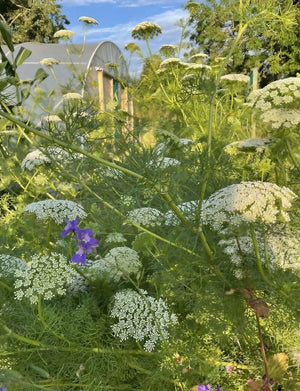
For a soft, romantic late-summer scheme, pair 'Ostrich Plume' with the airy white clouds of Ammi majus and the gentle apricot of Calendula 'Art Shades Mixed'. For autumn drama, contrast the soft plumes with the deep crimson of Amaranthus 'Love-Lies-Bleeding' and the architectural form of Bells of Ireland.
Plant alongside
Aster Ostrich Plume pairs beautifully with these cottage garden classics


RHS Plants for Pollinators
This plant has been assessed by the Royal Horticultural Society and recommended as especially beneficial to bees, butterflies and other pollinators. Growing plants like this directly supports UK pollinator populations — something close to our hearts at Salle Moor Hall Farm, where we see the difference a cottage garden full of the right plants can make.
Learn more at RHS.org.uk →