Bronze Fennel Seeds
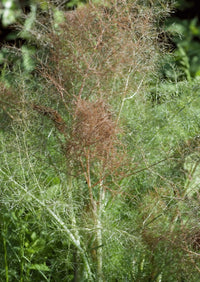
Grow the edible mist! Bronze Fennel creates tall clouds of smoky-purple foliage with a sweet aniseed flavour. This stunning architectural perennial reaches 120-180cm (4-6ft) tall, producing feathery, finely-dissected leaves in gorgeous bronze-purple tones that shimmer in the sunlight. In summer, it sends up tall stems topped with large, flat umbels of tiny golden-yellow flowers that attract bees, hoverflies, and butterflies in droves—it's particularly beloved as a host plant for Black Swallowtail caterpillars!
This is NOT the bulbing Florence Fennel you buy in supermarkets—this is a "herbaceous" fennel grown for its leaves, flowers, and seeds rather than forming a swollen white base. The young purple leaves taste of sweet anise and are delicious in salads, with fish, or steeped as fennel tea. In late summer, harvest the golden flower pollen (called "The Spice of Angels" by top chefs!) or let the flowers set seed for aromatic fennel seeds to use in cooking. Bronze Fennel is a Herbaceous Perennial that dies back to the ground in winter, then re-emerges with fresh purple shoots every spring. It grows a very long, carrot-like taproot which makes it incredibly drought-resistant once established. This is an essential architectural plant for adding height, movement, and ethereal purple haze to borders, and it's wonderfully low-maintenance once established. Perfect for cottage gardens, wildlife gardens, herb gardens, and mixed borders where its dramatic foliage provides a stunning backdrop for other flowers!
Read More
🌸 Understanding the Plant
Foeniculum vulgare 'Purpureum' (Bronze Fennel) is a Herbaceous Perennial (hardy zones 5-9) native to the Mediterranean and southwestern Asia. It's the sole species in its genus and belongs to the carrot family (Apiaceae), making it a cousin to dill, parsley, and carrots!
The Bronze-Purple Colour: What makes this variety spectacular is the foliage colour—new growth emerges in stunning bronze-purple tones (sometimes described as "smoky," "copper," or "wine-tinged") that glint and shimmer in sunlight. As foliage ages through the season, it gradually fades from intense purple to grey-green with bronze undertones. The depth of colour is most intense in spring and early summer, and varies with heat, sunlight, and soil fertility—plants grown in full sun with lean soil produce the deepest purple; rich soil produces more green tones.
The "Mist" Effect: The foliage is extraordinarily finely dissected—each leaf is divided and sub-divided into thread-fine segments that create a soft, feathery, cloud-like appearance. When planted in groups or drifts, Bronze Fennel creates an ethereal "purple mist" effect that's absolutely magical! It provides the perfect textural contrast to plants with broad, solid leaves.
The Taproot - Drought Resistance: Bronze Fennel grows a very long, carrot-like taproot (sometimes 30cm+ deep!) that allows it to find water deep underground. This makes it incredibly drought-resistant once established—it can survive prolonged dry spells that would kill many perennials. HOWEVER, this taproot also means fennel hates being moved—always direct sow or plant out whilst very young!
The Flowers & Seeds: In July-September, mature plants send up tall flowering stems topped with large, flat umbels (10-15cm across) of tiny golden-yellow flowers. These umbels are composed of hundreds of individual tiny flowers that collectively create a spectacular display! Bees, hoverflies, and butterflies absolutely mob the flowers. After flowering, aromatic seeds form—these are the fennel seeds used in cooking (with that characteristic sweet anise flavour). If you don't harvest them, they'll drop and you'll get baby fennel plants popping up everywhere next year!
The "Fennel Pollen" - Chef's Secret: In late summer when flowers are fully open, you can gently shake the yellow flower heads over a bowl to collect the golden pollen dust. This fennel pollen has an intense, concentrated sweet anise flavour that's often called "The Spice of Angels" by top chefs! It's incredibly expensive to buy but free if you grow your own fennel!
Black Swallowtail Butterfly Host Plant: Bronze Fennel is a prized host plant for Black Swallowtail butterfly caterpillars. If your foliage gets nibbled in summer by striped green caterpillars, consider it a badge of ecological honour! Plant an extra or two to share—the caterpillars will eat some foliage but rarely devastate the plant, and you'll be rewarded with beautiful butterflies!
🌱 Growing Guide
Bronze Fennel is wonderfully easy to grow once you understand its one golden rule: direct sowing is best because it hates being moved!
How to Sow:
DIRECT SOWING (RECOMMENDED): Sow directly outdoors from April to May after last frost, or from late August to September for germination next spring. Prepare soil well and rake to a fine tilth. Sow seeds thinly in shallow drills 5mm-1cm deep, covering lightly with soil. Space drills 45-60cm apart. Water well and keep soil moist until germination (10-21 days at 15-20°C). INDOOR SOWING (if necessary): If you must start indoors, sow in deep modules or root trainers 6-8 weeks before last frost to accommodate the taproot. Sow 1 seed per module, 5mm deep. Keep at 18-20°C. Germination takes 10-21 days. Transplant out whilst still very young (4-6 weeks old) to minimise root disturbance, spacing 45-60cm apart.
Thinning:
Once seedlings are large enough to handle, thin to 45-60cm spacing. This seems generous but mature plants become substantial! Give them room to develop their full architectural presence.
Where to Plant:
Bronze Fennel demands full sun for best colour (very light shade tolerated but purple tones will be less intense). It thrives in moist but well-drained, moderately fertile soil. It will tolerate poor, sandy, or clay soils as long as drainage is good—it hates waterlogged conditions! Despite preferring "moist" soil, once established with that deep taproot, it's remarkably drought-tolerant.
Watering & Feeding:
Water regularly until established (first growing season). Once established, water only during very prolonged dry spells—the deep taproot makes mature plants self-sufficient! DO NOT over-feed—fennel grown in very rich soil produces excessive leafy growth and less intense purple colour. A light mulch of compost in spring is sufficient.
Support:
Despite growing very tall (120-180cm), Bronze Fennel is usually self-supporting. In very windy or exposed gardens, or if grown in overly rich soil (which makes stems softer), some light staking with canes may be needed in the flowering stage.
Deadheading & Self-Seeding:
If you want to prevent self-seeding: cut flower heads off before they turn brown and drop seed. If you DON'T mind volunteer seedlings (they're easy to weed out if unwanted): leave seed heads to mature and drop naturally—you'll get free fennel plants next year! In some regions fennel can become slightly invasive through self-seeding, so manage it responsibly by deadheading if this concerns you.
Winter Care:
Bronze Fennel is a herbaceous perennial that dies back to ground level in winter. When this happens (after first hard frosts), cut back all dead stems to ground level and clear away debris. Fresh purple shoots will emerge from the crown in spring!
Harvesting:
Young leaves: Harvest anytime for fresh use in salads or cooking—they're best when young and tender. Fennel pollen: In late summer, shake open flower heads over a bowl to collect the golden pollen. Fennel seeds: Allow flowers to set seed, then harvest when seed heads have fully ripened and turned brown. Hang upside down in paper bags to catch seeds as they dry.
Pests & Diseases:
Virtually trouble-free! The only "pest" is Black Swallowtail caterpillars, which are actually a benefit—plant extra fennel to share! Occasionally root rot can occur in waterlogged soil, but this is easily prevented by ensuring good drainage.
📋 Plant Specifications
| Botanical Name | Foeniculum vulgare 'Purpureum' |
| Common Names | Bronze Fennel, Copper Fennel, Purple Fennel, Smokey Fennel |
| Plant Type | Herbaceous Perennial (dies back in winter, returns each spring) |
| Hardiness | Hardy perennial (USDA zones 5-9) |
| Light Requirements | Full sun (essential for best purple colour) ☀️ |
| Height | 120-180cm (4-6ft) when flowering |
| Spread | 60-90cm |
| Spacing | Plant 45-60cm apart |
| Flowering Period | July to September |
| Flower Colour | Golden-yellow umbels |
| Foliage Colour | Bronze-purple fading to grey-green |
| Flavour | Sweet anise/liquorice |
| Perfect For | 🌿 Architectural Height 🦋 Black Swallowtail Host Plant 🐝 Bees, Butterflies & Hoverflies 🥗 Edible Leaves, Pollen & Seeds 🏡 Cottage Gardens 💧 Drought-Tolerant (once established) 🪨 Gravel Gardens 🌾 Cut Flowers & Foliage |
| Seeds per Packet | Approximately 250 seeds |
🤝 Beautiful Garden Combinations
The dark, smoky foliage of Bronze Fennel is perfect for creating dramatic contrasts with flowers! All companion plants listed below are available from Bishy Barnabees!
- 🧡 Calendula 'Touch of Red': The Fire Mix! The deep orange and mahogany of Calendula flowers look absolutely incredible against the purple haze of fennel foliage—this is a high-impact, warm-toned combination that screams "late summer abundance!" Both are edible (Calendula petals, fennel leaves), both attract beneficial insects (Calendula brings hoverflies, fennel brings bees), and both are easy-to-grow, self-seeding plants that establish permanent populations in the garden. Use Bronze Fennel as the tall backdrop (120-180cm) with Calendula at the front (30-60cm) for perfect height layering. The textural contrast is superb—fine feathery fennel fronds against bold daisy flowers. This combination works brilliantly in cottage gardens, cutting gardens, or edible landscapes!
- 🌸 Cosmos 'Sensation Mixed': The Pink Haze! The airy, ferny foliage of Cosmos echoes the delicate texture of fennel fronds, whilst the pink and white flowers provide a soft, romantic contrast to the dark purple stems. Both plants create that ethereal "see-through" quality that's so desirable in modern naturalistic planting—you can see other plants through their foliage, creating depth and layering. Both flower July-October, both are beloved by pollinators, and both make excellent cut flowers (cosmos blooms, fennel foliage). Plant them together in generous drifts for a romantic, cottage-garden effect with incredible movement—every breeze sets the whole planting dancing! Both are also ridiculously easy to grow and will self-seed once established.
- 💙 Cornflower 'Blue Ball': The Cool Palette! For a calmer, more sophisticated look, combine the deep bronze-purple of fennel with the electric blue of cornflowers. This is a classic "cool + warm" colour combination—the blue and purple tones are harmonious whilst providing enough contrast to make both plants "pop." Add some white Ammi majus (if you have it) and you've got a fresh, clean, meadow-style border that's quintessentially British cottage garden! Both fennel and cornflowers thrive in similar conditions (full sun, well-drained soil, minimal feeding), both attract pollinators, and both are perfect for cutting. The upright habit of cornflowers (60-90cm) sits nicely in the mid-border with fennel rising behind (120-180cm) as the tall architectural element!
📅 Sowing & Flowering Calendar
Sow outdoors April-May (spring) or August-September (autumn). Flowers July-September.
| Month | J | F | M | A | M | J | J | A | S | O | N | D |
|---|---|---|---|---|---|---|---|---|---|---|---|---|
| Sow Outdoors | ✓ | ✓ | ✓ | ✓ | ||||||||
| Flowers | ✓ | ✓ | ✓ |
🧑🍳 Chef's Secret
The young leaves and seeds are delicious, but the real prize is the Fennel Pollen! In late summer, shake the yellow flower heads over a bowl to collect the golden dust. It has an intense, sweet flavour often called "The Spice of Angels" by top chefs. This is incredibly expensive to buy commercially but FREE if you grow your own fennel!
This is a Biodiversity Champion
Bronze Fennel is a prized host plant for Black Swallowtail butterflies! The beautiful striped caterpillars will munch on the foliage (they rarely devastate the plant) before transforming into stunning butterflies. The golden-yellow flower umbels attract masses of bees, hoverflies, and other pollinators. Plant Bronze Fennel and you're creating vital habitat for declining butterfly populations whilst growing a beautiful, architectural, edible plant!
Need more detailed growing advice?
Visit our comprehensive growing guides at bishybarnabeescottagegarden.com
- Regular price
-
£2.10 - Regular price
-
- Sale price
-
£2.10
Couldn't load pickup availability
5.0 / 5.0
(1) 1 total reviews


Bronze Fennel
- Regular price
-
£2.10 - Regular price
-
- Sale price
-
£2.10
I received these seeds very quickly. Looking forward to sowing them soon along with the other seeds I ordered and having beautiful plants to add to my fragrant patch of garden.
Lovely surprise to receive an extra packet of seeds as a "thank you " gift.
So thrilled and will definitely order again.