

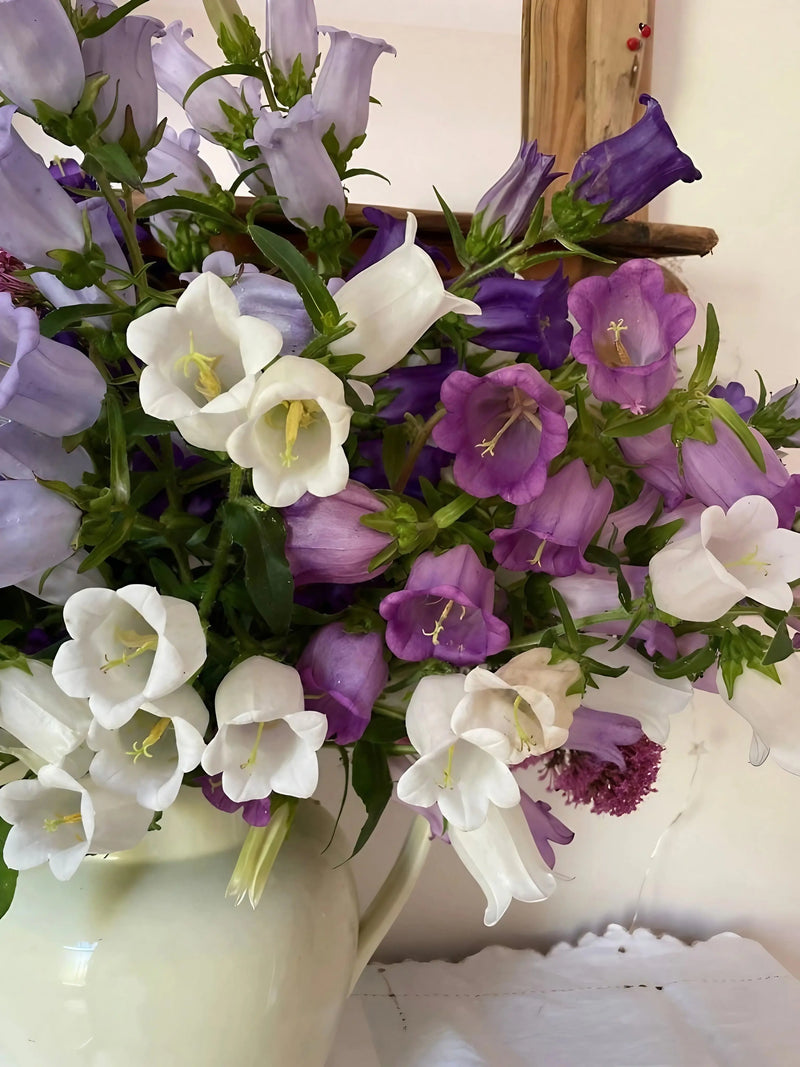
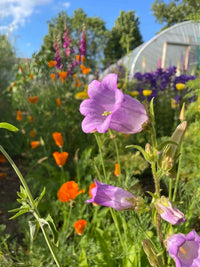
Canterbury Bells Crown Single Mixed
Campanula medium 'Crown Single Mixed'
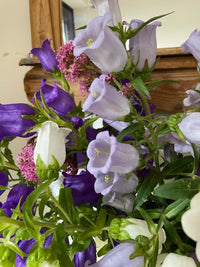
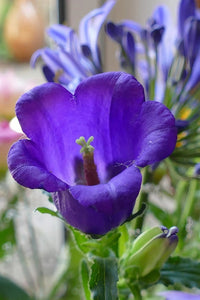
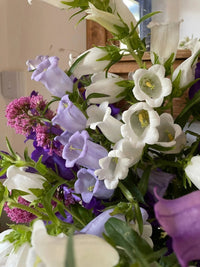
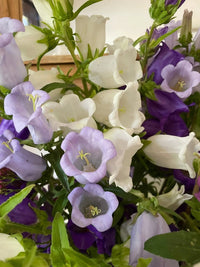
Tall, upright spires of classic large bell-shaped flowers in deep purple-blue, pink, white and lilac — the traditional cottage biennial grown in Britain for 500 years.
About this variety
Campanula medium 'Crown Single Mixed' Canterbury Bells 'Crown Single Mixed'
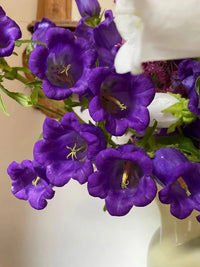
Tall, upright spires of classic large bell-shaped flowers in deep purple-blue, soft pink, pure white and clear lilac — Canterbury Bells is the traditional cottage garden biennial that has been grown in British gardens for nearly 500 years, and the flower that gives any romantic spring border its proper sense of vertical grandeur.
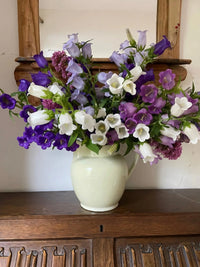
This is one of the great heritage flowers of the British cottage garden. Each plant produces tall stems (60–80cm) crowded with the classic open bell-shaped flowers — a single layer of fused petals forming substantial 5–8cm bells in a generous mix of deep purple-blue, vivid pink, pure white and gentle lilac. As a hardy biennial, Canterbury Bells flowers in its second year from sowing — a longer game than annuals, but the wait is worthwhile. The plants form a sturdy basal rosette in their first season, overwinter, then explode into flower from May to July of the following year. RHS Plants for Pollinators recognised — the open bells are perfect landing pads for bumblebees, who can crawl right inside in pursuit of nectar. Excellent cut flowers with good vase life, and one of the classic flowers of the traditional English cottage garden.
A note on growing
Sow in late spring or early summer (May to July) for flowers the following year. Surface-sow as the seeds need light to germinate; do not cover. Maintain 18–20°C and germination takes 14–21 days. Pot on into 9cm pots once large enough to handle and grow on through the summer. Plant out into the final position in autumn — Canterbury Bells need to be established before winter to flower the following spring. Full sun or partial shade. Rich, moisture-retentive but well-drained soil enriched with leaf mould. Once established, the plants self-seed reliably, producing a permanent, wandering colony — though as with most biennials, the seedlings need a year of growth before flowering.
Where it shines
In the back or middle of cottage borders where the tall spires give vertical structure, particularly beautiful alongside roses, foxgloves and other classic English perennials. In informal woodland edges and dappled shade, where the traditional "cottage garden" character feels right. As cut flowers for tall, romantic arrangements — the bell-shaped flowers have surprising stage presence in vases. In wildflower meadow plantings, where the biennial habit suits the natural rhythm of meadow renewal.
Plant alongside
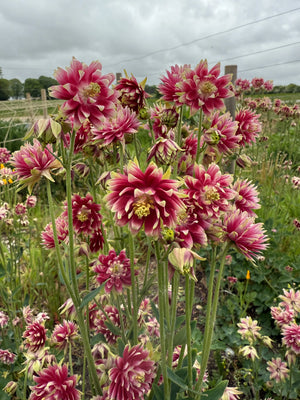
For a classic English cottage spring scheme, combine with Foxglove 'Excelsior Mixed' and Aquilegia 'Nora Barlow'. The vertical spires of foxgloves complement the bell-shaped Canterbury Bells beautifully, while the rounded pom-poms of aquilegia add a third texture. For colour-coordinated planting, pair with Sweet Rocket (Hesperis) for fragrance and the soft pink Achillea 'Pastel Mixed' as ground-level interest.
Plant alongside
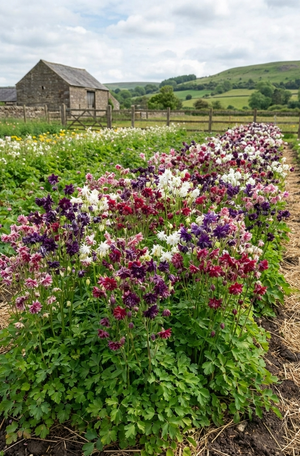
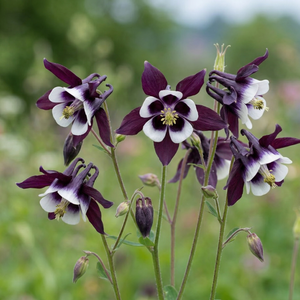
Canterbury Bells Crown Single Mixed pairs beautifully with these cottage garden classics

RHS Plants for Pollinators
This plant has been assessed by the Royal Horticultural Society and recommended as especially beneficial to bees, butterflies and other pollinators. Growing plants like this directly supports UK pollinator populations — something close to our hearts at Salle Moor Hall Farm, where we see the difference a cottage garden full of the right plants can make.
Learn more at RHS.org.uk →