Aquilegia 'Nora Barlow' Seeds
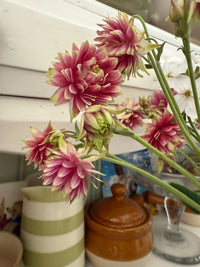
A true icon of the cottage garden! Unlike typical Aquilegias with their delicate spurred flowers, 'Nora Barlow' produces extraordinary fully double, spurless, pom-pom-like blooms in the most enchanting colour combination: raspberry-pink petals elegantly tipped with white and soft green. Named after Emma Nora Barlow (Charles Darwin's granddaughter, who discovered this variety in her Cambridgeshire garden in the early 1980s), this hardy perennial has become one of the most beloved and distinctive Granny's Bonnets you can grow.
The flowers emerge upward-facing on graceful branched stems from May to June, creating a sophisticated, romantic display that cuts beautifully for the vase. What makes 'Nora Barlow' particularly special is its unique "colour fade" performance—the blooms start as deep raspberry-pink, gradually age through pale pink tinged with green, and end as nearly pure white, meaning your plant displays a stunning gradient of tones simultaneously! This is a short-lived perennial (typically 3-4 years), but it self-seeds politely and generously, ensuring you have a permanent, wandering colony that feels both intentional and delightfully spontaneous. The ferny, grey-green divided foliage provides elegant structure even when not in flower. Beloved by bumblebees (especially long-tongued species) and making exceptional cut flowers with excellent vase life, 'Nora Barlow' brings a sense of nostalgic charm, botanical heritage, and effortless cottage garden romance to shaded borders, woodland edges, and naturalistic plantings.
Read More
🌸 Understanding the Plant
Aquilegia vulgaris var. stellata 'Nora Barlow' is a Hardy Herbaceous Perennial (H7), meaning it will sail through even harsh British winters without any protection whatsoever, tolerating temperatures well below -20°C.
'Nora Barlow' is NOT your typical Aquilegia. Most Granny's Bonnets have single flowers with distinctive backward-pointing nectar spurs (the "bonnets"). 'Nora Barlow' belongs to the Barlow Series (which includes 'Black Barlow', 'Blue Barlow', 'Rose Barlow')—the first Aquilegia vulgaris cultivars bred specifically for fully double, spurless flowers that resemble starry pompons or miniature dahlias rather than traditional columbines. This breakthrough breeding (originally for cut flower production) created flowers with masses of fine, pointed petals arranged in rosette form, opening upward-facing rather than nodding.
The "Colour Fade" Phenomenon: What makes 'Nora Barlow' particularly enchanting is its gradual colour transformation. Each flower starts as deep raspberry-pink with white tips and subtle green tinges. Over 7-10 days, the pink gradually fades through pale blush-pink to nearly pure white, whilst the green edges become more pronounced. Because flowers on the same plant open sequentially over 3-4 weeks, you get a gorgeous ombré effect with deep pink buds, medium pink blooms, and pale white-green mature flowers all displayed simultaneously—like a living watercolour painting!
The Darwin Connection: This variety has genuine botanical heritage! It was discovered by Emma Nora Barlow (1885-1989), a British botanist and geneticist who was Charles Darwin's granddaughter. She spotted this spontaneous mutation growing in her Cambridgeshire garden in the early 1980s. Since its introduction to cultivation by renowned horticulturist Alan Bloom, 'Nora Barlow' has become one of the most widely sold and beloved Aquilegia cultivars worldwide—a testament to its unique beauty and reliable garden performance.
Lifespan Reality: Like most Aquilegia vulgaris cultivars, 'Nora Barlow' is a short-lived perennial—individual clumps perform at their best for 3-4 years before vigour declines. HOWEVER, this is NOT a problem because 'Nora Barlow' self-seeds prolifically (yet politely, never invasively!) to form large, long-lived colonies. When grown in isolation or dedicated 'Nora Barlow' patches, the seedlings produce a remarkably high proportion of true-to-type offspring, maintaining the distinctive double raspberry-pink-white-green colour combination. The result? Your original plant may be short-lived, but the colony becomes garden-immortal through successive generations of self-sown offspring!
🌱 Growing Guide
Aquilegia can be sown in two optimal windows: indoors from January to May OR September to October, or outdoors from April to July. Germination can be slow and erratic, but 'Nora Barlow' is absolutely worth the wait!
How to Sow:
Here's the critical bit: Aquilegia seeds need light to germinate. Scatter seeds on the surface of moist, free-draining seed compost and press lightly to ensure good contact, but DO NOT cover with soil or vermiculite. Water gently from below or with a fine mist to avoid washing seeds away. Keep the seed tray in a bright location at 15-21°C and maintain consistent moisture (but never waterlogged). Germination is slow and patience-testing! Expect 14-30 days as typical, but some seeds may take up to 60-90 days (yes, genuinely 3 months!). Do NOT give up early!
❄️ The Cold Stratification Trick:
If germination is poor or non-existent after 3-4 weeks at room temperature, try this highly effective technique: Place the entire seed tray inside a sealed plastic bag and move it to the refrigerator (around 4°C) for 7-10 days. This cold period mimics winter dormancy and "unlocks" stubborn seeds by breaking internal germination inhibitors. After the cold treatment, remove the tray from the fridge, unwrap it, and return it to warmth (15-21°C) and bright light. Check daily—germination often begins within 5-10 days after returning to warmth! Many gardeners report this dramatically improves germination rates for Aquilegia, especially older seed batches or particularly stubborn varieties like 'Nora Barlow'.
Planting Out:
When seedlings are large enough to handle (2-3 true leaves, usually 6-8 weeks after germination), carefully transplant into individual 7-9cm pots. Handle by the leaves (never the delicate stems!) to avoid damage. Move young plants to their final flowering positions in autumn (September to November) if sown in spring/summer, or in spring (March to May) if sown the previous autumn. Aquilegias are very hardy and actually benefit from experiencing a cold winter period before flowering—this vernalisation helps trigger strong flower production the following spring. Space plants 30-40cm apart.
Site Selection:
'Nora Barlow' is remarkably adaptable! It thrives in partial shade to dappled shade (its native habitat is open woodlands) but also performs well in full sun if soil moisture is adequate. The ideal is morning sun with afternoon dappled shade. Aquilegias prefer humus-rich, moisture-retentive but well-drained soil—think woodland-style soil enriched with leaf mould, garden compost, or well-rotted manure. They're very adaptable to most garden soils (including heavy clay if improved with organic matter) but struggle in extremely dry, poor soils or waterlogged winter conditions.
Post-Flowering Management:
After flowering finishes in June-July, the foliage often becomes tatty or mildewed. You can cut back to ground level when foliage looks shabby—the plant will send up fresh new basal rosettes within 2-4 weeks. Alternatively, leave the foliage if it still looks acceptable and remove only the worst affected leaves.
Managing Self-Seeding:
'Nora Barlow' self-seeds prolifically! Deadhead selectively (remove some spent flower stems but leave others to set seed) to get free plants forever whilst maintaining a tidy appearance. Seedlings appear throughout late summer and autumn—leave them in situ, transplant to better positions, or pot up to share with friends. When grown in isolation from other Aquilegia varieties, 'Nora Barlow' seedlings typically come 70-90% true to type with the distinctive double raspberry-pink-white-green flowers.
📋 Plant Specifications
| Botanical Name | Aquilegia vulgaris var. stellata 'Nora Barlow' |
| Common Names | Nora Barlow Granny's Bonnet, Double Columbine |
| Plant Type | Hardy Herbaceous Perennial (short-lived, 3-4 years, but self-seeds prolifically) |
| Hardiness | H7 (Very hardy - tolerates temperatures below -20°C) |
| Light Requirements | Partial shade to full sun (prefers morning sun, afternoon dappled shade) ⛅ |
| Height | 70-75cm (28-30 inches) when in flower |
| Spread | 40-50cm (16-20 inches) |
| Spacing | Plant 30-40cm apart |
| Flowering Period | May to June (late spring to early summer) |
| Perfect For | ✂️ Exceptional Cut Flower 🌳 Woodland Edges & Shaded Borders 🐝 RHS Plants for Pollinators 🏡 Cottage Garden Romance 🌱 Self-Seeding Colonies ⛅ Partial Shade Tolerance |
| Seeds per Packet | Approximately 50 seeds |
🤝 Beautiful Garden Combinations
'Nora Barlow' creates magical partnerships with woodland perennials, cottage garden classics, and late spring bulbs. All companion plants listed below are available from Bishy Barnabees!
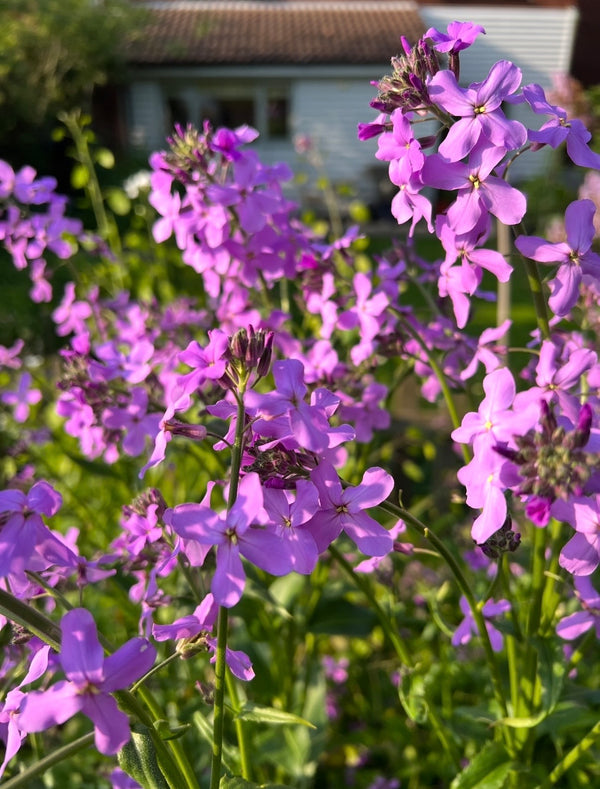
- 🌙 Sweet Rocket 'Purple' (Hesperis matronalis): The ultimate woodland companions! Both thrive in partial shade to dappled shade and flower simultaneously in May-June, creating a dreamy, romantic cottage garden effect. The tall purple flower spires of Hesperis (70-90cm) float elegantly above the raspberry-pink pompoms of 'Nora Barlow' (70-75cm), providing perfect height variation whilst sharing similar graceful, airy habits. The colour combination is sophisticated: deep purple + raspberry-pink + white create a harmonious cool-toned palette that never clashes. Both are brilliant self-seeders, so once established they'll naturalise together through your borders in delightfully spontaneous drifts. BONUS: Sweet Rocket is intensely fragrant (especially in the evening), whilst 'Nora Barlow' provides cut flower substance—together they create multi-sensory magic!
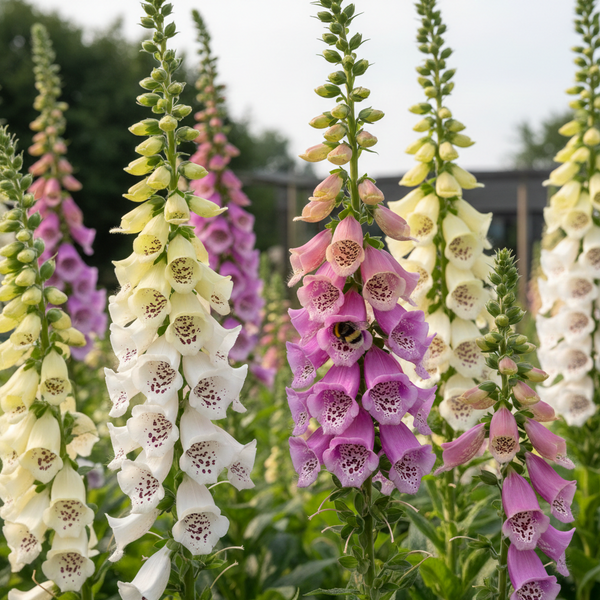
- 🍋 Foxglove 'Primrose Yellow': Instead of traditional purple Foxgloves, pair 'Nora Barlow's' raspberry-pink pompoms with the soft, creamy-yellow spikes of 'Primrose Yellow' Foxglove for a sophisticated colour scheme that elevates both plants! The pale yellow and pink create a gentle, luminous palette perfect for woodland edges and shaded borders—this is the combination you see in the most refined cottage gardens. The height layering is perfect: Foxgloves tower to 90-150cm, creating vertical drama above the mid-height 'Nora Barlow' at 70-75cm. Both thrive in partial shade, humus-rich soil, and consistent moisture. Flowering times align beautifully: Foxgloves bloom May-July (peak June), whilst 'Nora Barlow' flowers May-June—giving you 6-8 weeks of overlapping colour. This is THE partnership for creating that effortless "established cottage garden" look!
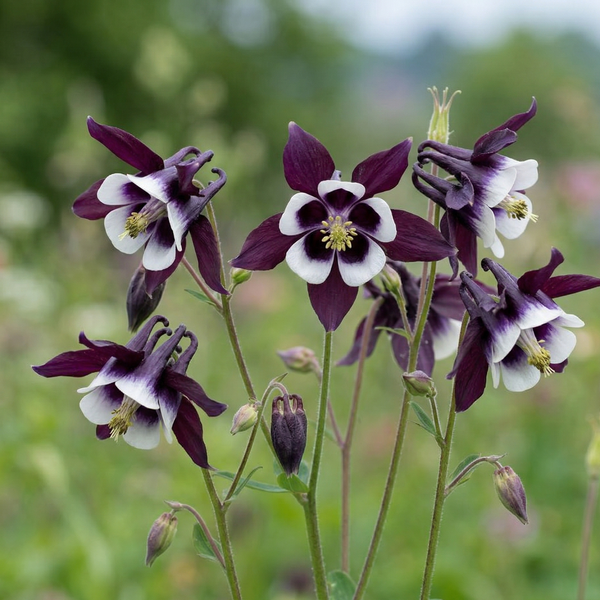
- 💙 Aquilegia 'Blue' (standard spurred variety): Create an "Aquilegia tapestry" by combining different varieties! Plant blue spurred Aquilegia alongside double pink 'Nora Barlow' for contrast in both colour (blue vs. pink) and flower form (spurred vs. spurless). Both flower May-June, both self-seed, both attract pollinators. The mix creates botanical interest whilst maintaining cottage garden cohesion.
📅 Sowing & Flowering Calendar
Sow indoors Jan-May or Sept-Oct. Sow outdoors Apr-Jul. Surface sow (needs light!). Flowers May-Jun (2nd year).
| Month | J | F | M | A | M | J | J | A | S | O | N | D |
|---|---|---|---|---|---|---|---|---|---|---|---|---|
| Sow Indoors | ✓ | ✓ | ✓ | ✓ | ✓ | ✓ | ✓ | |||||
| Sow Outdoors | ✓ | ✓ | ✓ | ✓ | ||||||||
| Flowers (Year 2) | ✓ | ✓ |
❄️ Cold Stratification Secret!
If germination is slow or non-existent after 3-4 weeks, try this game-changing trick: Place your seed tray in a sealed plastic bag and refrigerate (around 4°C) for 7-10 days. This cold period mimics winter and "unlocks" stubborn Aquilegia seeds by breaking dormancy! After cold treatment, return the tray to warmth (15-21°C) and bright light—germination often begins within 5-10 days! This technique dramatically improves germination rates for 'Nora Barlow' and other Aquilegia varieties.
RHS Plants for Pollinators
Aquilegia 'Nora Barlow' has been awarded the prestigious RHS Plants for Pollinators recognition. This award is only given to plants proven to provide exceptional nectar and pollen resources for pollinating insects. The fully double spurless flowers attract a wide range of bees (including long-tongued bumblebees, honeybees, and short-tongued species), hover flies, and other beneficial insects during the critical May-June period when newly emerging bumblebee queens and worker bees are building their colonies. By growing 'Nora Barlow', you're creating vital habitat and food sources for garden wildlife whilst enjoying one of the most beautiful cottage garden perennials!
Need more detailed growing advice?
Visit our comprehensive growing guides at bishybarnabeescottagegarden.com
- Regular price
-
£2.55 - Regular price
-
- Sale price
-
£2.55
Couldn't load pickup availability
-
Hurry, only 6 items left in stock!
5.0 / 5.0
(2) 2 total reviews


Aquilegia Nora Barlow
- Regular price
-
£2.55 - Regular price
-
- Sale price
-
£2.55
My favourite aquilegia
Super quick delivery. Can't wait for Spring to get planting.