

Hollyhock Nigra
Alcea rosea 'Nigra'
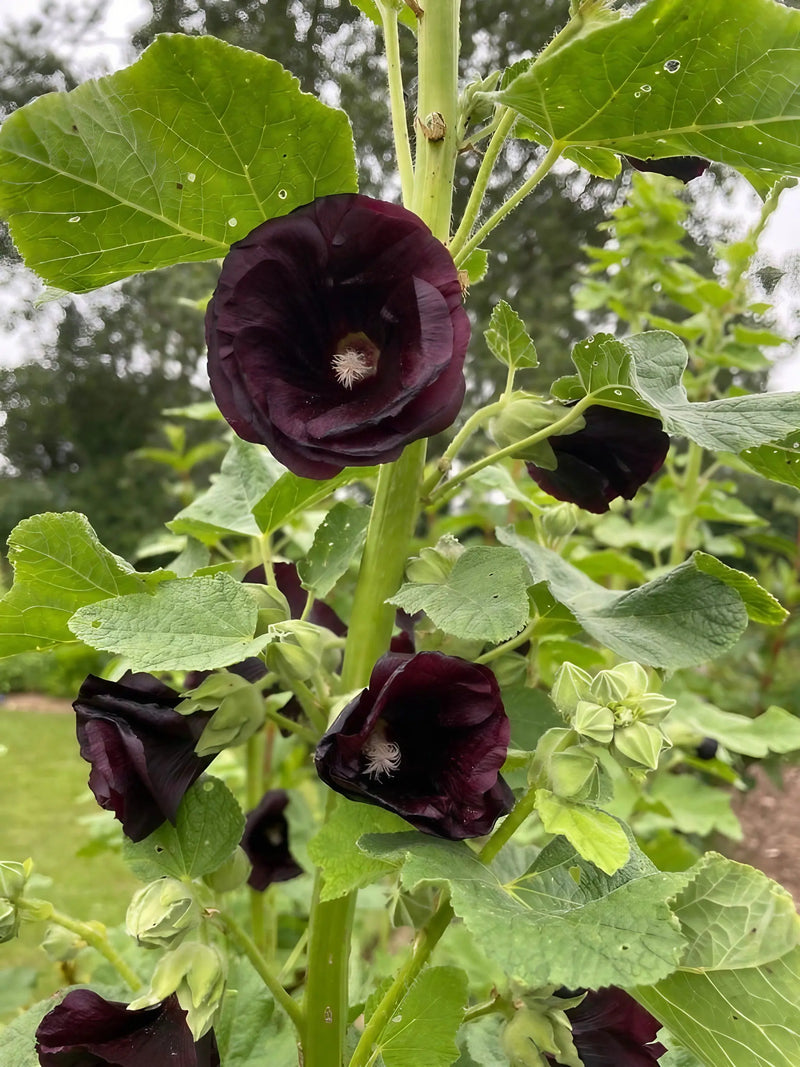
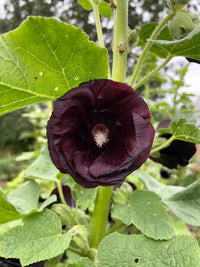
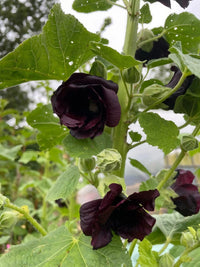
The legendary heritage Hollyhock with near-black maroon-purple single flowers and small yellow eyes — rising 2m against walls. Continuously cultivated since the 1600s.
About this variety
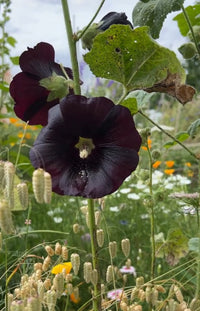
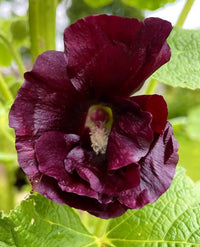
The near-black hollyhock, and closer to true black than almost any flower gets. Open single saucers the colour of crushed blackcurrant, each with a small yellow eye at the centre, held in dense columns up two-metre stems.
It has been in English gardens since the 1600s, which is a long run for a garden plant, and it was a favourite of Thomas Jefferson's. Being a single rather than one of the heavy Chater's doubles, bumblebees can get straight into the centre, so it earns its place in a wildlife garden as well as a Gothic one.
Site it against something pale. Near-black flowers vanish against a dark hedge or a brick wall in shadow; against whitewash, weathered timber or pale stone the colour reads true and the yellow eye does its work.
Rust is the usual hollyhock problem and this one is no more resistant than any other. Expect orange pustules on the lower leaves by midsummer, water at the base rather than over the foliage, and pull spent plants rather than nursing them. The stems and leaves are bristly and can irritate skin, so wear gloves.
Plant alongside
Hollyhock Nigra pairs beautifully with these cottage garden classics


RHS Plants for Pollinators
This plant has been assessed by the Royal Horticultural Society and recommended as especially beneficial to bees, butterflies and other pollinators. Growing plants like this directly supports UK pollinator populations — something close to our hearts at Salle Moor Hall Farm, where we see the difference a cottage garden full of the right plants can make.
Learn more at RHS.org.uk →