

Cornflower Red Boy
Centaurea cyanus 'Red Boy' — ruby-red selected form of a naturally blue species
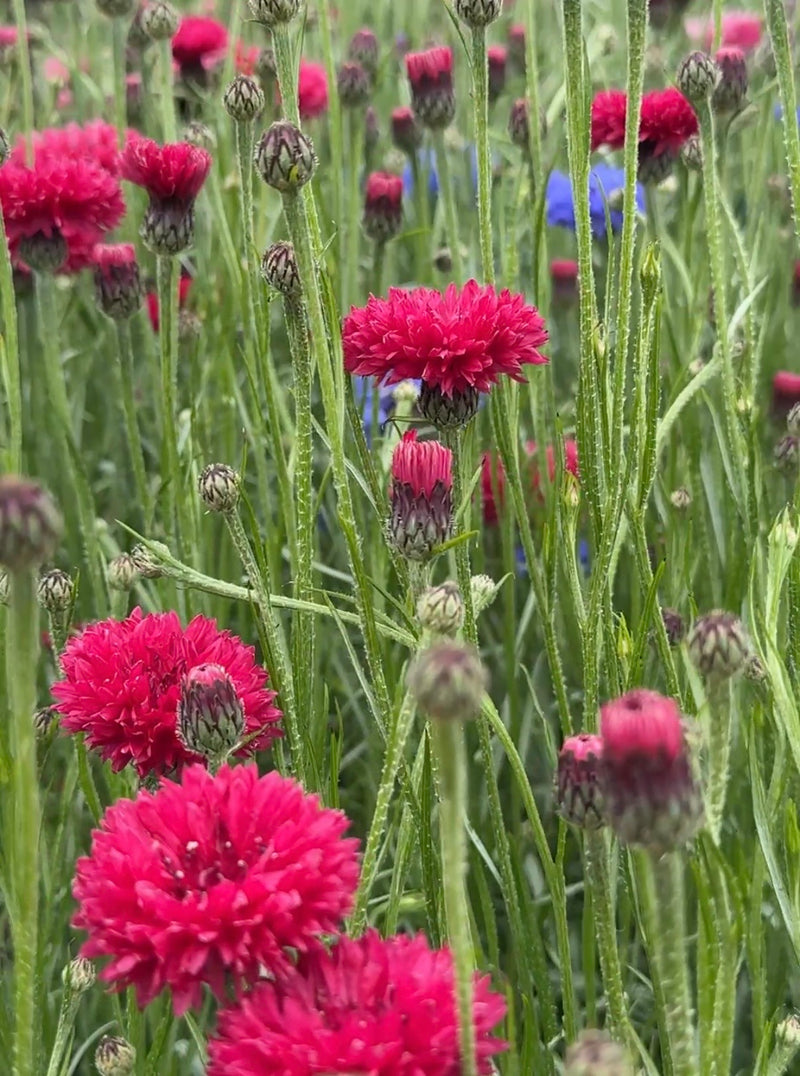
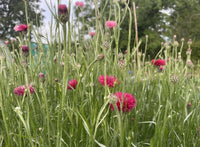
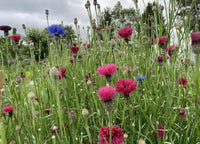
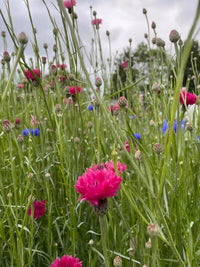
Rich, deep carmine-pink ruby cornflowers like crushed velvet — the warm-toned berry sister of the cornflower family, with edible petals and exceptional pollinator value.
About this variety
The name oversells it, and the flower is better for it. This is not a fire-engine red but a deep carmine-ruby, a berry tone that reads ruby in strong sun and shifts towards crushed velvet in softer light.
That warmth is what it brings to a border that has gone all blues and greens. It sits with the apricot and blush end of the cutting patch far better than a true scarlet would, and it is one of the few cornflowers that works in a warm-toned bouquet rather than a cool one.
Everything else is standard for a tall double Ball cornflower: silver-green stems, feathery foliage, generous production for as long as you keep cutting. The petals are edible and hold their ruby colour unusually well when dried, so they are worth saving for cake work. Sow it in autumn if the ground is workable. September-sown plants come through the winter and make substantially bigger, more branched specimens the following year than anything started in spring.
Plant alongside
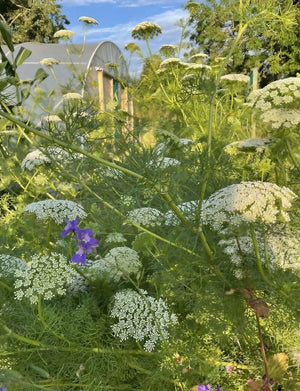
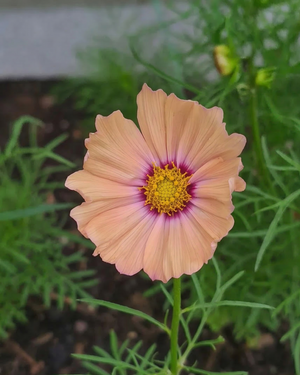
Cornflower Red Boy pairs beautifully with these cottage garden classics


RHS Plants for Pollinators
This plant has been assessed by the Royal Horticultural Society and recommended as especially beneficial to bees, butterflies and other pollinators. Growing plants like this directly supports UK pollinator populations — something close to our hearts at Salle Moor Hall Farm, where we see the difference a cottage garden full of the right plants can make.
Learn more at RHS.org.uk →