

Corncockle
Agrostemma githago — Corncockle; traditional British arable wildflower
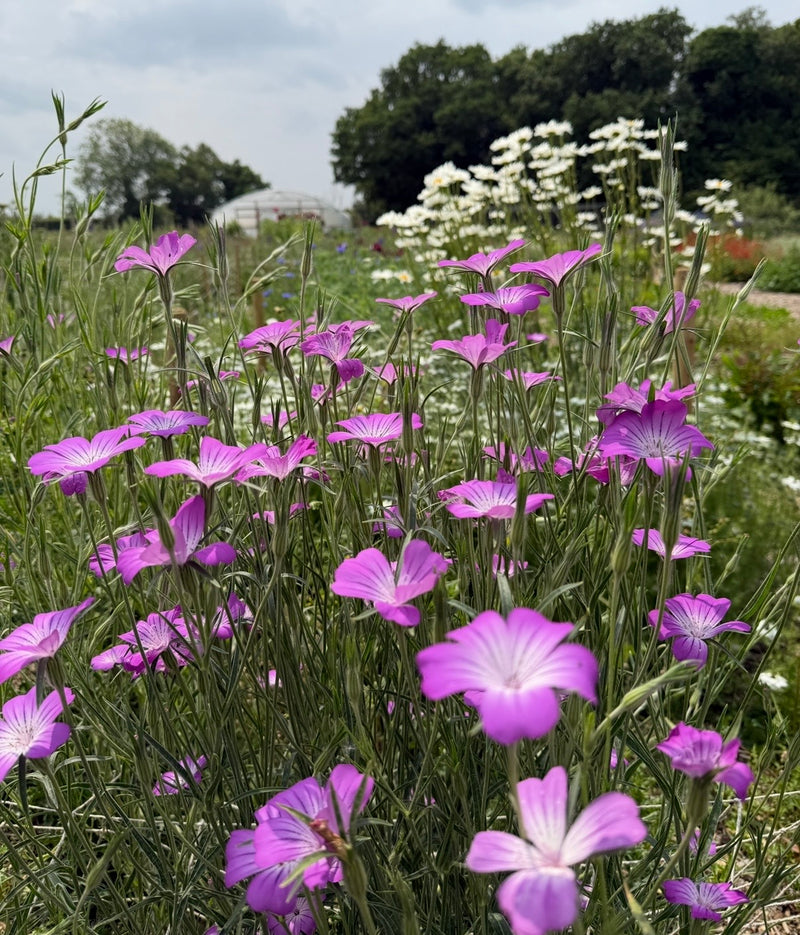
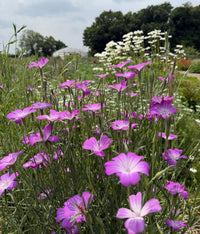
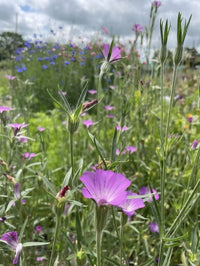
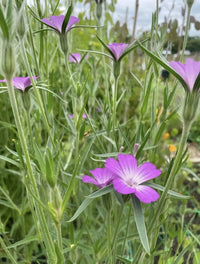
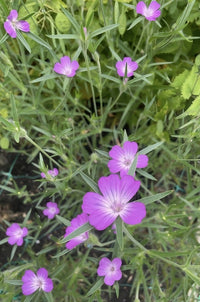
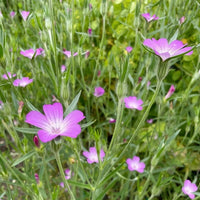
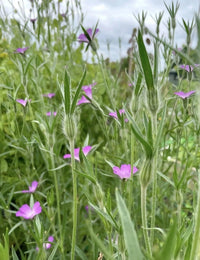
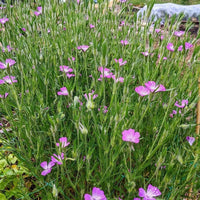
Tall slender stems with magenta-pink trumpet flowers and black-speckled white centres — the iconic British cornfield wildflower, weaving through cottage borders.
About this variety
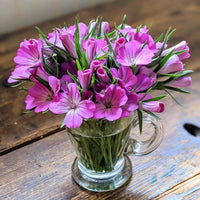
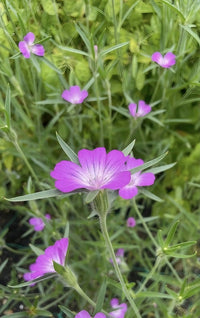
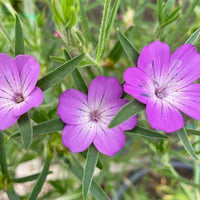
Large open magenta-pink trumpets with a pale centre marked by fine black lines, held airily on wiry stems at 75 to 90cm. The silky petals catch the light and the whole plant sways in the smallest breeze, which is most of its charm.
It used to grow in every cornfield in Britain. Better seed cleaning and post-war herbicides had all but removed it from farmland by the 1950s, so what grows in cottage gardens and wildflower plots now is genuinely a survival rather than a decoration. The black lines on the petals are honey guides, pointing long-tongued bumblebees at the nectar at the bottom of the tube.
It weaves rather than competes, threading up through whatever is planted beside it, so it is better scattered through a border than grown in a block. It self-seeds reliably once you have it, and it has a sensitive taproot that does best sown where it is to grow, on poor, well-drained ground.
Every part of this plant is poisonous if eaten, the seed most of all. Wear gloves when handling it, and think carefully before planting it where children forage or pets chew.
Plant alongside
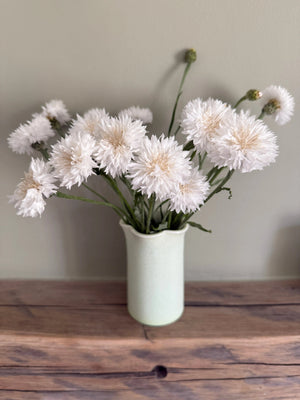
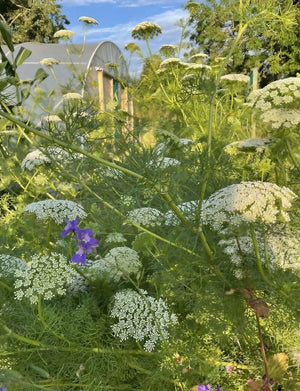
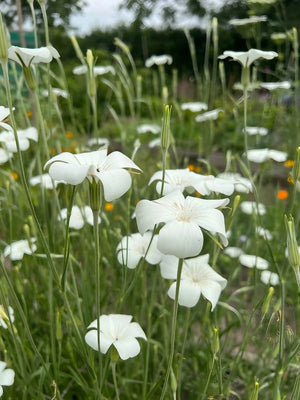
Corncockle pairs beautifully with these cottage garden classics
RHS Plants for Pollinators
This plant has been assessed by the Royal Horticultural Society and recommended as especially beneficial to bees, butterflies and other pollinators. Growing plants like this directly supports UK pollinator populations — something close to our hearts at Salle Moor Hall Farm, where we see the difference a cottage garden full of the right plants can make.
Learn more at RHS.org.uk →