

Platycodon Balloon Flower Mixed
Platycodon grandiflorus Mixed -- Balloon Flower
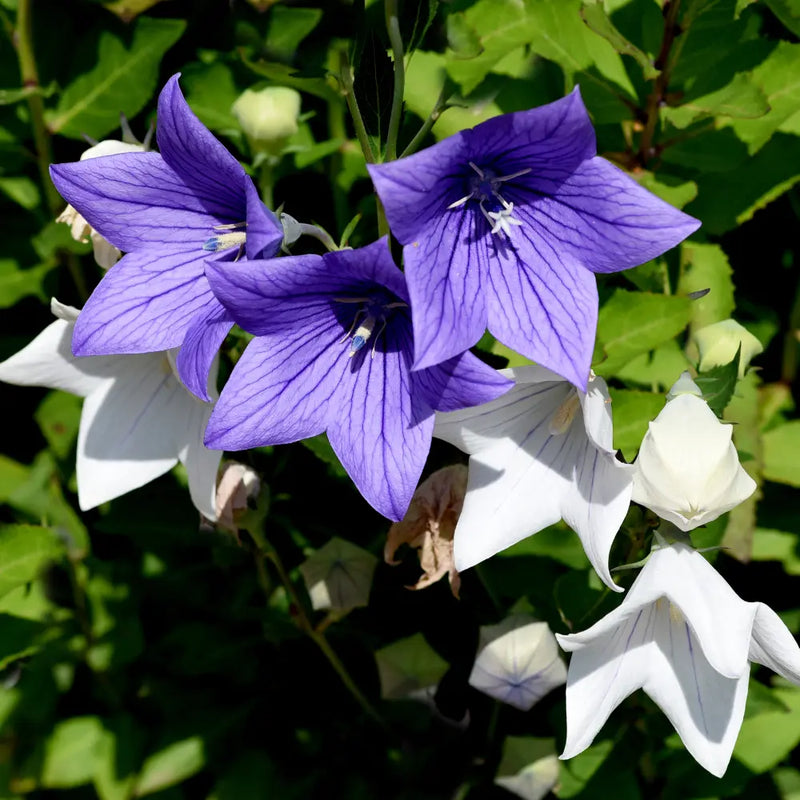
Magical balloon-shaped buds that swell and pop open into wide star bells in blue, pink and white — the long-lived cottage perennial that improves every year for a decade or more.
About this variety
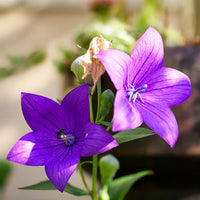
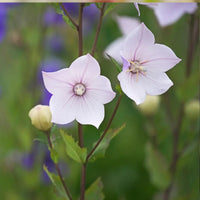
The bud is the show. Each one swells into a perfectly inflated balloon, geometric and taut, and holds that shape for days before splitting along its five seams into a wide cupped star of six or seven centimetres. Clear blue, soft pink and white all come on the same planting, from July to September at 60 to 80cm.
It is a slow investment that pays for a very long time. Establishment takes a couple of years, then it improves every season and a plant will sit happily in one spot for ten or fifteen years. Do not plan to move it. It makes a substantial taproot early and hates disturbance, so raise it in deep modules and drop the rootball in intact.
The one thing that loses people their platycodon is spring digging. It emerges very late, often not until May, long after everything around it is up, and a bare patch in April looks like empty ground. Put a permanent label or cane in before the foliage dies down in autumn. If you cut it, the stems bleed a milky sap that seals them and stops them drinking; sear the cut end with a match and the vase life improves enormously.
Plant alongside
Platycodon Balloon Flower Mixed pairs beautifully with these cottage garden classics
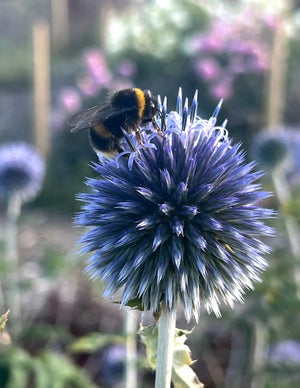

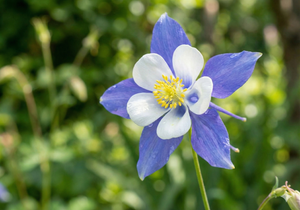
RHS Plants for Pollinators
This plant has been assessed by the Royal Horticultural Society and recommended as especially beneficial to bees, butterflies and other pollinators. Growing plants like this directly supports UK pollinator populations — something close to our hearts at Salle Moor Hall Farm, where we see the difference a cottage garden full of the right plants can make.
Learn more at RHS.org.uk →