

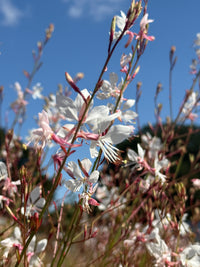
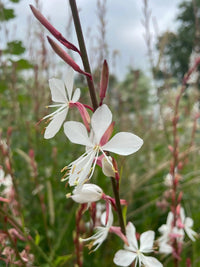
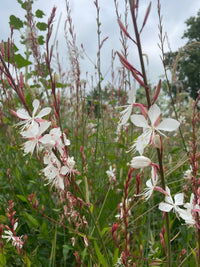

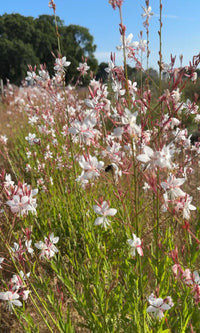
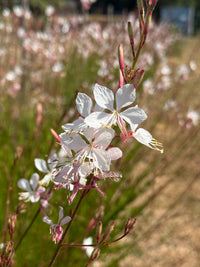
Gaura 'The Bride'
Oenothera lindheimeri 'The Bride' — whirling butterflies; formerly Gaura
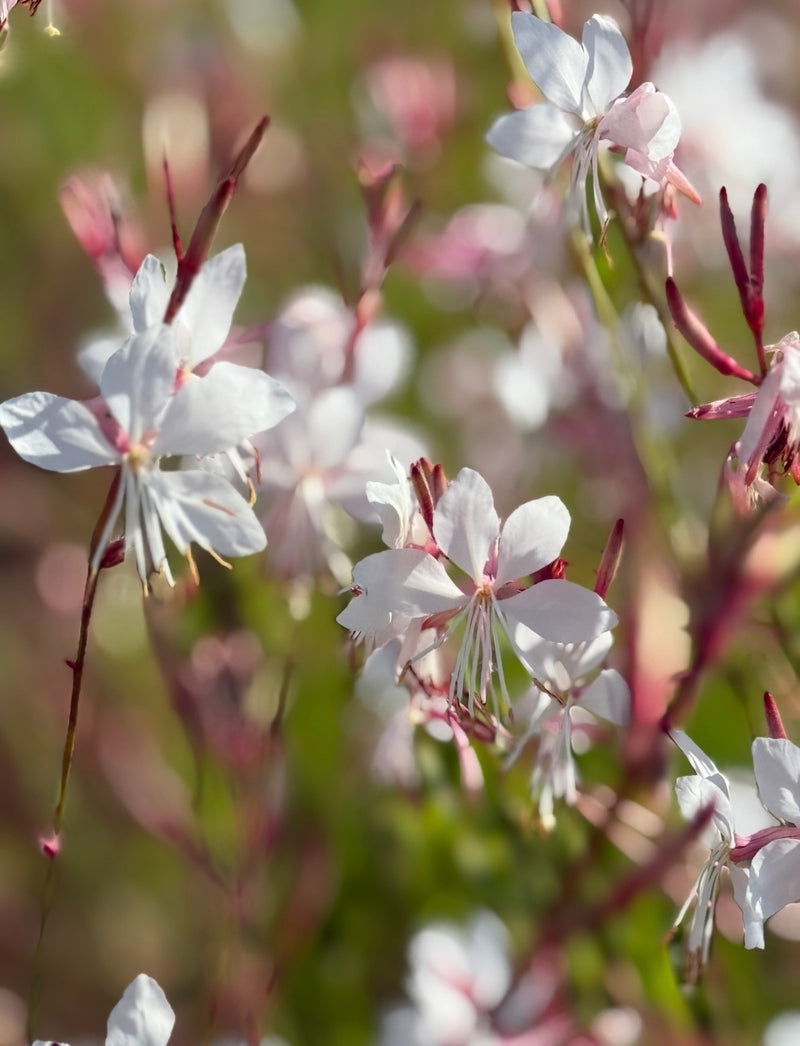
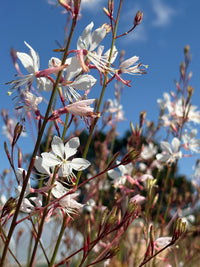
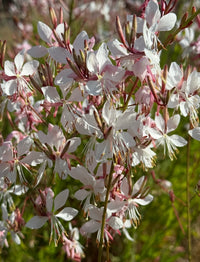
Clouds of pure white starry blooms on slender arching stems — the white Whirling Butterflies that bring magical dancing movement to moon gardens and cottage borders.
About this variety
The white form, and if anything the better of the two. Pure white four-petalled flowers scattered loosely along fine arching stems, so that even in still air the plant seems to be moving.
White is what makes it useful rather than merely pretty. In an evening border the flowers hold light long after coloured ones have gone flat, and set in front of a heavy planting the white veil makes everything behind it read more strongly. It flowers June through October, a very long season for a perennial, and it cuts for a soft romantic arrangement in a way little else does.
It is a prairie plant from Texas and Louisiana and it wants sun and sharp drainage. Cold wet clay in winter rots the crown and it does not come back, so a container is the answer on heavy ground. It also comes up very late in spring, often not until May, which catches people out every year. And be aware that seed-raised gaura is variable: a proportion of plants come with a pink flush rather than pure white, so grow a few extra and keep the cleanest.
Plant alongside
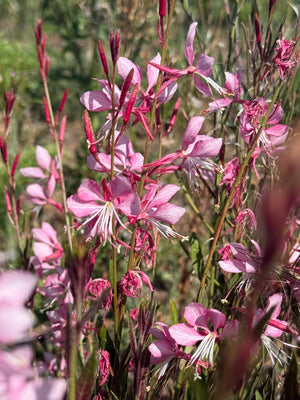
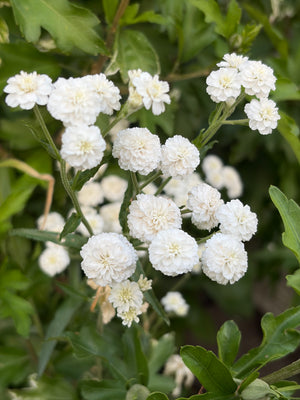
Gaura 'The Bride' pairs beautifully with these cottage garden classics


RHS Plants for Pollinators
This plant has been assessed by the Royal Horticultural Society and recommended as especially beneficial to bees, butterflies and other pollinators. Growing plants like this directly supports UK pollinator populations — something close to our hearts at Salle Moor Hall Farm, where we see the difference a cottage garden full of the right plants can make.
Learn more at RHS.org.uk →