

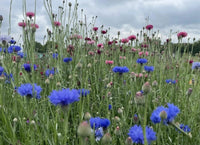
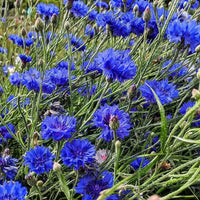
Cornflower Blue Ball
Centaurea cyanus 'Blue Ball' — the definitive cornflower; cyanus = blue in Greek
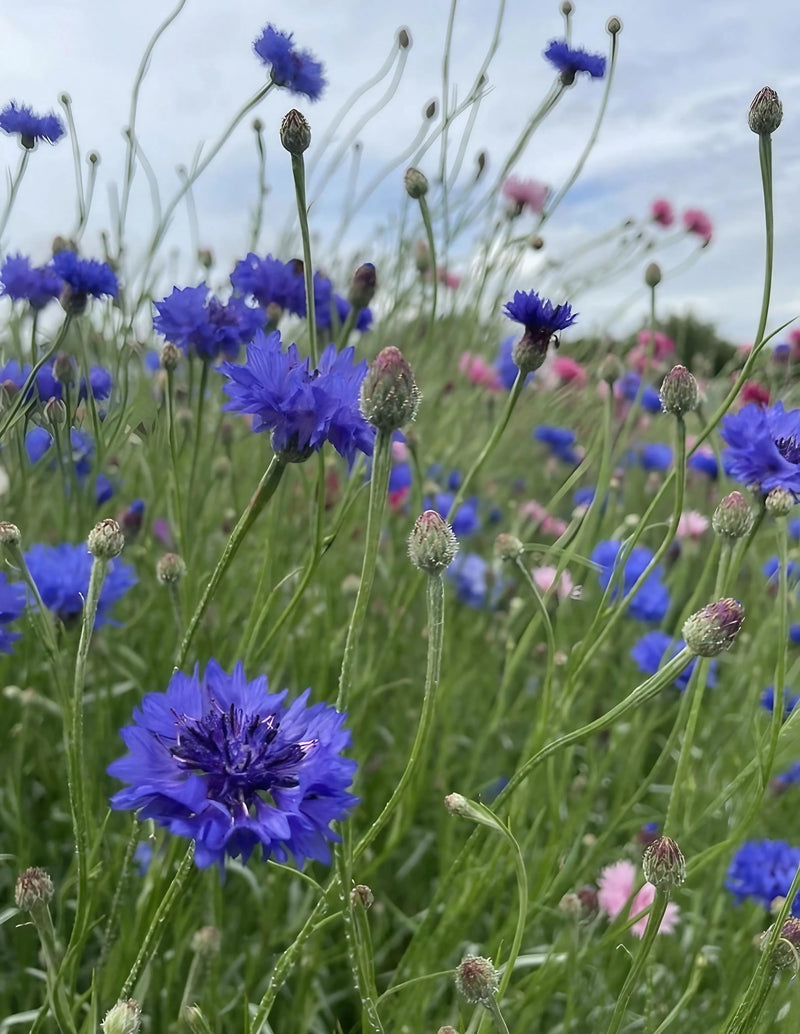
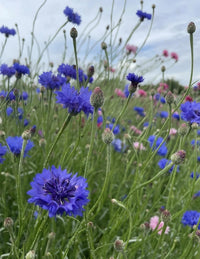
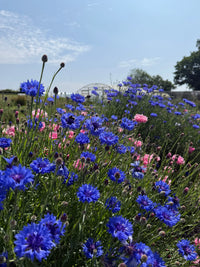
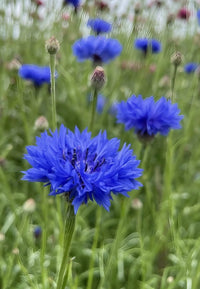
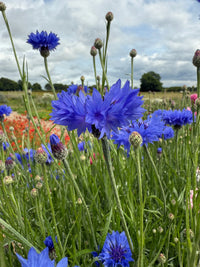
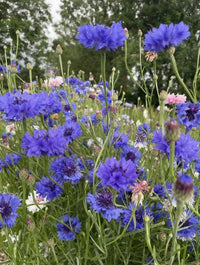
The definitive cornflower — masses of fully double, ruffled, electric azure-blue flowers on tall silvery stems. The cottage garden classic with edible petals.
About this variety
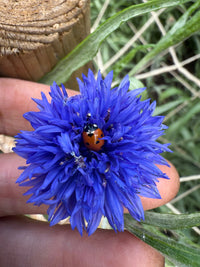
The cornflower that named the colour. Dense, fully double, ruffled heads in an electric azure that looks lit from inside, on silver-green stems. If you grow only one cornflower it should be this one.
It is a genuine cut-and-come-again plant. The more you take, the more it makes, and a short row will keep a jug filled from early summer to the frosts. Stop cutting for a fortnight and it sets seed and shuts down, which is the commonest way people lose a cornflower crop in July.
Two honest notes. The doubling that makes the flower substantial also crowds the centre, so it is less use to bees than the single wild form; if pollinators are the priority, grow some wild cornflower alongside it. And at this height the stems lean after heavy rain unless there is something to hold them, so run a net or some twiggy sticks through the row early rather than after it has gone over. Self-sown seedlings drift back towards smaller, simpler flowers within a couple of generations.
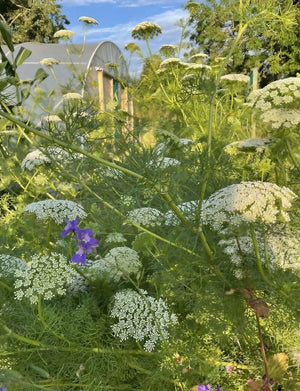
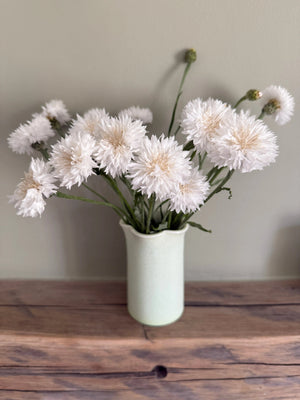
Plant alongside
Cornflower Blue Ball pairs beautifully with these cottage garden classics

RHS Plants for Pollinators
This plant has been assessed by the Royal Horticultural Society and recommended as especially beneficial to bees, butterflies and other pollinators. Growing plants like this directly supports UK pollinator populations — something close to our hearts at Salle Moor Hall Farm, where we see the difference a cottage garden full of the right plants can make.
Learn more at RHS.org.uk →