

Phacelia
Phacelia tanacetifolia -- Blue Tansy; Fiddleneck; Lacy Phacelia
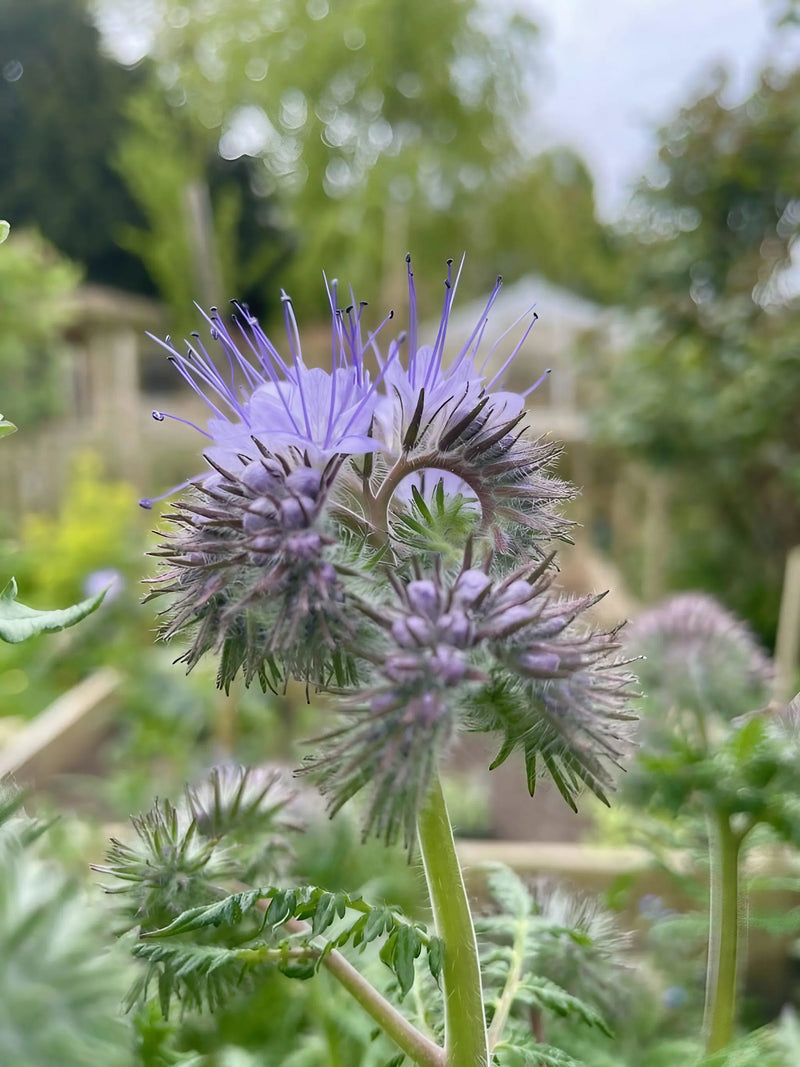
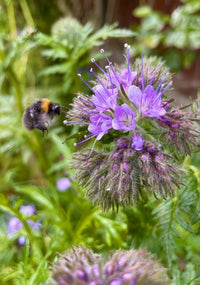
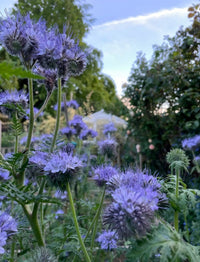
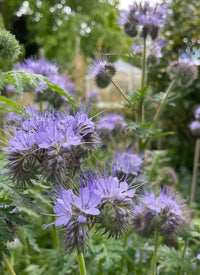
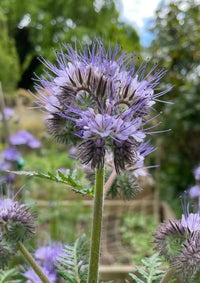
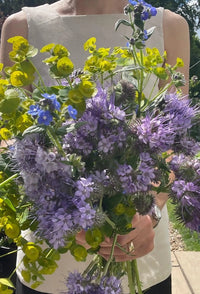
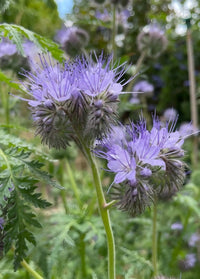
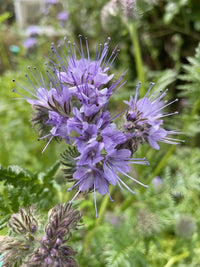
Lavender-blue coiled "fiddleneck" flower spikes above ferny foliage — one of the top five UK bee plants AND a superb soil-improving green manure. Fast-growing hardy annual.
About this variety
Coiled lavender-blue flower spikes that uncurl as they mature, above finely divided ferny foliage, on a fast hardy annual reaching 60 to 90cm in six or seven weeks from sowing.
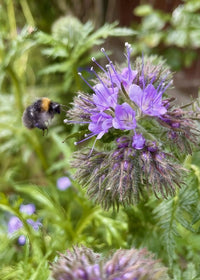
It is one of the best bee plants that will grow in Britain, and two things account for it. The flowers make nectar continuously through the day rather than in pulses, so there is always something there, and the florets are shallow enough for short-tongued bees and hoverflies as well as bumblebees. Most good nectar plants serve one group; this serves nearly all of them.
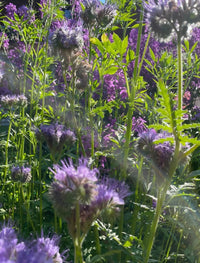
It is also a first-rate green manure. Sown thickly on an empty bed in August or September it makes a dense root system that breaks up clay, covers the soil against winter rain, and adds organic matter when dug in. Dig it in before it flowers if that is the job you want from it. The seed needs darkness, so rake it in to about a centimetre rather than scattering it on the surface. Each plant flowers for four to six weeks, so sow a short row monthly from March to September for continuous forage.
The stems and leaves carry fine stiff hairs that can itch or rash sensitive skin. Wear gloves, particularly when digging a lot of it in.
Plant alongside
Phacelia pairs beautifully with these cottage garden classics
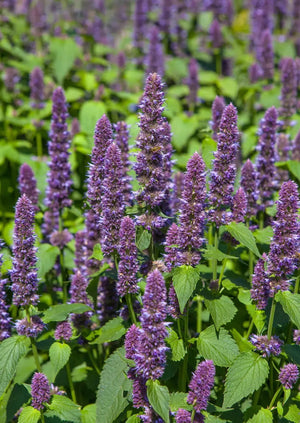
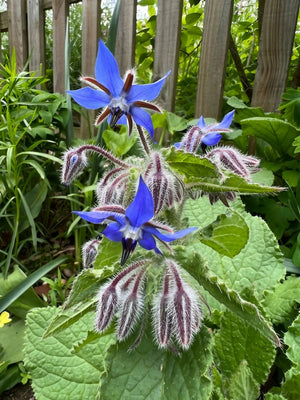
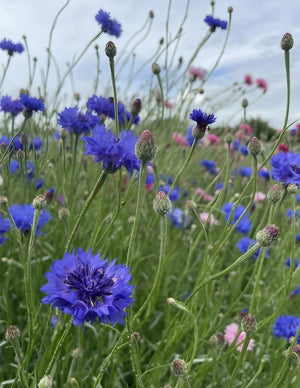
RHS Plants for Pollinators
This plant has been assessed by the Royal Horticultural Society and recommended as especially beneficial to bees, butterflies and other pollinators. Growing plants like this directly supports UK pollinator populations — something close to our hearts at Salle Moor Hall Farm, where we see the difference a cottage garden full of the right plants can make.
Learn more at RHS.org.uk →