

Poppy Hungarian Blue
Papaver somniferum 'Hungarian Blue' -- Breadseed Poppy
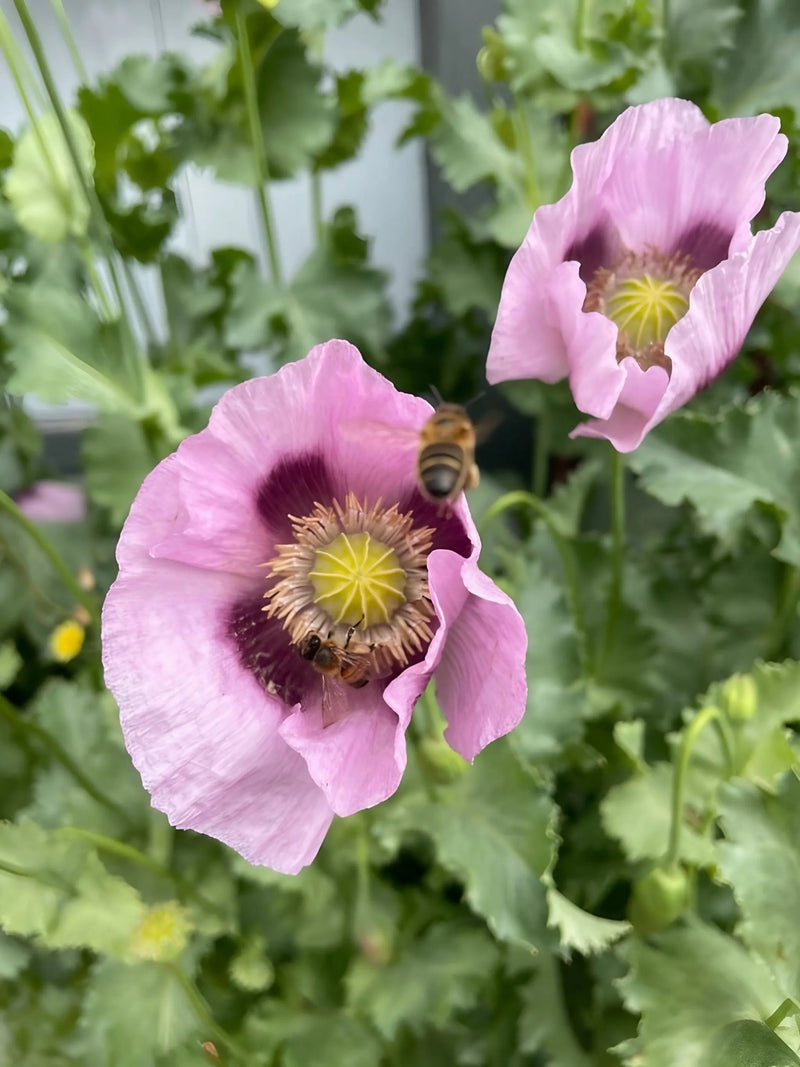
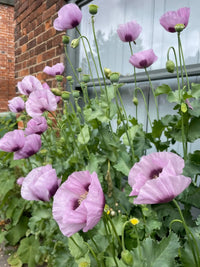
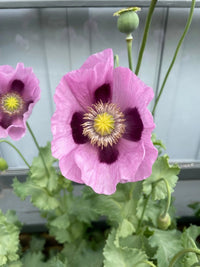
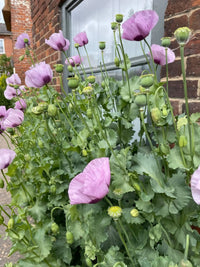
Large violet-purple bowl flowers above silver-blue foliage — followed by big seed pods packed with the slate-blue "breadseed" poppy seeds prized for baking.
About this variety
Large single violet-purple bowls, eight to ten centimetres across, on tall silvery stems above blue-grey glaucous foliage. Then the pods, which on this variety are exceptionally fat, packed with hundreds of slate-blue seeds.
Those seeds are the point. This is the breadseed poppy, grown across Hungary and central Europe for centuries, and they are exactly what is sold in a supermarket packet as blue poppy seeds. Home-grown they are considerably fresher, and the difference in a lemon and poppyseed cake is not subtle.
Harvest when the pods are completely dry and brown, usually August or September. Small windows open near the top as they ripen, so tipping a pod upside down shakes the seed out cleanly. Store it airtight somewhere cool and dark. Sow direct, since the taproot will not take moving, surface-sow uncovered, autumn for preference, and thin to 30cm for the biggest flowers and the fattest pods.
Only the fully dried mature seed is food-safe. Green pods, leaves and immature seed are toxic, so wait for full ripening and wear gloves handling green material.
Plant alongside
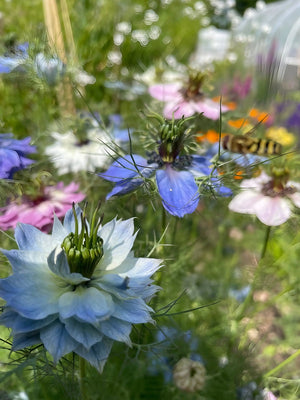
Poppy Hungarian Blue pairs beautifully with these cottage garden classics
RHS Plants for Pollinators
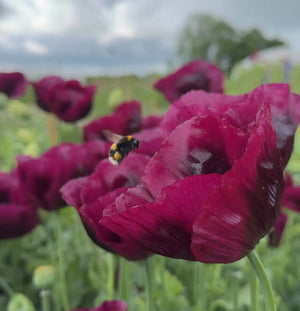
This plant has been assessed by the Royal Horticultural Society and recommended as especially beneficial to bees, butterflies and other pollinators. Growing plants like this directly supports UK pollinator populations — something close to our hearts at Salle Moor Hall Farm, where we see the difference a cottage garden full of the right plants can make.
Learn more at RHS.org.uk →