

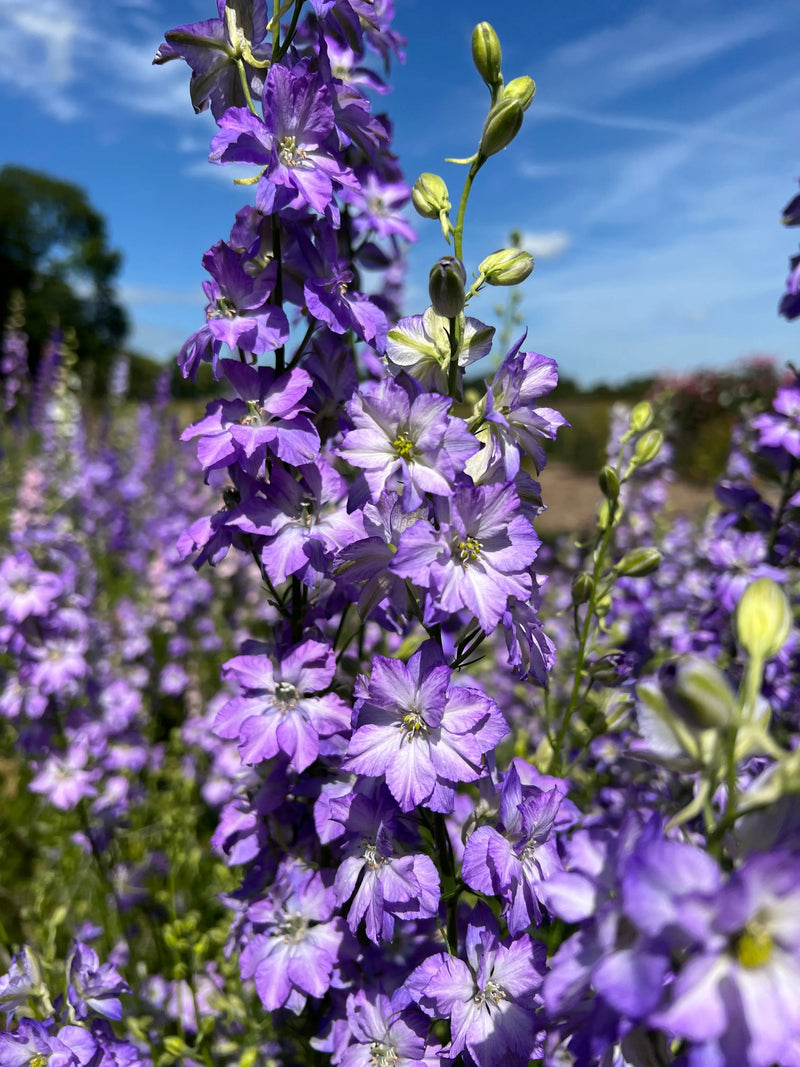
Larkspur Fancy Purple Picotee
Consolida ajacis 'Fancy Purple Picotee'
Tall spires of double white flowers with violet-purple picotee edges — the artisan flower farmer's favourite Larkspur with sophisticated bicolour elegance.
About this variety
Double white flowers, each petal edged in a fine violet-purple line, on spires of 100 to 120cm. The picotee is precise rather than smudged, and it is the detail that makes this the one flower farmers keep for themselves.
Larkspur is the annual answer to delphinium, and for most British gardens it is the more sensible plant: the same vertical drama, one season instead of three years, no staking regime, no slug war in spring.
Two things about the seed catch people out. It needs darkness to germinate, so cover it with about 5mm of soil rather than surface-sowing. And it is a cool-season plant that goes dormant if it gets warm; a week in the freezer before sowing breaks that dormancy. September sowing gives the tallest, earliest plants, and March or April works but gives you less. It has a sensitive taproot and must be sown where it is to grow. It cuts for seven to ten days and dries well, and larkspur petals are the traditional biodegradable wedding confetti.
All parts of the plant and the seed are toxic. Wash your hands after handling and keep it from children and pets.
Plant alongside
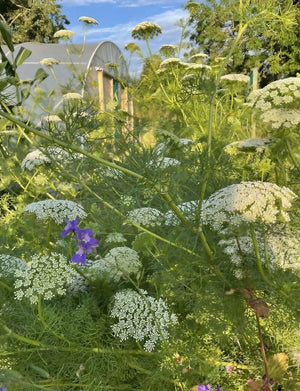
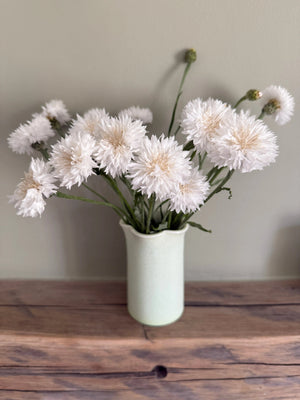
Larkspur Fancy Purple Picotee pairs beautifully with these cottage garden classics


RHS Plants for Pollinators
This plant has been assessed by the Royal Horticultural Society and recommended as especially beneficial to bees, butterflies and other pollinators. Growing plants like this directly supports UK pollinator populations — something close to our hearts at Salle Moor Hall Farm, where we see the difference a cottage garden full of the right plants can make.
Learn more at RHS.org.uk →