

Poppy Black Peony
Papaver somniferum 'Black Peony' -- Peony Poppy
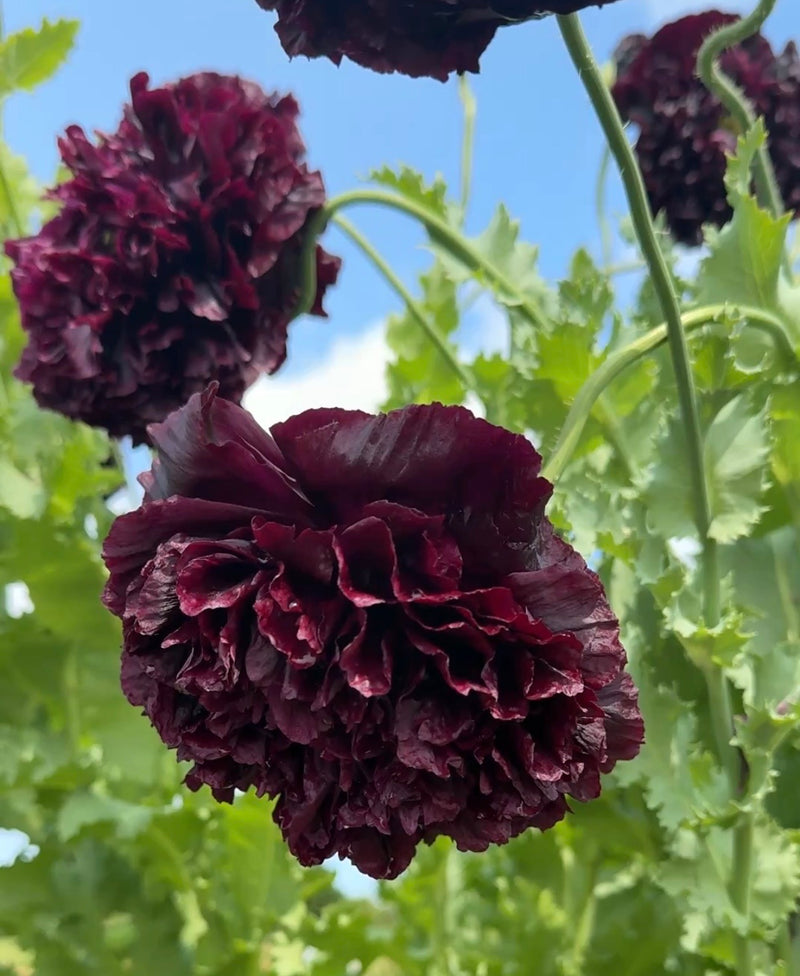
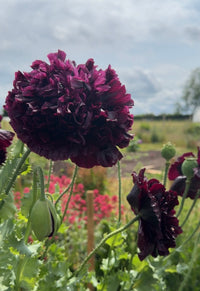
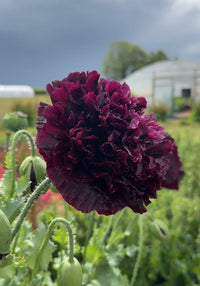
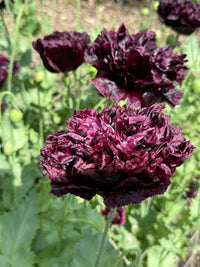
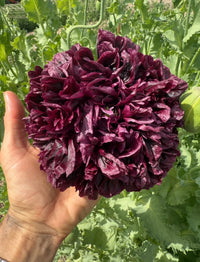
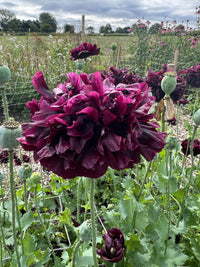
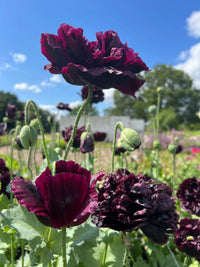
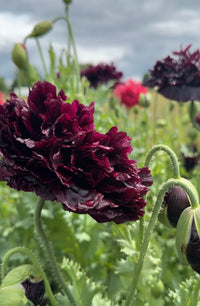
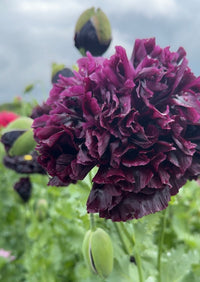
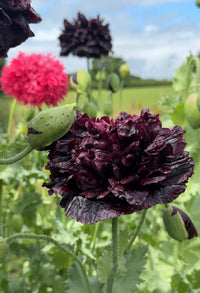
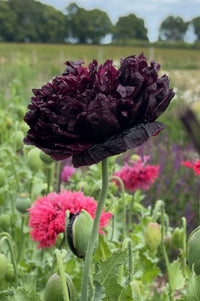
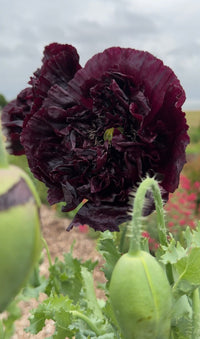
Huge fully-double peony-form blooms in the deepest velvet maroon-black, followed by magnificent architectural pepper-pot seed heads. The Gothic cottage drama poppy.
About this variety
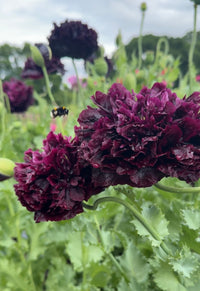
Huge fully double blooms in a velvety maroon so dark it reads as black and seems to swallow light rather than reflect it. Packed with ruffled silky petals, they look far more like a peony than a poppy, on stout stems at 75cm to a metre above blue-green serrated leaves. The seed heads are the second half of it: big pepper-pot capsules that stand through autumn and dry as well as anything in the garden.
Thinning is what separates a good crop from a disappointing one. Thin the seedlings to 30cm apart when they are about 5cm tall. Crowded plants stay spindly and the flowers come out a fraction of the size, and this is the commonest reason a double poppy underwhelms.
Sow direct where it is to flower, because the taproot will not take moving. Surface-sow and do not cover, since the seed needs light, and September sowing gives markedly bigger plants than spring. Despite the doubling, bumblebees crawl right into the petals for the sooty pollen and come out covered in it.
All parts of the plant are toxic except the fully dried seeds. Keep it away from children and pets.
Plant alongside
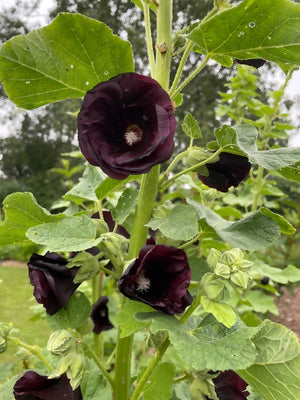
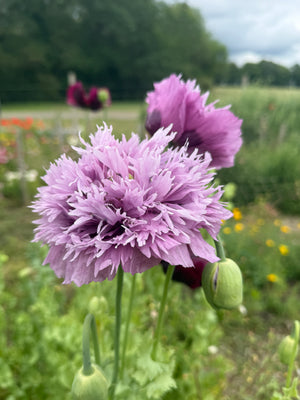
Poppy Black Peony pairs beautifully with these cottage garden classics


RHS Plants for Pollinators
This plant has been assessed by the Royal Horticultural Society and recommended as especially beneficial to bees, butterflies and other pollinators. Growing plants like this directly supports UK pollinator populations — something close to our hearts at Salle Moor Hall Farm, where we see the difference a cottage garden full of the right plants can make.
Learn more at RHS.org.uk →