


Poppy Flanders Red
Papaver rhoeas -- Flanders Poppy; Corn Poppy; Field Poppy
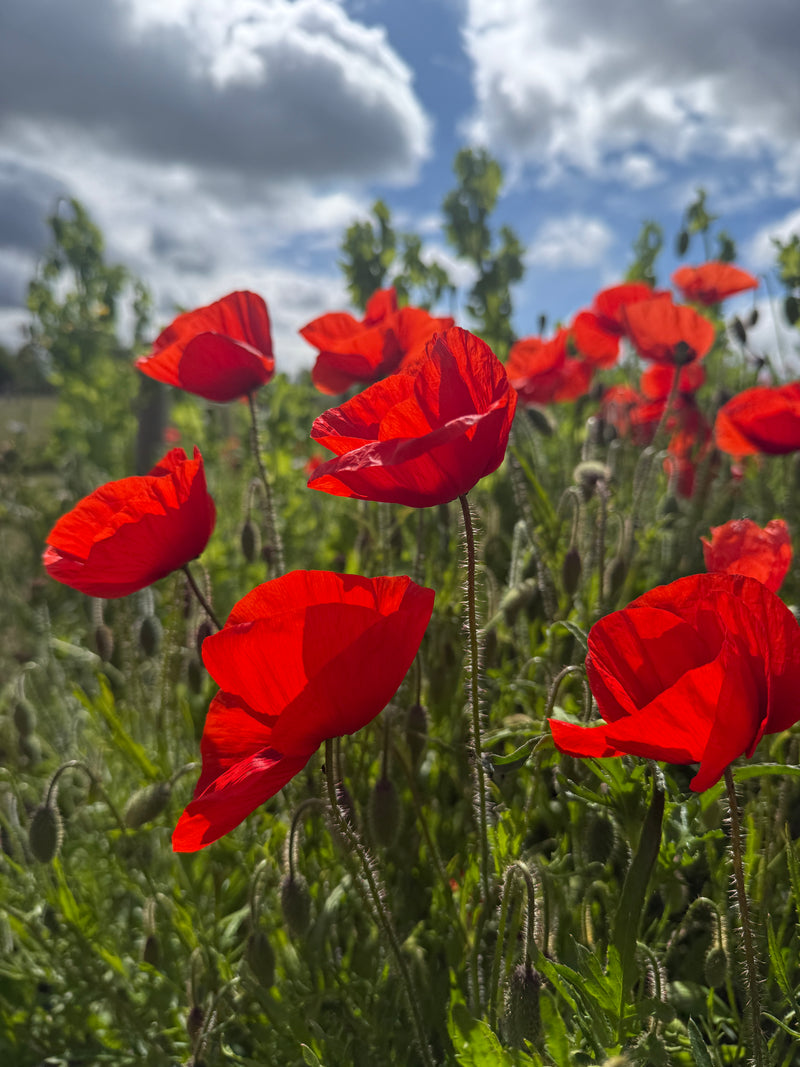
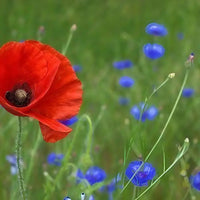
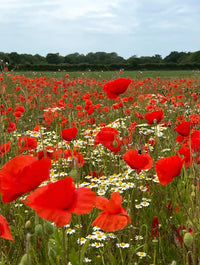
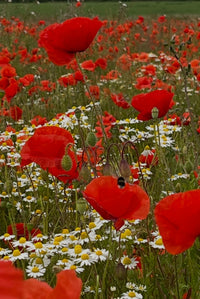
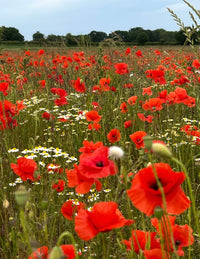
The iconic silky scarlet Field Poppy with dark centre — the native British wildflower of fields and remembrance. Hardy annual, self-seeding, exceptional pollen plant.
About this variety
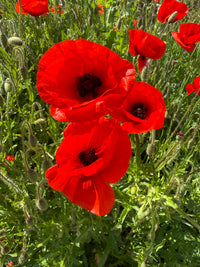
The British field poppy, the same Papaver rhoeas that came up across the ground in Flanders and became the flower of remembrance. Silky scarlet cups five to seven centimetres across with a dark blotch at the base, on wiry stems at 45 to 75cm.
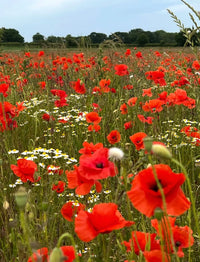
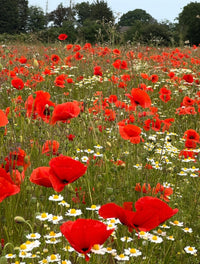
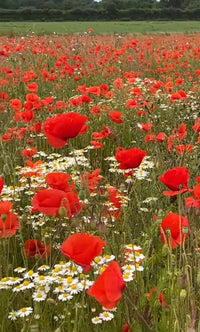
The petals are translucent, which is the thing photographs never quite catch. Plant it where the low sun can come through them from behind and the colour lights up from inside. Bees take the dark pollen, which is high in protein, and it self-seeds prolifically enough to hold a colony indefinitely once settled. In an establishing meadow it does the useful job of giving colour in year one while the perennials are still making roots.
Sow it direct, because the taproot will not take moving, and surface-sow without covering. Autumn sowing is markedly better: the seed gets a natural cold spell over winter and the plants come up stronger and flower weeks earlier. Do not feed it; poor ground gives the best plants. To cut it, take the bud as it cracks and sear the stem end with a match or in boiling water, or the sap runs and the flower wilts within the hour.
Plant alongside
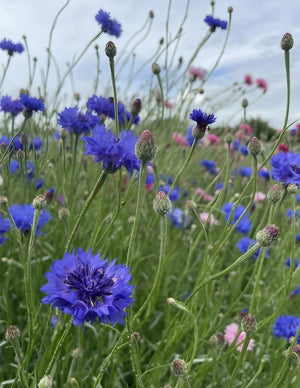
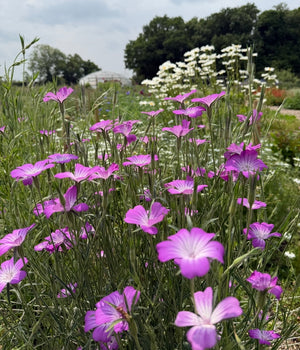
Poppy Flanders Red pairs beautifully with these cottage garden classics

RHS Plants for Pollinators
This plant has been assessed by the Royal Horticultural Society and recommended as especially beneficial to bees, butterflies and other pollinators. Growing plants like this directly supports UK pollinator populations — something close to our hearts at Salle Moor Hall Farm, where we see the difference a cottage garden full of the right plants can make.
Learn more at RHS.org.uk →