

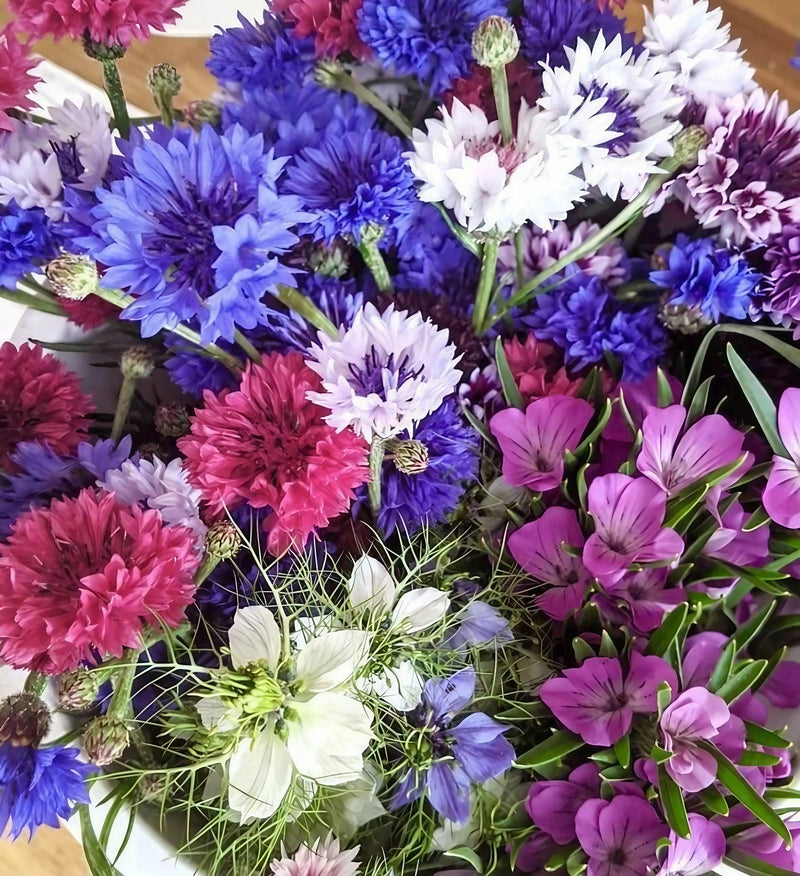
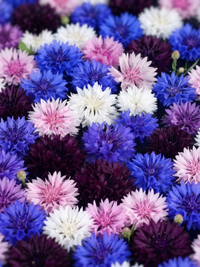
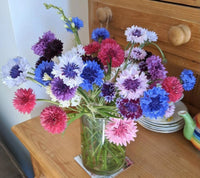
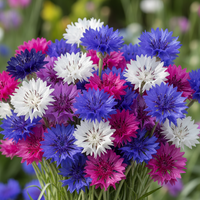
Cornflower Polka Dot Mixed
Centaurea cyanus 'Polka Dot Mixed' — compact dwarf multi-colour mix
A compact dwarf cornflower mix in seven cottage colours on bushy 30–50cm plants — the container-friendly polka-dot palette bred specifically for amateur gardeners.
About this variety
A dwarf cornflower, bushy at 30 to 50cm, bred in 1960 for gardeners who wanted the whole colour range without the height. The mix runs blue, deep maroon, raspberry, rose, pink, lavender and white, which is the widest palette in the family.
The compact habit is the point. It needs no staking, it does not lean after rain the way the tall Ball types do, and it will grow in a window box or a patio pot where a 90cm cornflower would be absurd. At the front of a border it makes low multicoloured mounds that hold their shape all season.
The trade-off is on the stem. The flowers are smaller than the tall varieties and the stems are short, so this is a plant for looking at rather than for the cutting patch; a small jug of informal posies is about as far as it goes. Self-sown seedlings keep the dwarf habit reasonably well, which is unusual and useful. It is about as easy as a hardy annual gets, which makes it a good one for a child's patch.
Plant alongside
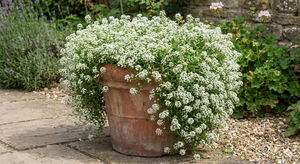
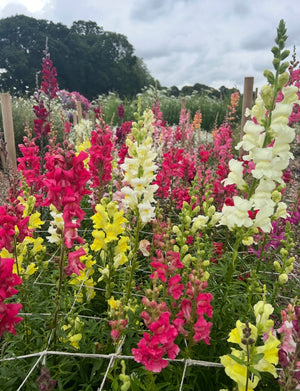
Cornflower Polka Dot Mixed pairs beautifully with these cottage garden classics


RHS Plants for Pollinators
This plant has been assessed by the Royal Horticultural Society and recommended as especially beneficial to bees, butterflies and other pollinators. Growing plants like this directly supports UK pollinator populations — something close to our hearts at Salle Moor Hall Farm, where we see the difference a cottage garden full of the right plants can make.
Learn more at RHS.org.uk →