

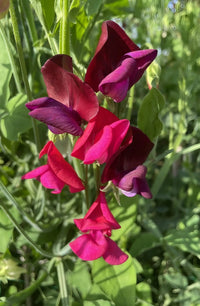
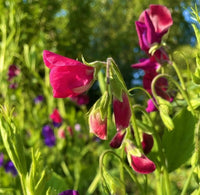
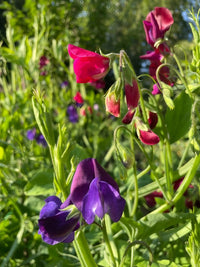
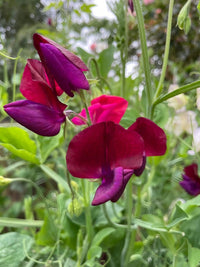
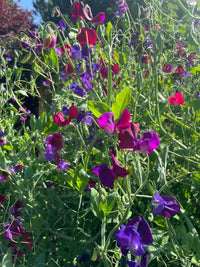
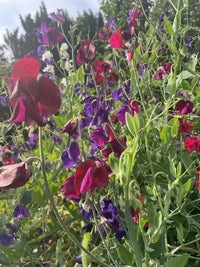
Sweet Pea Old Spice Starry Night
Lathyrus odoratus 'Old Spice Starry Night' — Grandiflora type; Old Spice series
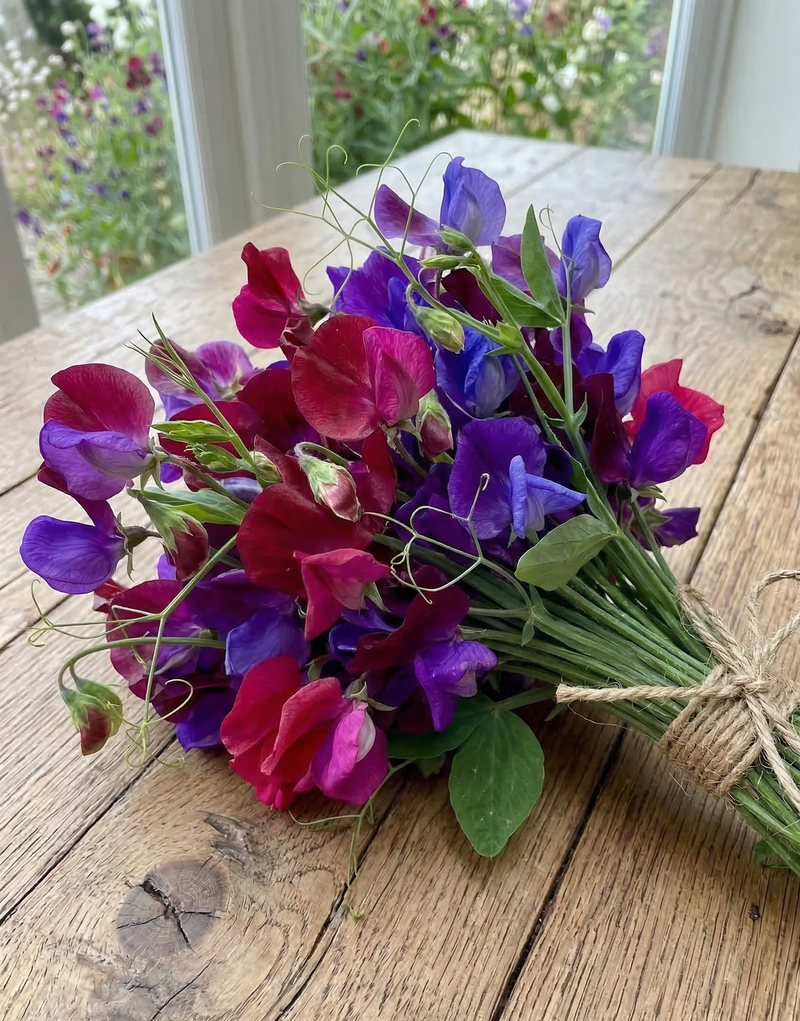
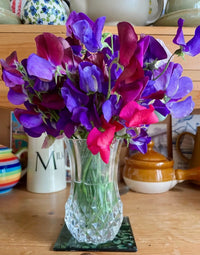
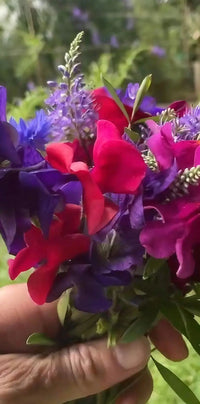
Velvety bicolour blooms in deep violet, indigo, maroon and purple — the heritage Old Spice Sweet Pea with double the perfume of modern types and superior heat tolerance.
About this variety
Velvety bicolours in deep violet, indigo, maroon and purple, and the most powerfully scented thing in the whole range. It is the staff favourite here.
These are Grandifloras rather than Spencers, and the difference is a real trade. The flowers are smaller and the stems shorter than a modern exhibition variety, and in return you get roughly double the perfume, which is the original wild sweet pea scent the Spencers largely bred out.
The other advantage is heat. The Old Spice series was selected for tolerance of hot weather, and in a warm British July, when standard Spencers stop flowering and go over, these keep going. In the kind of summers we are getting now, that is worth more every year.
It wants rich ground, a sturdy support and daily picking. Cut every flower as it opens; one seed pod is enough to tell the plant to stop. And the seeds look like garden peas and are toxic, so keep them from children and do not eat the pods.
Plant alongside
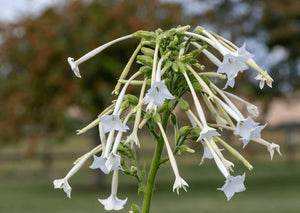
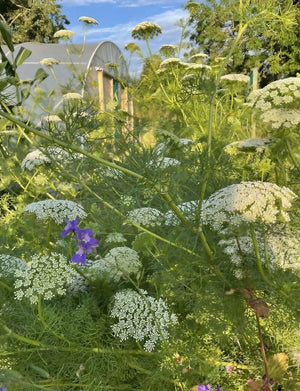
Sweet Pea Old Spice Starry Night pairs beautifully with these cottage garden classics


RHS Plants for Pollinators
This plant has been assessed by the Royal Horticultural Society and recommended as especially beneficial to bees, butterflies and other pollinators. Growing plants like this directly supports UK pollinator populations — something close to our hearts at Salle Moor Hall Farm, where we see the difference a cottage garden full of the right plants can make.
Learn more at RHS.org.uk →