

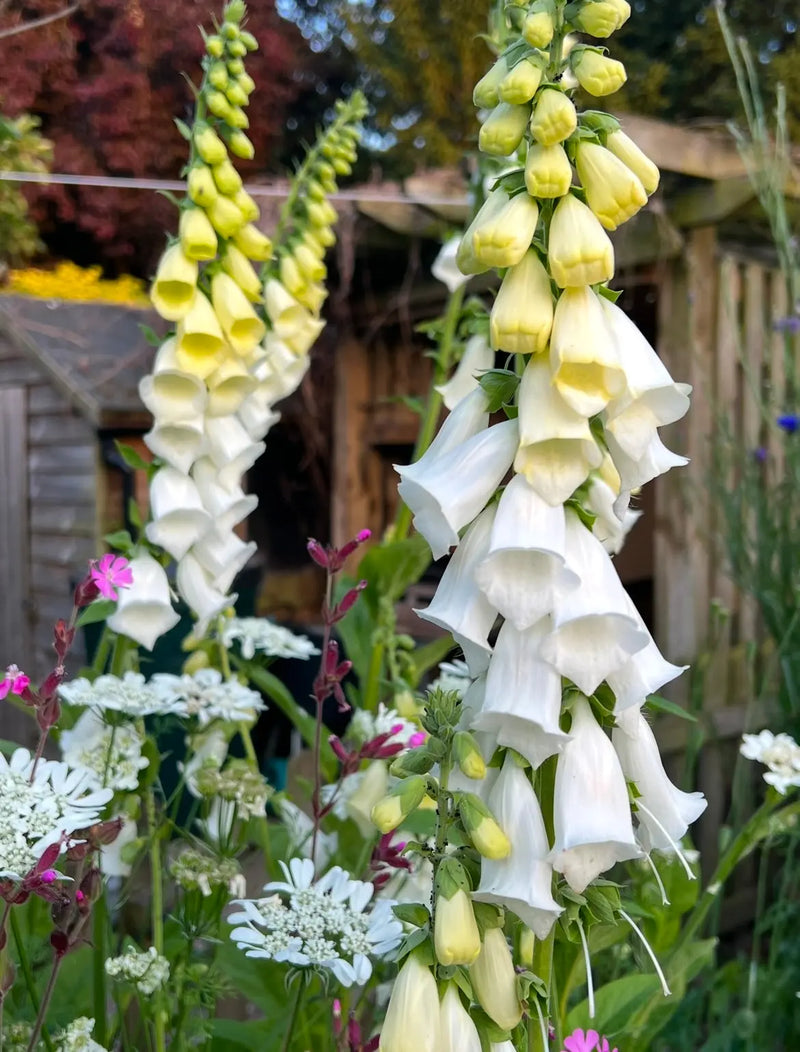
Foxglove Alba White
Digitalis purpurea f. albiflora — white foxglove; Alba
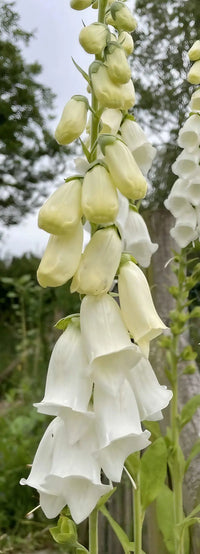
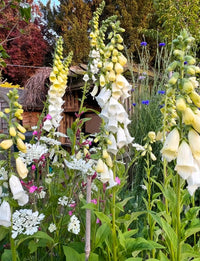
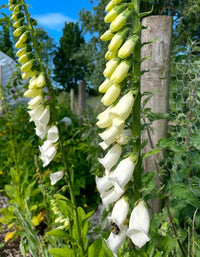
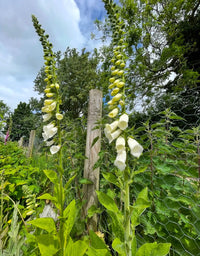
Tall majestic spires of pure white bell-shaped flowers — the elegant white Foxglove that glows at dusk and lights up shaded cottage borders.
About this variety
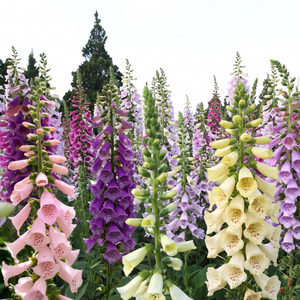
Spires of pure white bells at 1.2 to 1.5m, faintly cream-speckled inside the throats. The pale colour gathers what light is left at dusk, which is why white foxgloves turn up in every evening border and moon garden.
It is a biennial. Leaves in year one, the display in year two, then it dies, having dropped enough seed to start the next colony. Left alone it wanders round a garden, coming up where it fancies rather than where you put it, which is most of the charm. Long-tongued bumblebees have co-evolved with that bell shape and work it obsessively.
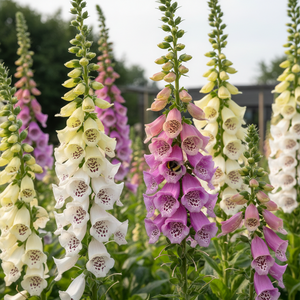
One caution about the white: it does not stay white in a mixed population. Cross-pollinated by ordinary purple foxgloves nearby, seedlings revert to purple within a generation or two. Pull anything that comes up coloured if you want to keep an all-white drift.
Every part of a foxglove is highly toxic and eating any of it can be fatal. Wear gloves to handle the plants, keep the seed packet away from small children, and do not plant it where pets or grazing animals can reach it.
Plant alongside
Foxglove Alba White pairs beautifully with these cottage garden classics
RHS Plants for Pollinators
This plant has been assessed by the Royal Horticultural Society and recommended as especially beneficial to bees, butterflies and other pollinators. Growing plants like this directly supports UK pollinator populations — something close to our hearts at Salle Moor Hall Farm, where we see the difference a cottage garden full of the right plants can make.
Learn more at RHS.org.uk →