



How to Grow Foxgloves
from Seed
Tall, stately spires of mauve-purple thimble flowers with freckled throats, beloved by bumblebees and woven through the British cottage garden for centuries — one of the most romantic and most rewarding plants you can grow from seed
There are few sights more quintessentially English than a stand of foxgloves rising through dappled light at the edge of a border — tall, stately spires hung with rows of soft mauve-purple thimbles, each freckled inside with its own dusting of deep spots, swaying gently as bumblebees disappear one by one into the flowers. Digitalis purpurea has grown wild in British hedgerows, woodland edges and cottage gardens for so many centuries that it feels less like a plant we cultivate and more like a part of the landscape itself, returning year after year wherever it is allowed to settle and self-seed.
For the cottage gardener, the foxglove is one of the most generous plants you can grow. It thrives in the half-shade where so few flowering plants will, it asks for almost nothing once established, and it brings height, drama and the romance of the wild into even the smallest border. It is a biennial — which simply means it grows a leafy rosette in its first year and flowers gloriously in its second — and once you understand that single rhythm, foxgloves are genuinely one of the easiest and most rewarding flowers to raise from seed. Sow once, allow a little self-seeding, and you may never need to sow again. Whether you choose our signature 'Bishy Barnabee Mix' house blend or a single colour form, the growing remains exactly the same.
Quick Facts at a Glance
Plant Type
Hardy Biennial
Sowing Time
May–Jul indoors or direct
Flowering Months
June – July (year two)
Position
Part shade to full sun
Height & Spread
100–150cm · 45–60cm spread
Difficulty Rating
2 out of 5 — Easy
Understanding the Plant
Digitalis purpurea is a hardy biennial native to western Europe and naturalised throughout the British Isles, where it has been a beloved fixture of woodland edges, hedgerows and cottage gardens for centuries. It belongs to the plantain family (Plantaginaceae) and is the species from which the famous wild purple foxglove takes its form — tall flowering spires of one to one and a half metres, hung along one side with rows of pendulous tubular flowers in soft mauve-purple, each freckled inside the throat with a constellation of deep maroon spots ringed in white.
The key thing to understand about foxgloves is their biennial life cycle. In their first year from seed they produce only a low rosette of soft, downy, deep-green leaves — no flowers at all. Through that first summer and autumn the plant quietly builds its strength, overwinters as a hardy rosette, and then in its second summer throws up its magnificent flowering spire before setting seed and, usually, dying. This is entirely normal and not a sign of any problem. Once you understand it — and allow the plant to self-seed — foxgloves establish a natural rolling cycle in the garden, with rosettes and flowering spires present every year.
A Biennial Rhythm Worth Understanding
If your first-year foxgloves produce only leaves and no flowers, nothing has gone wrong — this is exactly what a biennial does. The plant is building a strong rosette and root system in year one, ready to flower spectacularly in year two. The simplest way to enjoy continuous foxgloves is to sow for two years running, after which the plant's generous self-seeding usually takes over the rhythm for you, with new rosettes appearing each year to flower the next.
⚠️ Toxicity — Important Safety Note
Foxgloves are highly toxic — all parts of the plant, including the leaves, flowers, seeds and roots, are poisonous if ingested by humans, pets and livestock. Digitalis contains powerful compounds that affect the heart, and even small quantities can be dangerous. Wash your hands after handling plants or seeds, keep seed packets away from children, wear gloves when cutting or deadheading, and do not plant where young children, curious pets or grazing animals could eat any part of the plant. Handled sensibly and enjoyed at a respectful distance, foxgloves are entirely safe to grow and a treasured part of the cottage garden.
Outstanding for Bumblebees
Foxgloves are one of the very best plants in the cottage garden for bumblebees. The deep tubular flowers are perfectly shaped for long-tongued bumblebees, who climb right inside to reach the nectar — the spotted throat acts as a landing guide, directing them in. A flowering foxglove on a June morning, with bees disappearing into one thimble after another up the spire, is one of the great quiet pleasures of the wildlife garden, and a genuinely valuable nectar source.
When & How to Sow
Foxgloves are straightforward to grow from seed once you know the one essential rule — do not cover the seed. Foxglove seed is extremely fine and needs light to germinate; bury it and it will not come up. Get that single point right and foxgloves are one of the most generous and reliable plants you can raise from seed, producing far more rosettes than you will ever need.
When to Sow — Your Options
May to July is the ideal sowing window — sowing in early summer gives the plant a full season to build a strong rosette before winter, ready to flower the following June. Sow in seed trays or modules to transplant, or direct sow where the plants are to grow. Unlike larkspur, foxgloves transplant perfectly well, so module-sowing and pricking out is a reliable route. Sowing later than July still works but produces smaller rosettes and occasionally delays flowering by a further year.
Step by step — sowing in trays or modules:
-
Prepare trays or modules of fine, moist seed compost. Fill with good-quality seed compost and water gently from below by standing in a tray, so the surface is evenly moist but not waterlogged and the seed will not be washed about.
-
Scatter the fine seed thinly across the surface. Foxglove seed is dust-fine — tip a little into your palm and scatter as thinly as you can manage, or mix with a pinch of fine dry sand to help spread it evenly. Do not cover the seed — simply press very gently onto the surface to ensure contact. Light is essential for germination.
-
Cover with a clear lid or place in a bright spot. A clear propagator lid retains humidity while letting light reach the seed. Place at 15–20°C in bright but indirect light. A warm windowsill or greenhouse bench is ideal in early summer.
-
Germination in 14–21 days. Keep the surface consistently moist — never let fine surface-sown seed dry out, as it is vulnerable in the first two weeks. Mist gently rather than watering heavily. Be patient; foxglove germination is reliable but not always rapid.
-
Prick out once large enough to handle. When seedlings have two or three true leaves, prick out into individual pots or wider spacings. Handle by the leaf, never the delicate stem. Grow on in good light, keeping the young plants steadily moist.
-
Pot on and grow into sturdy rosettes. Through summer, grow the young plants on into strong leafy rosettes in pots or a nursery bed. The bigger and stronger the rosette by autumn, the more magnificent the flowering spire the following summer.
-
Plant out into final positions by early autumn. Plant the established rosettes into their flowering positions in September, spacing 45–60cm apart, so the roots settle in before winter. They will overwinter as hardy rosettes and flower the following June.
Direct Sowing Outdoors
Foxgloves also direct-sow very happily, much as they do in the wild. Choose a spot in dappled shade or sun, rake the soil to a fine tilth, and scatter the fine seed thinly across the surface in May or June — do not rake it in, simply press gently so light still reaches it. Keep the area moist until germination, then thin the seedlings to 45–60cm apart once large enough to handle. Direct-sown foxgloves establish beautifully and need no transplanting at all.
Beginner's Reassurance
Foxgloves are a wonderfully forgiving plant to start with. The seed germinates reliably, the seedlings are robust once past the dust-fine early stage, and the plants thrive in the difficult half-shady spots where so little else will grow. The only thing that catches people out is the biennial rhythm — so simply remember that year one is leaves, year two is flowers, and you cannot go far wrong.
Growing On Tips
Once established, foxgloves are among the most low-maintenance plants in the cottage garden. They are woodland-edge plants by nature, perfectly at home in the dappled shade and moisture-retentive soil that defeats so many sun-loving flowers, and they ask remarkably little of the gardener beyond a sensible spot and the patience to wait for year two.
Sun & Position
Foxgloves are happiest in part shade — dappled light at a woodland edge or the shadier side of a border is ideal, and one of their great virtues is thriving where sun-lovers fail. They will also grow in full sun provided the soil stays reasonably moist. Deep, dry shade is the one position to avoid.
Soil & Drainage
Moisture-retentive, humus-rich soil suits foxgloves best — the leaf-mould-rich ground of a woodland edge is their natural home. They tolerate most garden soils and a wide pH range, but dislike waterlogged winter ground, which can rot the overwintering rosette. A little leaf mould or compost worked in before planting is appreciated.
Watering
Keep young rosettes steadily moist through their first summer while they establish. Once settled, foxgloves are reasonably self-sufficient, though they appreciate watering during prolonged dry spells, particularly as the flowering spire rises in late spring. Avoid letting plants dry out completely during bud formation.
Feeding
Foxgloves rarely need feeding in any reasonable garden soil. An annual mulch of leaf mould or garden compost around the rosettes in spring provides all the nourishment they require and helps retain the moisture they like. Avoid heavy feeding, which encourages soft leafy growth at the expense of strong spires.
Deadheading
For more flowers, cut the main spire once its lower flowers fade and before it sets seed — this often prompts smaller side spikes to develop, extending the display. But to encourage self-seeding, leave one or two spires to ripen and scatter their seed. Always wear gloves when handling foxgloves.
Self-Seeding & Support
Allow a spire or two to set seed and foxgloves will gently self-sow, establishing a natural rolling cycle of rosettes and flowers. In exposed gardens, very tall spires may need a discreet cane; in sheltered borders they are usually self-supporting. Move self-sown seedlings while small if you want them elsewhere.
Common Problems & How to Fix Them
Foxgloves are resilient, trouble-free plants when their simple needs are met. The few issues that occasionally arise are nearly all easy to diagnose and address.
| Problem | Likely Cause | What to Do |
|---|---|---|
| No germination | Seed was covered | The single most common cause of failure. Foxglove seed needs light to germinate and must be surface-sown. Resow on the surface, pressing gently for contact but never covering with compost, and keep consistently moist. Be patient — germination can take up to three weeks. |
| No flowers in year one | Normal biennial behaviour | This is entirely normal and not a problem at all. Foxgloves are biennials — they make a leafy rosette in year one and flower in year two. Leave the rosette undisturbed over winter and it will produce its magnificent spire the following June. Patience is all that is required. |
| Seedlings damping off | Overwatering, poor airflow | Fine surface-sown seedlings are vulnerable to damping off if kept too wet in stagnant air. Water from below, ensure good ventilation, avoid overcrowding, and use fresh seed compost. Mist rather than soak. Once seedlings have a few true leaves they become much more robust. |
| Rosettes rotting over winter | Waterlogged soil | Foxgloves dislike sitting in cold wet ground all winter. Improve drainage with grit or compost, avoid heavy waterlogged clay, and plant rosettes slightly proud of the surface. In very wet gardens, a free-draining raised position suits them far better. |
| Slug and snail damage | Damp shade, soft young leaves | Young foxglove rosettes in damp shade are attractive to slugs and snails. Wool pellets, evening patrols on damp nights, or copper rings around precious plants all help. Established plants with tougher leaves are far less affected and generally grow away strongly. |
| Leaf spot on foliage | Damp conditions, poor airflow | Brown or purple leaf spotting can appear in damp, crowded conditions. Improve airflow with adequate spacing, remove badly affected leaves (wearing gloves), and avoid overhead watering. Usually cosmetic and rarely affects flowering, which carries on regardless. |
| Plant disappears after flowering | Natural end of life cycle | As a biennial, the foxglove naturally dies after flowering and setting seed in its second year. This is expected. Allow a spire or two to ripen and shed seed, and self-sown seedlings will carry the cycle forward — a small population maintains itself indefinitely with no intervention. |
When to Expect Flowers
Seed sown in May, June or July will germinate within two to three weeks and grow steadily through its first summer into a strong leafy rosette. That rosette overwinters quietly as a hardy little plant, and then — as the days lengthen the following spring — it begins to build its flowering spire, rising rapidly through May to burst into flower in June. Peak flowering runs through June and into July, with the thimbles opening sequentially from the bottom of the spire upwards over several weeks.
The two-year wait is the one thing to make peace with, and it is genuinely worth it. A well-grown foxglove in its second June — a single tall spire, or better still a drift of them threading through dappled shade, hung with rows of freckled mauve thimbles and busy with bumblebees — is one of the most romantic and most quintessentially English sights the cottage garden offers. And once self-seeding takes over, you will have spires every summer without ever sowing again.
Year One vs Year Two
If your foxgloves make only leaves in their first year, please don't be disheartened or dig them up — they are doing exactly what biennials do. The leafy rosette of year one is the foundation for the spire of year two. Leave the plants undisturbed through winter, allow them to grow away in spring, and the transformation in their second June is genuinely spectacular.
Sow in early summer for strong rosettes that overwinter and flower the following June — then allow a little self-seeding, and foxgloves will return to your garden year after year of their own accord.
| Jan | Feb | Mar | Apr | May | Jun | Jul | Aug | Sep | Oct | Nov | Dec | |
|---|---|---|---|---|---|---|---|---|---|---|---|---|
| 🌱 Sow (Year 1) | ||||||||||||
| 🪴 Plant Out (Year 1) | ||||||||||||
| 🌸 Flowering (Year 2) |
Cutting & Drying
Foxgloves make a dramatic and beautiful cut flower — those tall freckled spires bring height and the romance of the wild into an arrangement like little else — though they are best understood as a flower of the garden first and the vase second, and there are a couple of points worth knowing before you cut. Always wear gloves when cutting or arranging foxgloves, and keep arrangements well away from where children or pets might reach them.
Cutting Fresh for the Vase
Cut foxglove spires in the early morning when roughly the lower third of the flowers are open and the rest are plump coloured buds — they will continue opening up the spire in the vase. Cut long stems, strip the lower leaves (wearing gloves), and plunge immediately into deep cool water. Condition for several hours in a cool dark place before arranging. Foxgloves last around five to seven days in the vase and bring magnificent vertical drama to cottage-style arrangements alongside roses, alchemilla and grasses.
Drying Foxgloves — Honest Advice
Foxgloves do not dry well as flowers. The soft tubular thimbles collapse and lose their colour when air-dried, and the spires are not a candidate for hanging like larkspur or strawflowers. The one genuinely useful thing to dry, however, is the seedheads — the architectural ripened spires of empty seed capsules have a sculptural quality that works beautifully in dried autumn and winter arrangements, and they shed their fine seed as you handle them, which you can scatter where you would like more foxgloves to grow.
A Flower for the Wild Cottage Garden
The truest way to enjoy foxgloves is in the garden itself — drifting through dappled shade at a woodland edge, threaded between shrubs, or rising at the back of a cottage border among roses, geraniums and ferns. They bring height and movement to the difficult shady corners where so little else will flower, they support an extraordinary number of bumblebees through June, and once they have settled in and begun to self-seed they weave themselves into the fabric of a garden in the loveliest, most natural way — appearing each year wherever they please, as though they had always been there.
Plant Specifications
Shop Our Foxgloves
We grow a small, carefully chosen range of foxgloves at Salle Moor Hall Farm, and every one follows exactly the growing method in this guide. Whichever you choose, you'll be raising one of the most romantic and rewarding plants the cottage garden has to offer.


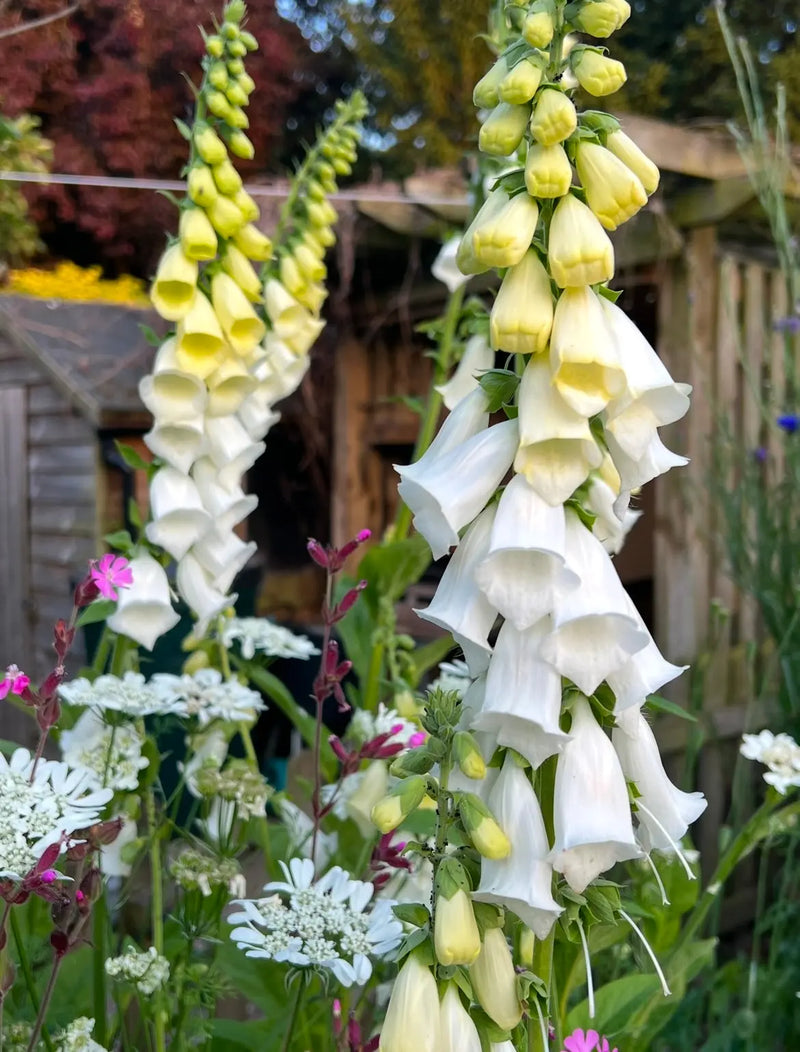
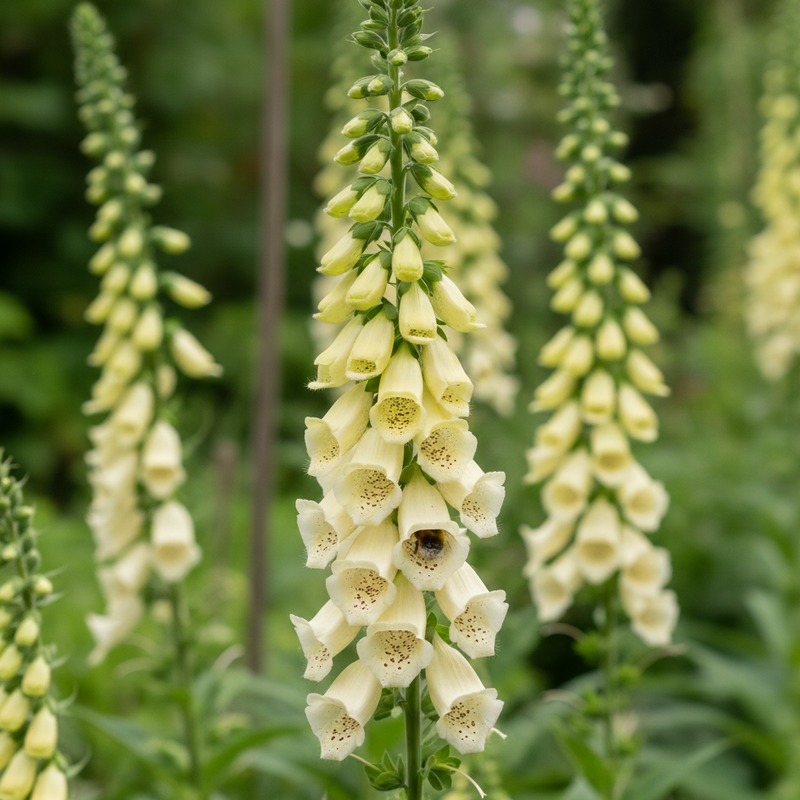
The romance of the wild, the height every border needs, and the favourite flower of the bumblebee.
Few plants belong in the British cottage garden as completely as the foxglove — tall freckled spires of mauve-purple thimbles rising through dappled shade, busy with bumblebees through June, returning year after year of their own accord once they have settled in. Foxgloves thrive in the difficult half-shady corners where so little else will flower, ask almost nothing of the gardener beyond a little patience for year two, and bring a quiet, romantic, quintessentially English beauty to any planting. Our Digitalis purpurea seed is selected for strong germination and the classic wild mauve-purple flower colour, ready to weave the romance of the woodland edge into your own garden.
Shop Foxglove Seeds →