Skip to product information
1 of 4

Wild Carrot Seeds (Daucus carota)

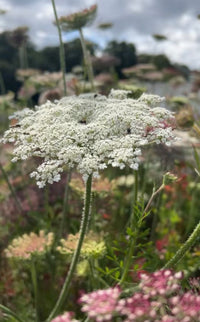
Known universally as "Queen Anne's Lace," Daucus carota is the darling of the wildflower meadow and the cut flower garden alike. It produces flat-topped, lacy umbels of creamy-white flowers that often feature a single, tiny dark purple dot in the very centre—a unique characteristic that distinguishes it from other white fillers.

While it looks delicate, this is a tough, native hardy annual (or biennial) that adds an instant "wild" feel to any arrangement. As the flowers fade, they curl inward to form a distinctive "bird's nest" shape, offering wonderful architectural interest and structural seed heads that look beautiful dried or dusted with winter frost.


Read More

🌿 Understanding the Plant

Daucus carota, the wild ancestor of the domestic carrot, is a robust Hardy Annual or Biennial (H7). It is perfectly adapted to the UK climate, surviving temperatures down to -20°C and thriving in diverse soil conditions from coastal dunes to inland meadows.

The "Bird's Nest" Architecture: A fascinating biological trait of Wild Carrot is its ability to curl its flower heads inward as they go to seed, creating a concave "nest." This structure protects the developing seeds and provides significant architectural interest in the winter garden, catching frost and snow in its delicate, wiry framework.

Pollinator Superfood: Umbellifers like Wild Carrot are among the most valuable plants for biodiversity. Their broad, flat floral platforms are specifically evolved to accommodate hoverflies, solitary bees, and predatory wasps, making them a critical component of a healthy, chemical-free garden ecosystem.

🌱 Growing Guide

Wild Carrot possesses a deep taproot and deeply dislikes root disturbance; for the most resilient plants, direct sowing is strongly recommended.

How to Sow:
Direct sow outdoors in August or September for the strongest stems and earliest flowers the following year, or in March to May for flowers in late summer. Sow thinly into finely raked drills 30cm apart and cover very lightly with soil; the seeds require a small amount of darkness to germinate. Germination typically occurs within 14-21 days.

Where to Plant:
They demand full sun and prefer well-drained soil. They are remarkably drought-tolerant once established thanks to their taproot, making them ideal for gravel gardens or naturalistic meadows. In fertile garden soil, they may grow quite tall and vigorous.

Ongoing Care:
While sturdier than many ornamental lace flowers, the stems can still be prone to leaning in high winds. We recommend providing light twiggy support (hazel or birch) or planting in dense groups so the plants can support each other. For the best cut flowers, harvest when the umbel is fully flat and the individual florets are open; if cut too early, the stems will wilt.

📋 Plant Specifications
Botanical Name Daucus carota
Common Name Wild Carrot / Queen Anne's Lace
Plant Type Hardy Annual / Biennial
Hardiness H7 (Ultra Hardy)
Light Requirements Full Sun ☀️
Height 60cm - 90cm
Spread 30cm
Spacing Plant 25-30cm apart
Flowering Period June to September
Perfect For 🌾 Wildflower & Meadow Gardens
✂️ Architectural Dried Flowers
🐝 Feeding Beneficial Insects
🏺 Naturalistic Floral Design
Seeds per Packet Approximately 100 seeds
🤝 Beautiful Garden Combinations

Wild Carrot is the ultimate "weaver" plant. It looks spectacular when mingling with the purple and blue spikes of our available collection:

  • 💜 Verbena bonariensis: The Classic Partner. The tall, wiry stems of Verbena rise through the lacy foliage of the Wild Carrot. This combination of airy purple heads and white lace creates the definitive "Cottage Garden" aesthetic with very little effort.
  • 💙 Salvia 'Victoria Blue': The Colour Pop. The deep indigo spikes of this Salvia provide a solid, rich block of colour that contrasts beautifully against the transparent, lace-like texture of the carrot umbels. Together, they create a vibrant and bee-heavy display.
📅 Sowing & Flowering Calendar

Direct sow in autumn for the strongest plants the following spring, or in spring for successional waves of lacy white umbels through summer.

Month J F M A M J J J A S O N D
Direct Sow
Flowering

🐝 Pollinator Landing Pad
Wild Carrot umbels provide the perfect flat landing platform for hoverflies, solitary bees, and other beneficial predatory insects. It is a critical "pollinator superfood" for a healthy, balanced kitchen garden or meadow.

🏆 Robust Garden Stamina

Known for its stamina and ability to thrive on poor, dry soils, Daucus carota is an essential choice for those wanting to create a naturalistic, low-maintenance garden that provides high-quality structural filler for the vase.

📖 Want more detailed growing advice?
View our Complete Growing Guide for Wildflowers →

Regular price
£2.30
Regular price
Sale price
£2.30
Tax included. Shipping calculated at checkout.
    Daucus Carota (Wild Carrot) - Bishy Barnabees Cottage Garden Ltd
    Daucus Carota (Wild Carrot) - Bishy Barnabees Cottage Garden Ltd
    Daucus Carota (Wild Carrot) - Bishy Barnabees Cottage Garden Ltd
    Daucus Carota (Wild Carrot) - Bishy Barnabees Cottage Garden Ltd