


The Wildflower Seed Box
10 hand-picked seed varieties
Nothing is quite as magical as a patch of wildflowers buzzing with life on a warm summer day. Ten individual packets of high-quality seeds — not a generic meadow mix, but separate varieties that put you in control of exactly where each plant goes.
Create a wild border, a mini-meadow in a raised bed, or a collection of pollinator pots. From the blazing red of Flanders Poppies to the architectural spikes of Wild Chicory, this box turns a bare patch of soil into a biodiversity hotspot — a long season of nectar for bees, butterflies, and hoverflies from a single box.
Meadow Management
To keep your wildflowers returning year after year, let the plants turn to seed heads in late summer rather than cutting them down. Then cut and drop — shear the dead stems and shake them over the soil to release seeds for the following season.
Almost every plant in this collection is on the RHS Plants for Pollinators list, ensuring a genuine contribution to your local ecosystem.
The perfect gift for the eco-conscious gardener — whether they have a window box or a large allotment, these seeds bring colour and wildlife back to their doorstep.
- 10 full-size seed packets, each with detailed growing notes
- Seasonal varieties chosen to complement each other
- Eco-friendly compostable packaging throughout
🎁 Want this as a gift? Add a message at checkout
📦 What’s in the collection
📬 Delivery & packaging
What’s inside your collection
10 seed packetsEvery variety below is included in this collection. Click any packet to read the full growing guide and see more photos.
-
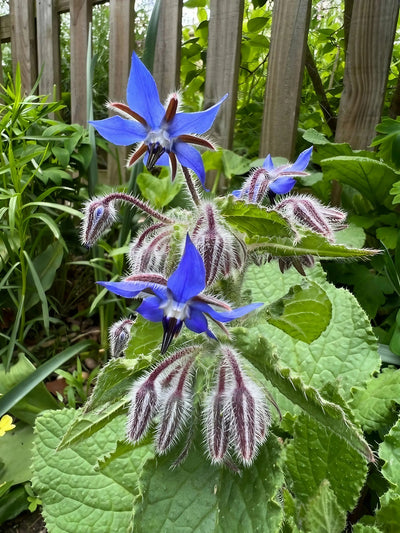
Borage
A Mediterranean annual that thrives in poor soil and full sun, produces vivid true-blue star flowers from June to October at a rate of nectar replenishment that makes it among the most valuable bee forage plants in cultivation, and whose edible flowers and leaves carry a fresh, clean, distinctive cucumber flavour.
View growing guide → -
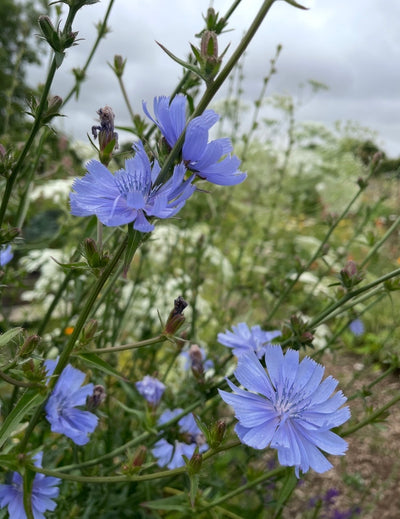
Chicory Wild
View growing guide → -
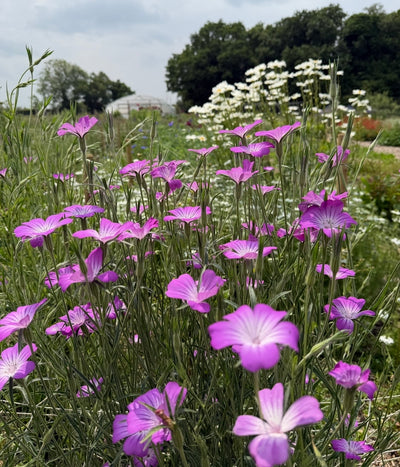
Corncockle
The lost cornfield wildflower — once one of the most beautiful sights of a British summer among wheat and barley, now vanished from farmland by herbicides, but revivable in any garden from seed; tall wiry stems and silky magenta-purple trumpets with distinctive dark veining that catch the light like stained glass
View growing guide → -
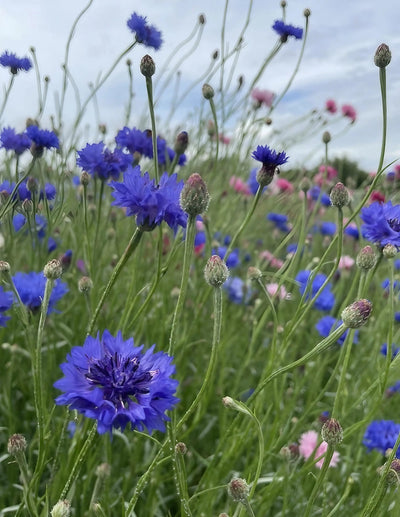
Cornflower Blue Ball
The definitive cornflower — the blue that gives its name to 'cornflower blue' in every paint chart, crayon box, and colour dictionary; electric azure double Ball blooms that glow in sunlight as if lit from within, the quintessential cottage garden annual, cut-and-come-again from June to the first frosts
View growing guide → -
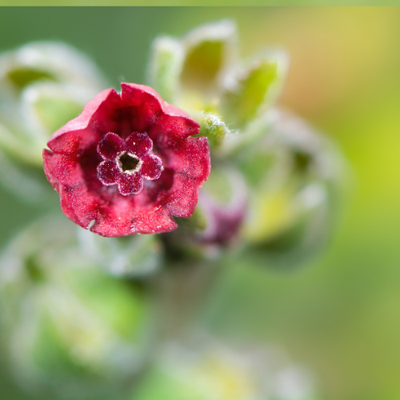
Cynoglossum officinale
The native wildflower biennial for dry, difficult soils and wild gardens — a two-year plant producing velvety grey-green rosettes in year one and dramatic maroon-red flower spikes in year two; RHS Plants for Pollinators, exceptionally hardy (H7), and at home on coastal banks and dry chalky ground where few garden flowers thrive
View growing guide → -
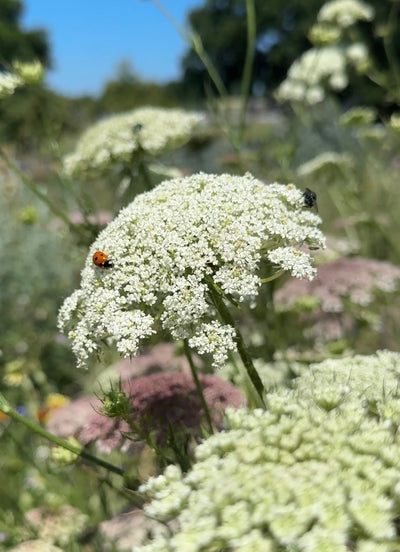
Daucus Carota (Wild Carrot)
The original wildflower filler — flat, intricate white umbels 8–12cm across on tall, branching hairy stems; a classic cottage garden and cutting garden plant that has given its DNA to every cultivated carrot ever grown, and whose flowers remain among the most beautiful, useful, and wildlife-friendly of all UK wildflowers
View growing guide → -
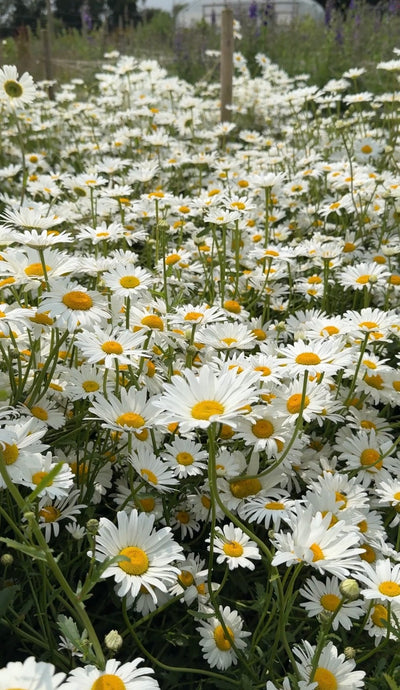
Oxeye Daisy
The backbone of the British wildflower meadow -- Hardy Native Perennial H7 producing pure white petals surrounding vibrant yellow eyes on wiry bobbing stems from May to September; surface press in light onto bare poor soil in autumn or spring; poor unfertilised soil essential for compact floriferous plants; make a single annual late-summer cut removing all cuttings to maintain low fertility; pair with Yellow Rattle if sowing into grass; year 2+ produces the full meadow display; RHS Pollinators heavyweight; vigorous enough to take over small formal borders -- plant where it has room
View growing guide → -
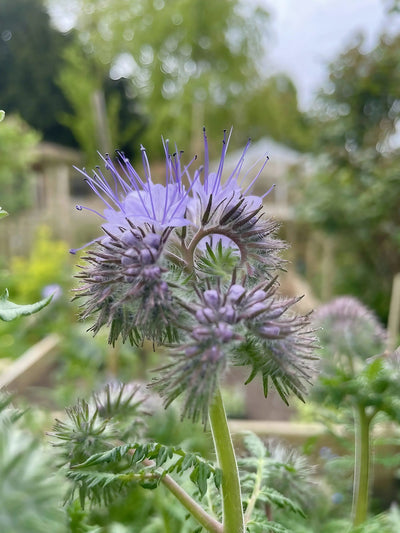
Phacelia
The dual-purpose powerhouse -- Hardy Annual H3 producing lavender-blue coiled fiddleneck flower spikes from just 6-8 weeks after sowing; one of the top five UK nectar plants for bees with all-day continuous nectar; also an exceptional green manure whose dense roots break up clay and foliage protects soil over winter; direct sow and rake in to 1cm depth (needs DARKNESS to germinate); succession sow every 4-6 weeks March-September for continuous bee foraging; skin contact with hairy stems may irritate -- wear gloves
View growing guide → -
Poppy Flanders Red
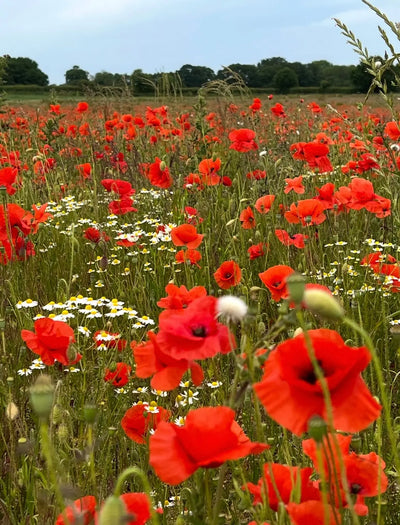
The symbol of Remembrance -- Native Hardy Annual H7 producing paper-thin scarlet cups with black blotch on hairy wiry stems; the pioneer plant that bloomed across the battlefields of Flanders in 1915 because it thrives in disturbed soil; scatter on the surface and press with your feet (light needed -- do not bury); autumn sow for biggest plants; direct sow only; thin to 20cm; builds a permanent self-seeding soil seed bank; RHS Plants for Pollinators high-protein pollen; the essential wildflower meadow annual
View growing guide → -
Red Campion
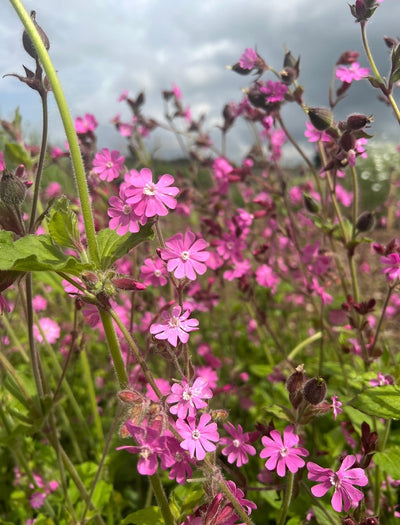
The native shade wildflower of the British hedgerow -- Very Hardy Native Perennial H7 producing vivid rose-pink clusters of deeply-notched five-petal flowers on hairy 60-90cm branching stems from May to August; DIOECIOUS (male and female flowers on separate plants -- both needed for seed set); the classic Bluebell companion; one of the very few flowering plants that genuinely thrives in semi-shade; surface press (light needed); autumn sow for strongest plants; self-seeding permanent colony; RHS Pollinators; cut back after first flush for second flowering; hybrid warning if White Campion is nearby
View growing guide →
