Annual Pollinator

Scabious Black Knight

Scabiosa atropurpurea 'Black Knight'

£2.40approx. 50 seeds

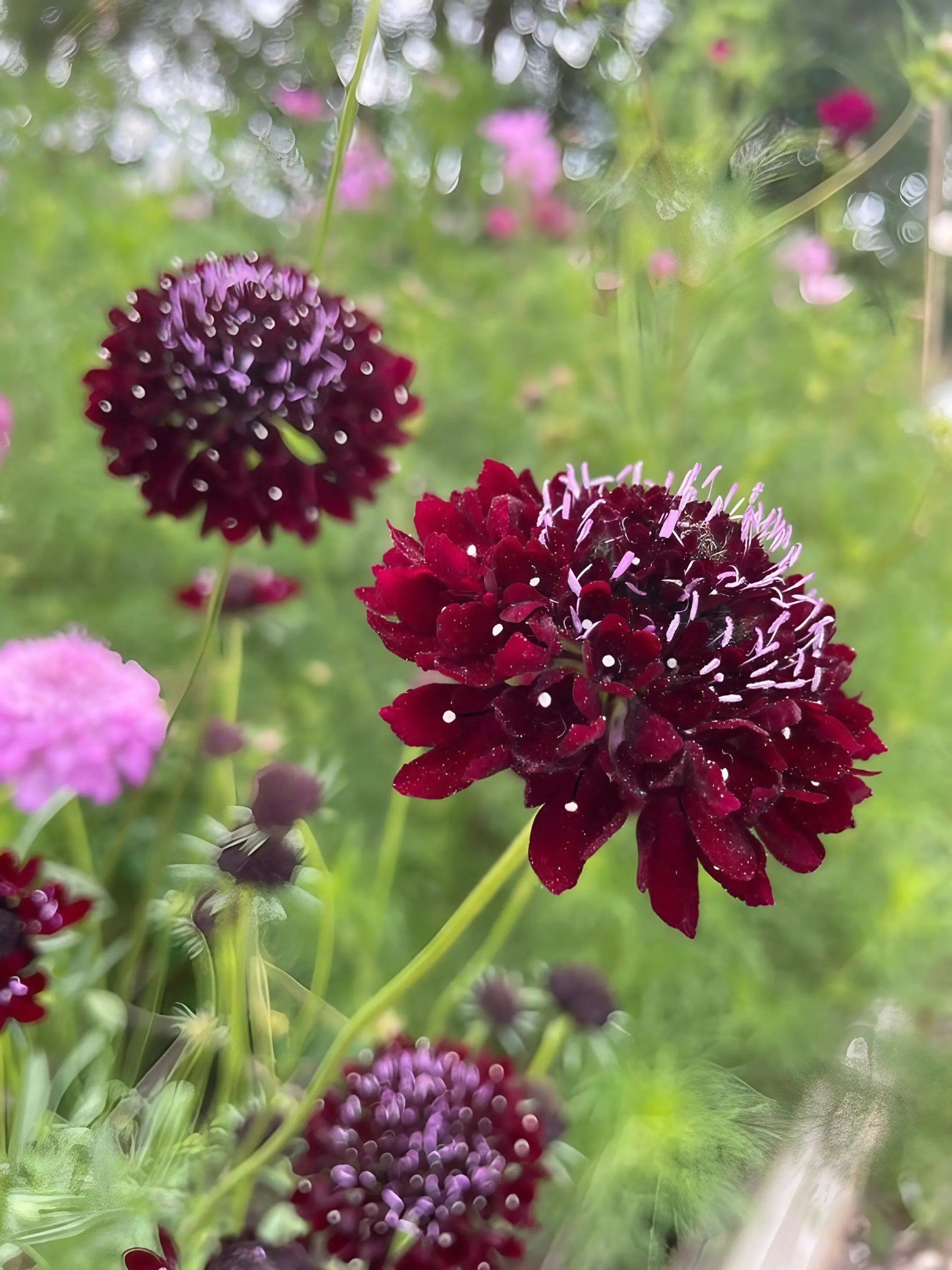
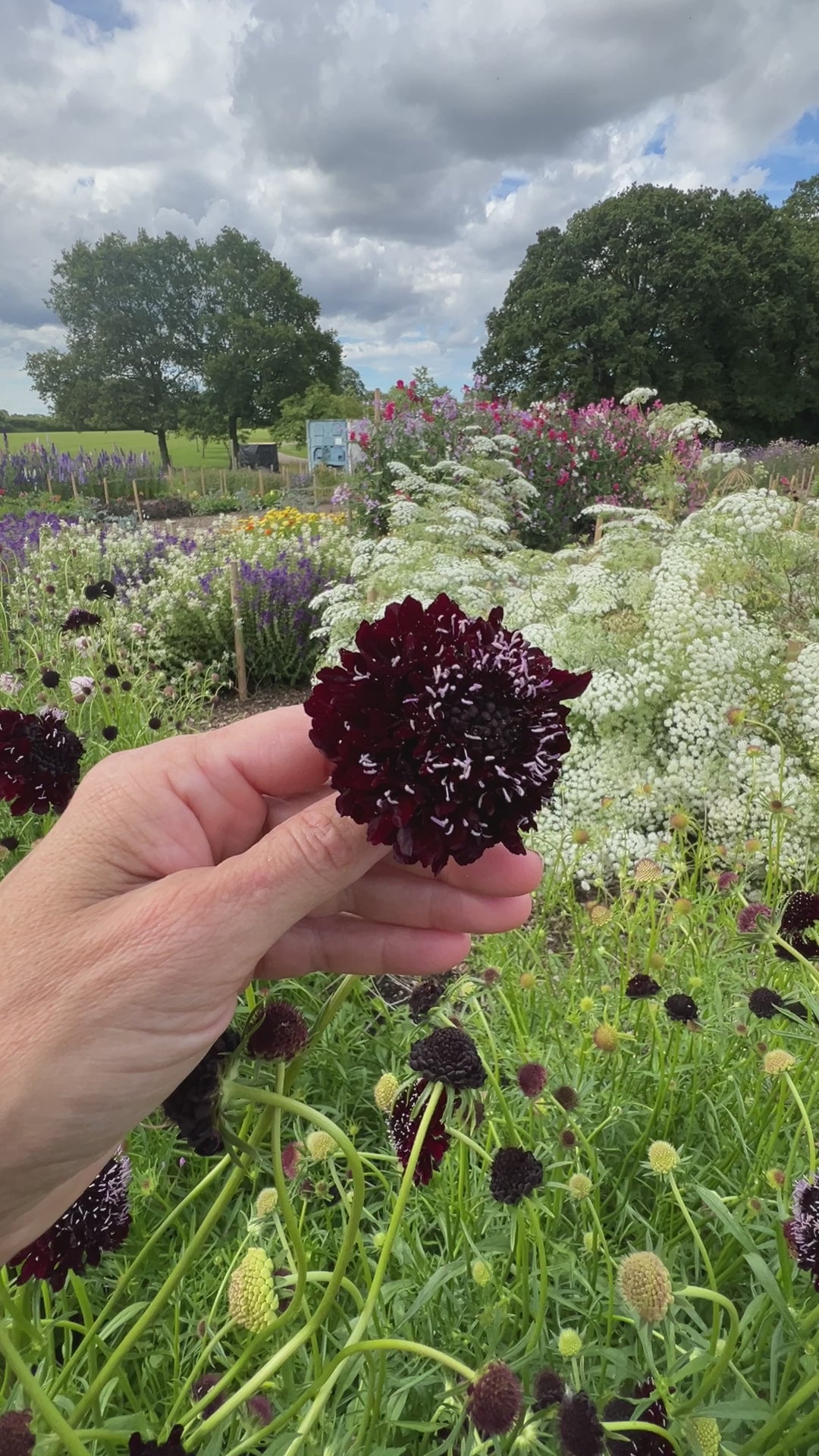
Deep maroon-purple velvet pincushion flowers so dark they're mistaken for black, with white pin-like stamens. Honey-scented, butterfly-magnet, professional florist favourite.

Sowing months
JanFebMarAprMayJunJulAugSepOctNovDec
Height
90cm
Spread
30cm
Spacing
30cm
Position
Full sun is essential for the best blooming, though it can tolerate partial shade.
Soil
Moderately fertile, light, and well-drained soil is ideal.
Grow guide
How to grow Scabious Black Knight
Read the full guide →
About this variety

As close to black as a flower gets. Dome-shaped pincushions in a maroon-purple velvet dark enough that in dappled light, or indoors, they simply read as black, speckled with tiny white stamens like pins in a cushion. On wiry stems at 90cm.

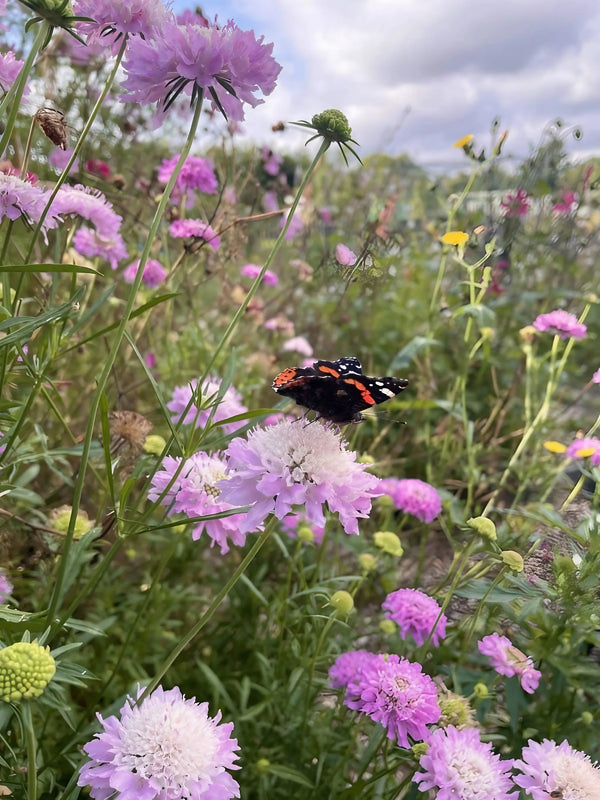
There is a honey scent on a warm day, and butterflies and bees come to it in numbers, which is not what people expect from a flower grown for its moodiness.

What dark flowers do in an arrangement is ground everything else. A summer bouquet of pinks, whites and warm oranges competes with itself; put three stems of this through it and the other colours settle down and read clearly. It is a true cut-and-come-again, so the more you take the more it makes, and deadheading is what keeps it going to the November frosts.

Two practical points. Get support in early, at 20 or 30cm, because 90cm stems go over in a summer storm and staking afterwards is too late. And it wants full sun and neutral to alkaline ground with sharp drainage; on clay add grit, or the roots rot in winter wet.
Plant alongside

Scabious Black Knight pairs beautifully with these cottage garden classics

RHS Plants for Pollinators

This plant has been assessed by the Royal Horticultural Society and recommended as especially beneficial to bees, butterflies and other pollinators. Growing plants like this directly supports UK pollinator populations — something close to our hearts at Salle Moor Hall Farm, where we see the difference a cottage garden full of the right plants can make.

Learn more at RHS.org.uk →