About this variety
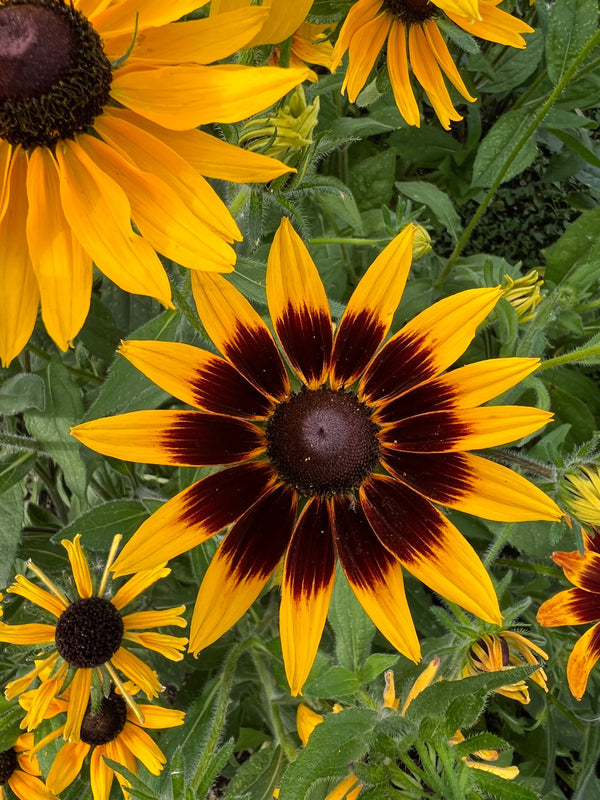
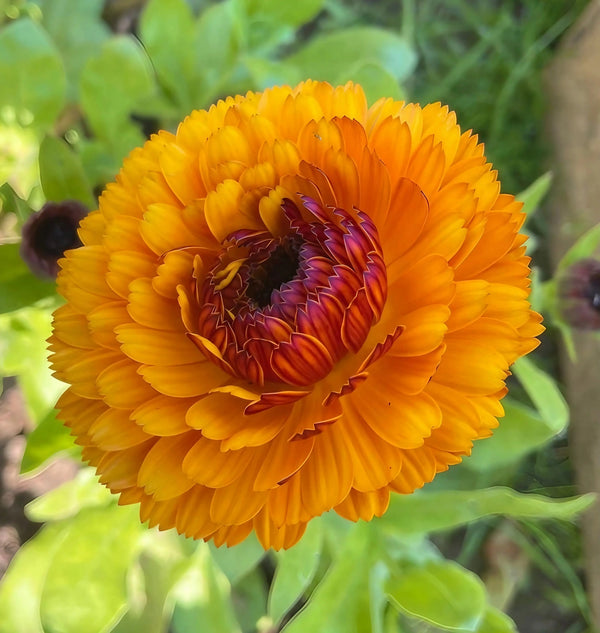
The compact one, at 45cm rather than the 60 to 90cm of the taller rudbeckias, in a rich golden-orange with the usual dark cone. That height is the whole point: it fits a container or the front of a border where a taller variety would be wrong.
The petals are thick and waxy, and that matters more in a British summer than it sounds. A heavy August downpour turns a petunia to mush and leaves this looking untouched.
Two demands, and they are not the usual ones. It wants rich, well-fed, moisture-retentive soil rather than lean ground, so dig compost in. And in a pot in full sun in July it is thirsty enough to need watering every day, with a weekly liquid tomato feed to keep the flowers coming; neglect it in a container and the flowering stops. Sow on the surface, because the seed needs light, and expect ten to fourteen weeks from a February sowing to the first flower. It is slow to start and then goes on to November. Protect the young plants from slugs for the first fortnight after planting out.