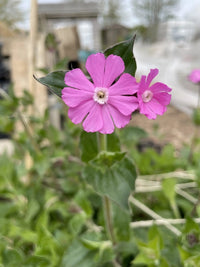
Close-up of vibrant pink Red Campion flowers by Bishy Barnabees Cottage Garden, with green stems and leaves in a field against a cloudy sky. The focused blooms and blurred background make them ideal for wildlife-friendly gardens.

Red Campion

£2.40
Skip to product information
Close-up of vibrant pink Red Campion flowers by Bishy Barnabees Cottage Garden, with green stems and leaves in a field against a cloudy sky. The focused blooms and blurred background make them ideal for wildlife-friendly gardens.
RHS Plants for Pollinators

Red Campion

Silene dioica -- Red Campion; native British wildflower

Vivid rose-pink five-petalled wildflowers on tall hairy stems above mid-green leaves — the native British woodland wildflower that brightens shady corners. Hardy perennial.

£2.40

Free UK delivery on seed orders over £30

Dispatched from our Norfolk farm — Royal Mail, usually within one working day.

Your growing year

Sow, plant out and flowering months for this variety

Jan
Feb
Mar
Apr
May
Jun
Jul
Aug
Sep
Oct
Nov
Dec
Sow
Plant out
In flower
SowPlant outIn flower

At a glance

Height
60-90cm
Spread
30cm
Spacing
30cm
Position
Prefers partial shade or dappled light. It can tolerate full sun, but requires more consistent moisture in this position.
Colour
Pink
Seeds per packet
200
Soil
Thrives in fertile, loam, or sandy soils.
Grow guide How to grow Red Campion Read the full guide →

About this variety

Rose-pink five-petalled flowers, each petal deeply notched so the star looks cut rather than grown, on hairy stems at 75 to 90cm from May through August. Despite the name it is pink rather than red; the red distinguishes it from white campion.

It is one of very few decorative perennials genuinely happy in shade. Under deciduous trees, along a north-facing hedge, at the edge of a wood: that is where it belongs and where it looks right, and it will take sun only if the ground stays reliably moist.

There is a botanical quirk worth knowing. The species name dioica means two houses, because male and female flowers are on separate plants. You need both for seed to set, so sow generously rather than putting in a few plants and hoping. It often behaves as a biennial in its first year, leaves one season and flowers the next, then self-seeds reliably into a permanent colony. Grow it near white campion and the two will cross, giving a graduated range from white through pink over a few years, which most people welcome.
RHS Plants for Pollinators

This plant has been assessed by the Royal Horticultural Society and recommended as especially beneficial to bees, butterflies and other pollinators. Growing plants like this directly supports UK pollinator populations — something close to our hearts at Salle Moor Hall Farm, where we see the difference a cottage garden full of the right plants can make.

Learn more at RHS.org.uk →